
































Everything you need for IT, all in one place.

The Halo platform will transform your current ways of working into intuitive, up-to-the-minute workflows. Combined with industry-leading AI functionality, it will enhance your efficiency, consistency and productivity, giving your teams the ability to deliver the very best in service - to customers and employees alike.

Resolve incidents with confidence

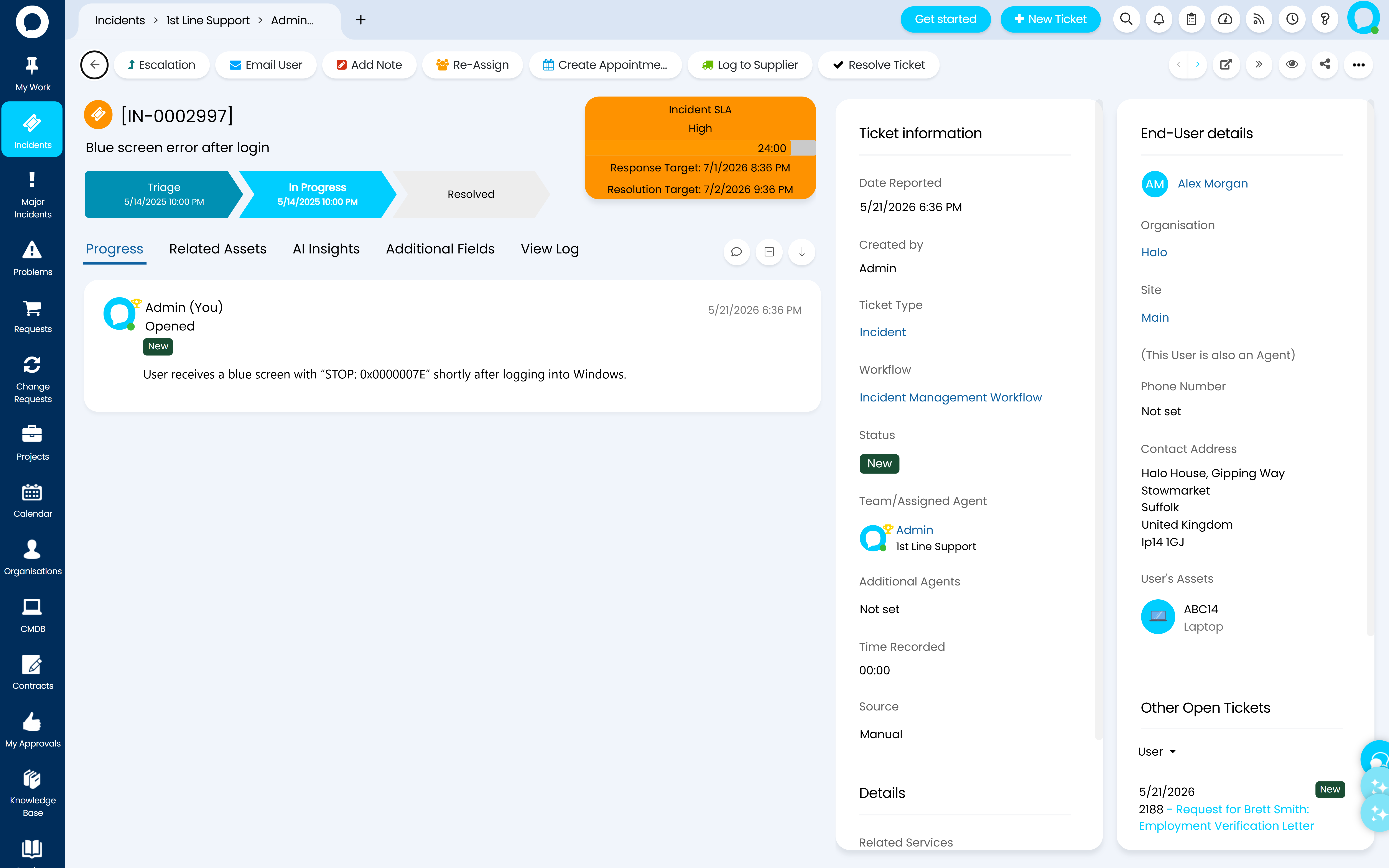
Log, prioritise and resolve incidents from one place. Halo helps teams capture issues from different channels, send them to the right team, track SLAs and OLAs, keep users updated, and link tickets to the affected services, assets or known issues. It also includes a dedicated major incident management console, where teams can group related tasks, coordinate updates and keep a clear record of what happened and how it was resolved.

Explore Incident Management

Make every request easier

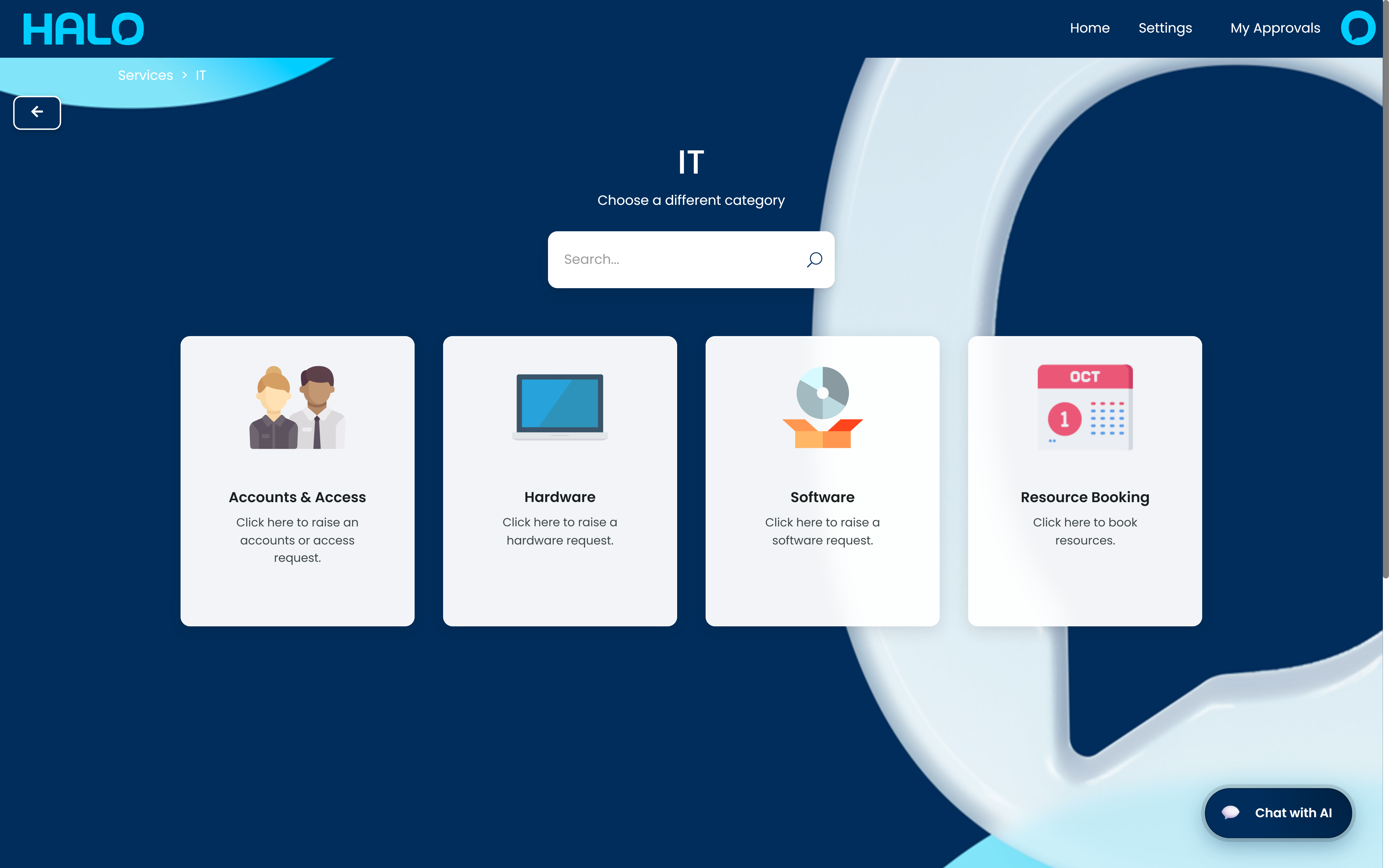
Make it easy for users to request what they need, without creating extra admin for IT. Halo lets teams build service catalogue items with forms, approvals, tasks and automation behind the scenes. This works for common requests like access, software, hardware, onboarding, offboarding and other internal services, with users able to track progress through the portal.

Explore Service Management

Fix issues at the source

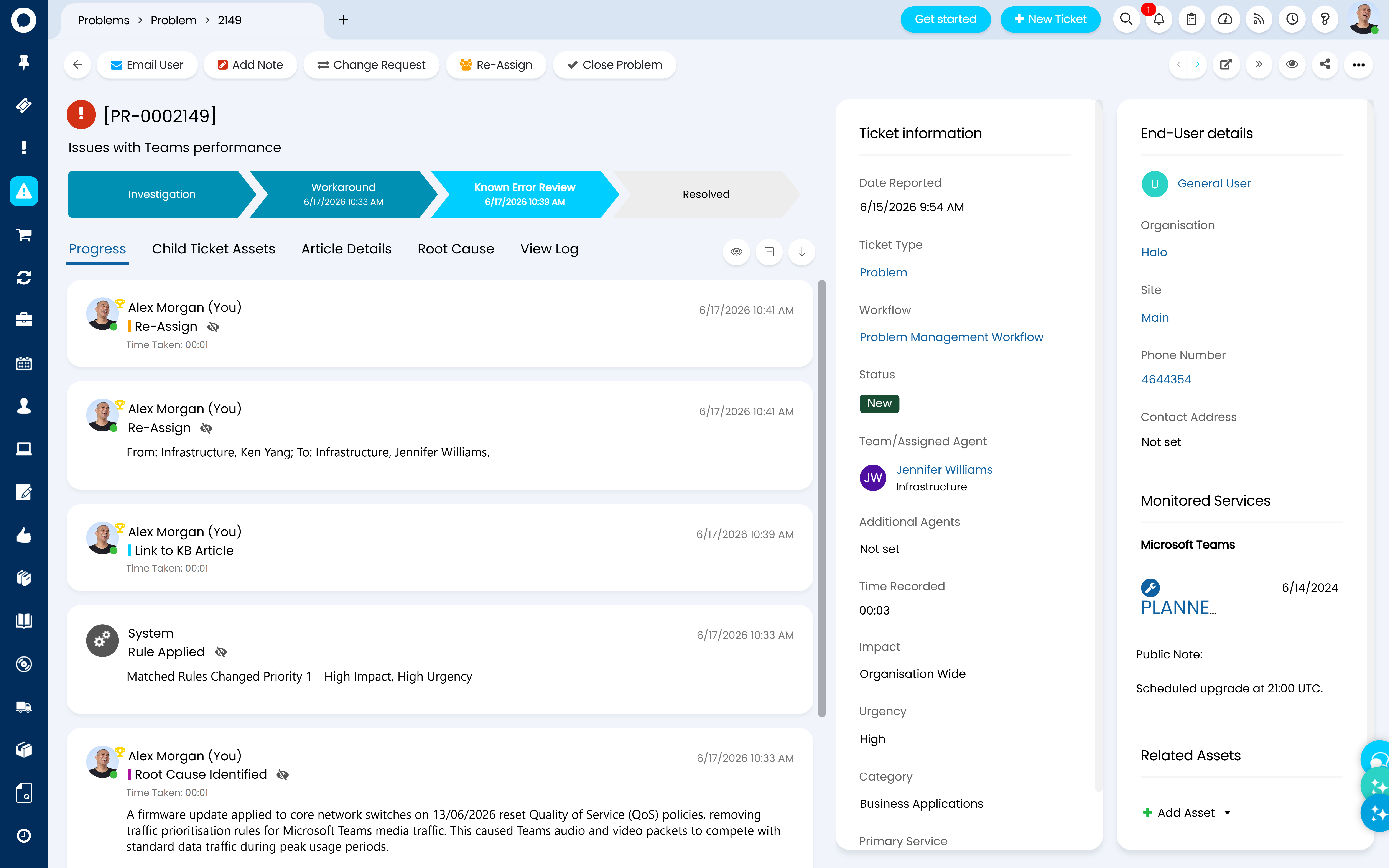
Stop the same issues coming back again and again. Halo helps teams link related incidents, investigate the cause, record known errors and track permanent fixes. Problems can be connected to affected services, assets, changes and knowledge articles, giving teams a clearer view of what is happening and what needs to be fixed properly. Additionally, you can manage related incidents from a single problem records, to provide known error documentation and workarounds to end users from a single record.

Explore Problem Management

Understand every service connection

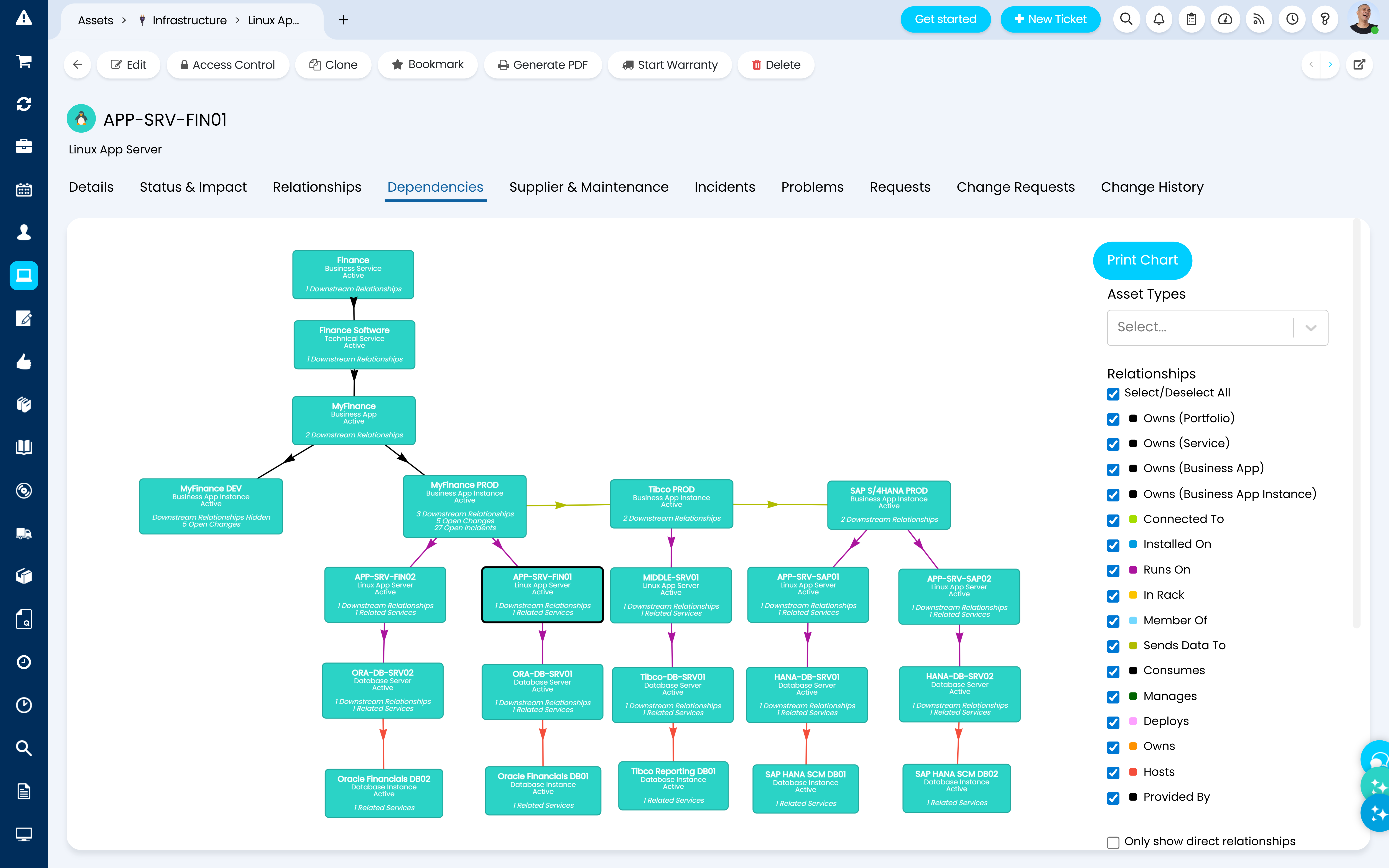
See what you support and how it all fits together. Halo brings assets, configuration items, services, users and relationships into one view, so teams can understand the impact of incidents, problems and changes. Asset and CI data can also be kept up to date through discovery and integrations, and then be leveraged directly in other supported ITIL processes, by driving approval and assignment automation.

Explore Assets & CMDB

Turn service data into insight

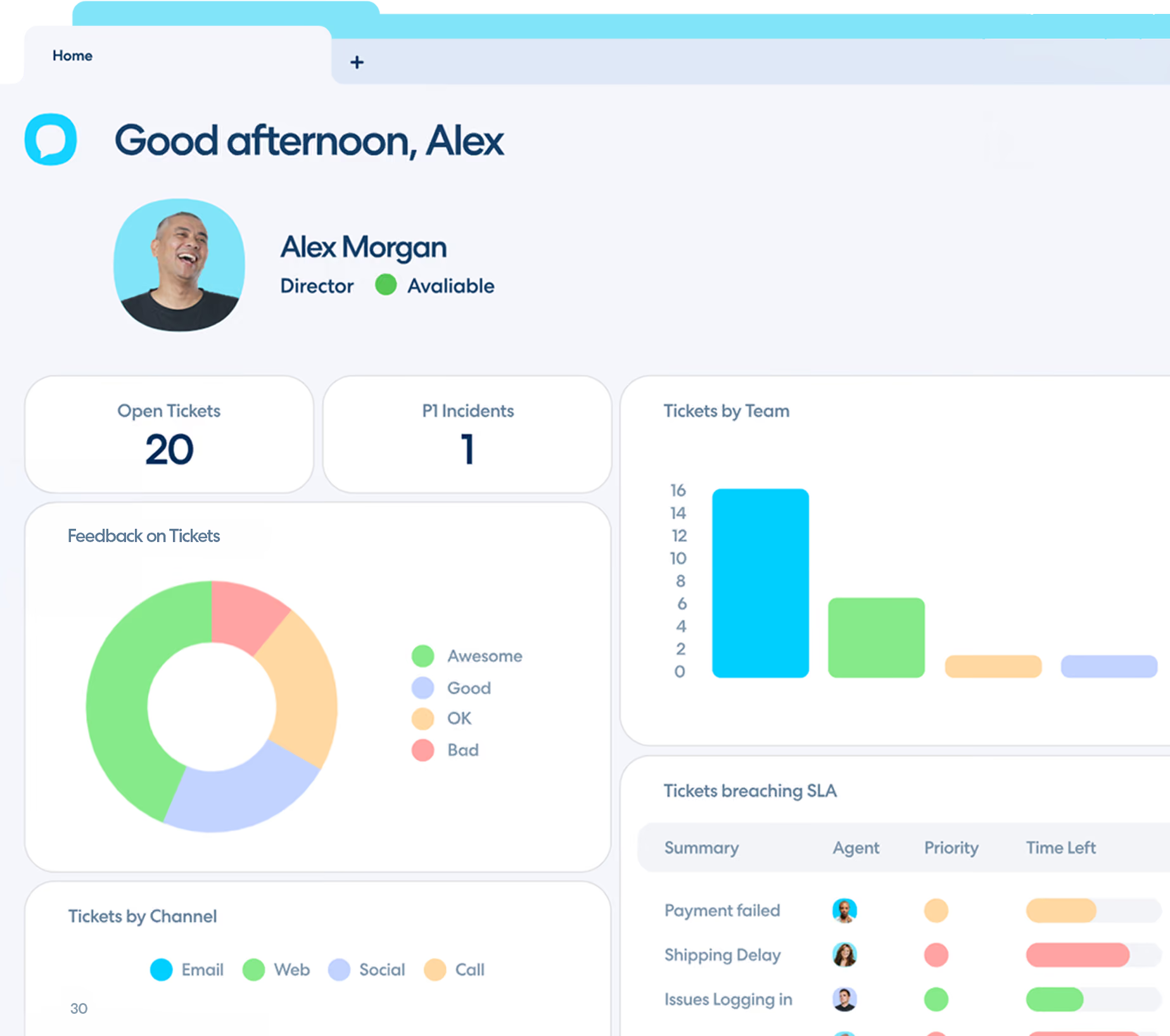
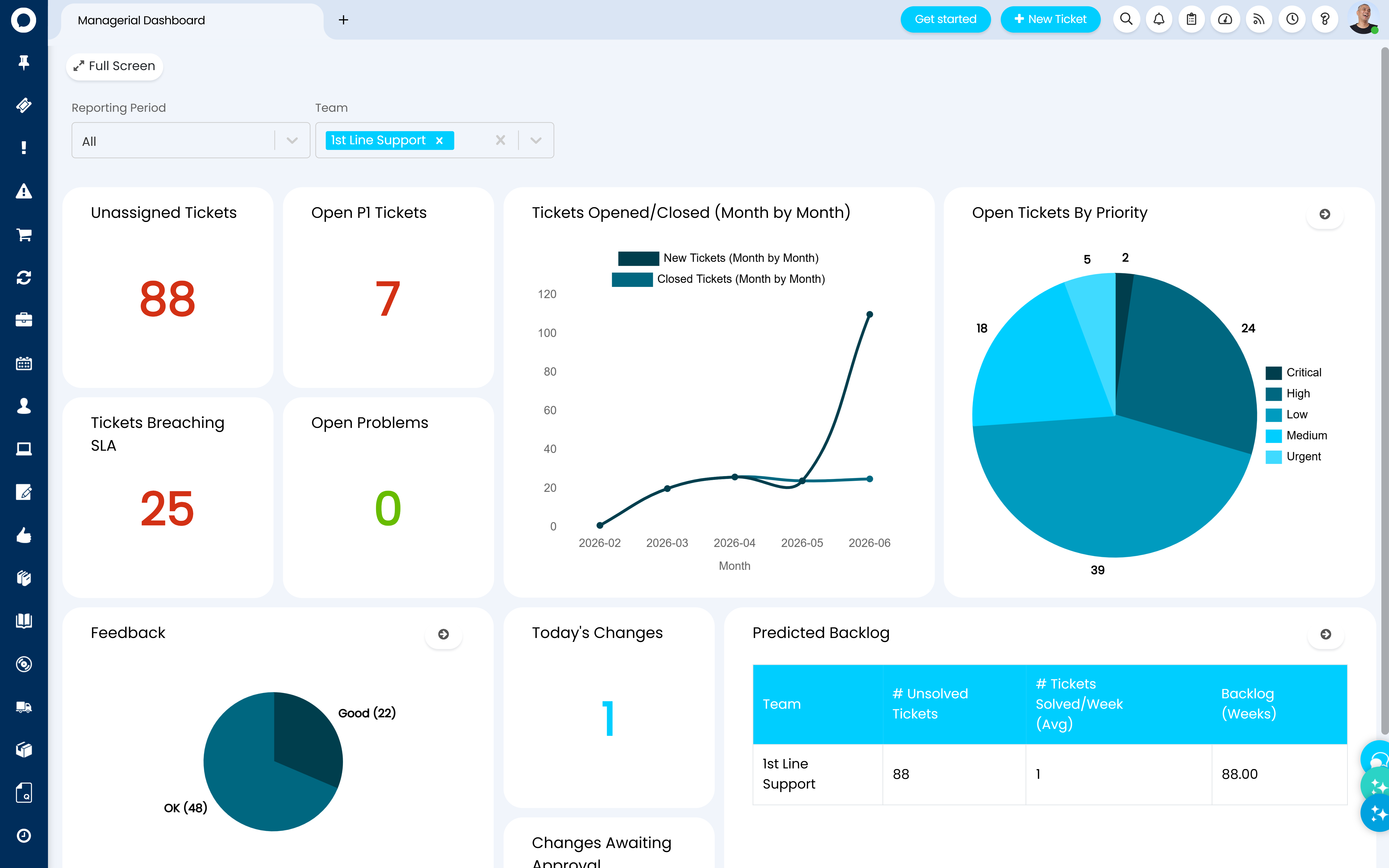
To get the visibility you need without starting from scratch, Halo includes 1,000+ out-of-the-box reports covering tickets, SLAs, teams, services, assets, changes, problems, customer satisfaction and more. Teams can use ready-made dashboards, schedule reports, track trends and spot where work is building up. Reports can also be built from the ground up with a no-code query builder, so each team can measure what matters to them.

Explore Reporting & Analytics
Why Halo?

Enterprise power without the enterprise overhead.

Halo gives IT teams the depth of a modern ITSM platform without the complexity, cost and upgrade burden that usually comes with enterprise suites.
One platform, not a module store.
Halo’s all-inclusive pricing means all ITSM capability is included from day one. Incident, request, change, problem, asset, CMDB, knowledge, automation, reporting and self-service all sit in one platform. The more processes you build into Halo, the more value you get from the same investment.
Built for enterprise scale.
Halo gives large IT teams the flexibility to adapt the platform around their services, teams, workflows and operating model, without locking them into heavy custom development. All personalised configuration stays upgrade-safe, so you can keep evolving the platform without slowing down future releases.
Configure fast. Keep control.
Admins can build forms, fields, workflows, portals, rules, automations and reports without code. That means IT teams can adapt Halo as processes change, instead of relying on consultants for every new queue, field or approval. For complex organisations, federated administration and sub-admin permissions let departments, regions or service owners manage their own areas, while platform admins keep control of the wider set up.
Architecture built for AI.
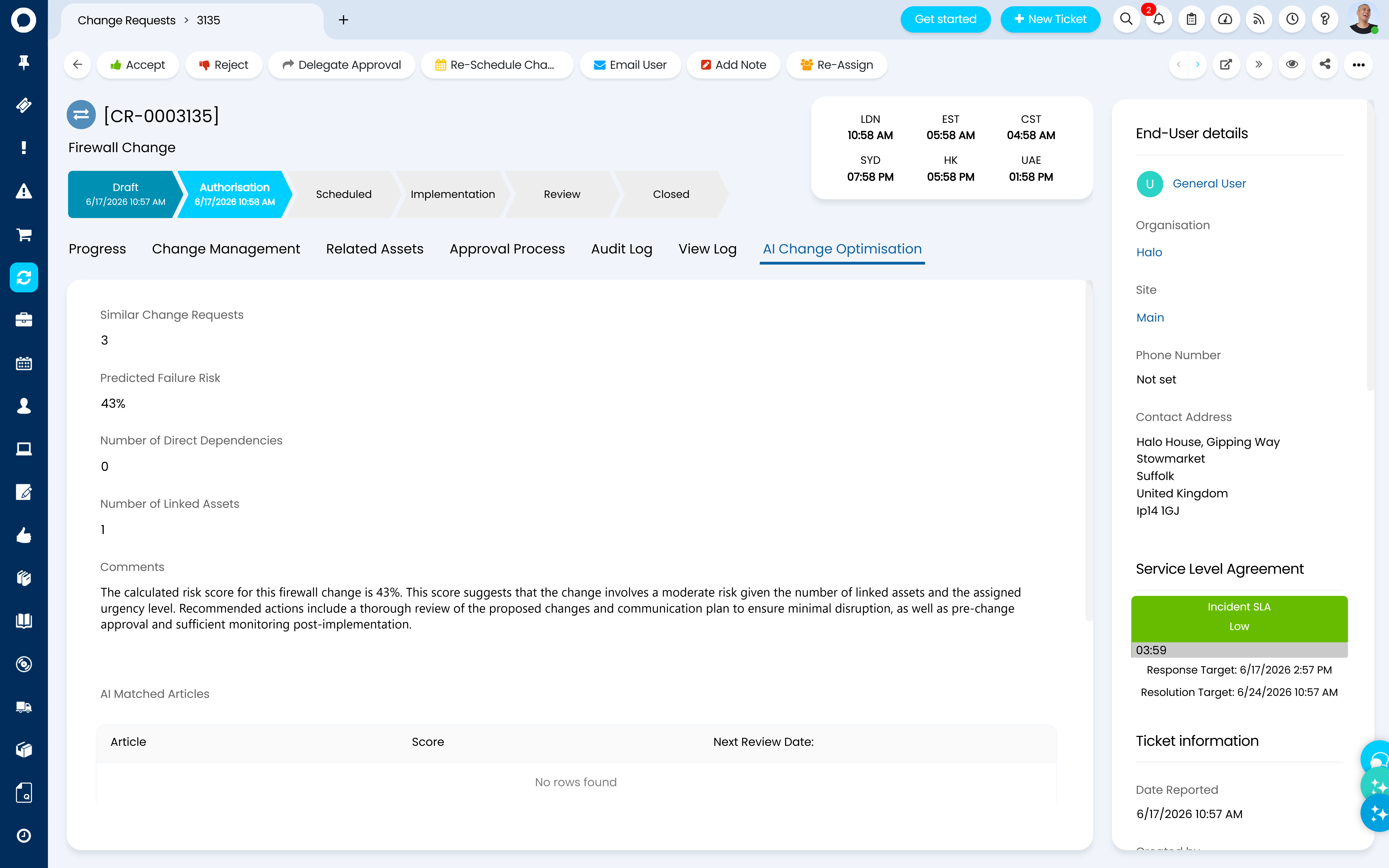
Halo is API-centric across the platform, making it ready for shift-left service delivery, automation and AI-led operations. AI agents and external tools can orchestrate work, trigger actions and update Halo as the system of record, giving IT teams a future-ready foundation for how service management is evolving.
One price, all features, included as standard.
Ticketing
Automation
AI & Copilot
Reporting
Asset Management
Integrations
SLA Management
Self-Service Portal
Competitor
Base
Growth
Pro
Enterprise
Enterprise
Enterprise
Enterprise
Unavailable
Migration & Implementation

Whatever you're on today, we've moved teams off it thousands of times.

A dedicated migration team that has lifted teams off every major vendor, every legacy platform and every patchwork of spreadsheets.

1K +

Migrations Delivered

100 %

Data Integrity

Any

Source platform
Customer Stories

What teams say after the switch

Browse Customer Stories
Resources

Driven by innovation

From independent analyst recognition to industry accreditations and product innovation, explore the latest developments from Halo.

Frequently asked questions

FAQ Question 1
FAQ Answer 1
What makes Halo different from traditional enterprise ITSM platforms? Halo gives IT teams the depth of an enterprise ITSM platform without the cost, complexity and dependency that often comes with larger suites. Core ITSM capability is included in one platform, so teams can manage incident, request, change, problem, knowledge, assets, CMDB, SLAs, automation and reporting without constantly adding separate modules. --- Is Halo suitable for enterprise ITSM? Yes. Halo is built for complex IT environments with multiple teams, services, sites, approval paths, workflows and user groups. It gives enterprise IT teams the control and flexibility they need, while keeping the platform easier to configure, maintain and evolve. It also supports advanced automation use cases with built-in runbooks and orchestrated processes. --- How does customisation affect upgradeability in the Halo platform? Halo is designed around configuration rather than heavy custom code. Teams can tailor workflows, forms, fields, portals, automation, reporting and rules to fit their processes, while staying on an upgrade-safe path. That means customers can adapt the platform without creating the technical debt that often slows down future releases. --- What AI capabilities are built into Halo? Halo AI is included as part of the base licence, with no additional Halo consumption-based pricing, and it includes a built-in OpenAI LLM connection at no extra cost. Customers can also connect their chosen AI provider using their own API key, giving them control over usage while unlocking advanced AI use cases across the platform. Halo AI can help with ticket triage, categorisation, summarisation, sentiment analysis, suggested replies, knowledge suggestions, resolution guidance, search, automation and workflow assistance, helping teams reduce manual effort without adding another paid module. --- What is included in Halo's ITSM pricing? Halo uses an all-inclusive licensing model, so core ITSM functionality is included rather than split into separate modules. The more you build into the platform, the more value you get from the same investment, without hidden add-ons for the capabilities most IT teams need to run service management properly. --- Can Halo support ITIL-aligned processes? Yes. Halo supports ITIL-aligned processes including incident management, service request management, change management, problem management, knowledge management, service level management, asset management and CMDB. Teams can use Halo to standardise best practice while still adapting workflows around their own operating model. --- Can internal teams manage Halo without relying on consultants? Yes. Halo is built so internal admins can configure and maintain the platform themselves. Admins can build forms, fields, workflows, portals, rules, automations and reports without code. For larger organisations, federated administration and sub-admin permissions also allow departments, regions or service owners to manage their own areas while central IT keeps control of the wider platform. --- Is Halo ready for the future of AI-led service management? Halo is built around an API-centric architecture, making it ready for a future where AI agents do more than suggest answers. AI agents and external automation tools can interact with Halo, trigger workflows, update records, route work, surface knowledge and coordinate activity across teams, while Halo remains the trusted system of record. This gives organisations a strong foundation for shift-left support, intelligent automation and agent-led service delivery as AI capabilities continue to evolve. --- How quickly can Halo be implemented? Halo is designed to be configured quickly without turning every deployment into a long transformation programme. Timelines depend on scope, data migration and integrations, but the platform is built to help teams move fast, prove value early and expand over time.