





































































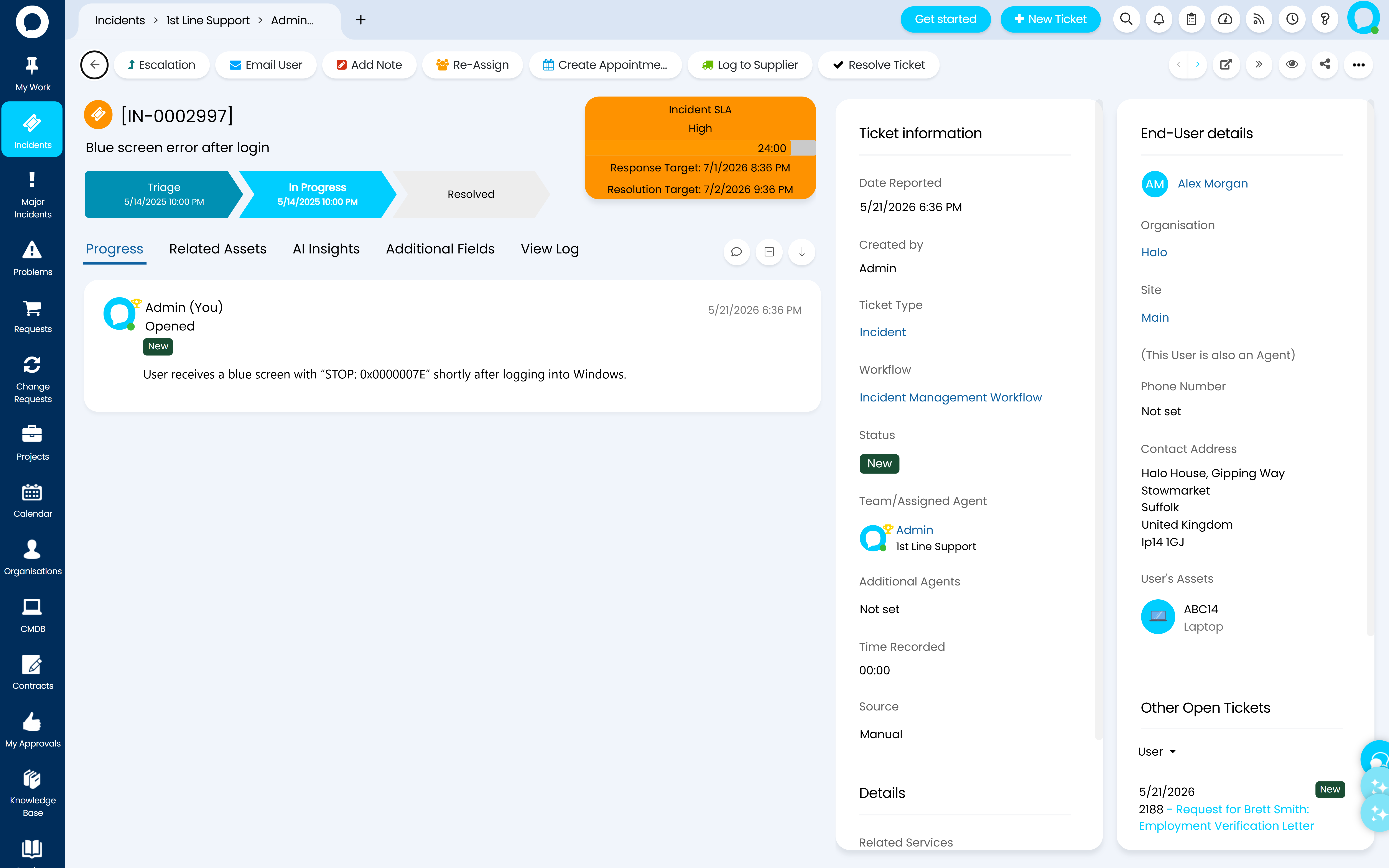











Structured resolution from the moment a ticket is raised
Every incident that enters Halo follows a structured, ITIL-aligned resolution process from the moment it is logged. Automated classification, priority assignment and team routing happen instantly, without manual intervention. The right person picks up the right issue at the right time, every time, with no sorting, no guesswork and no delays between logging and action.

SLA management built in, not bolted on
Halo gives you complete control over your service level agreements. Set individual SLA targets by ticket type, priority, team or customer group. Automated escalation rules trigger when targets are at risk, ensuring breaches are flagged before they happen rather than reported after. Every SLA is tracked in real time, giving service managers the visibility they need to protect performance and demonstrate delivery against commitments.

Full visibility across every incident
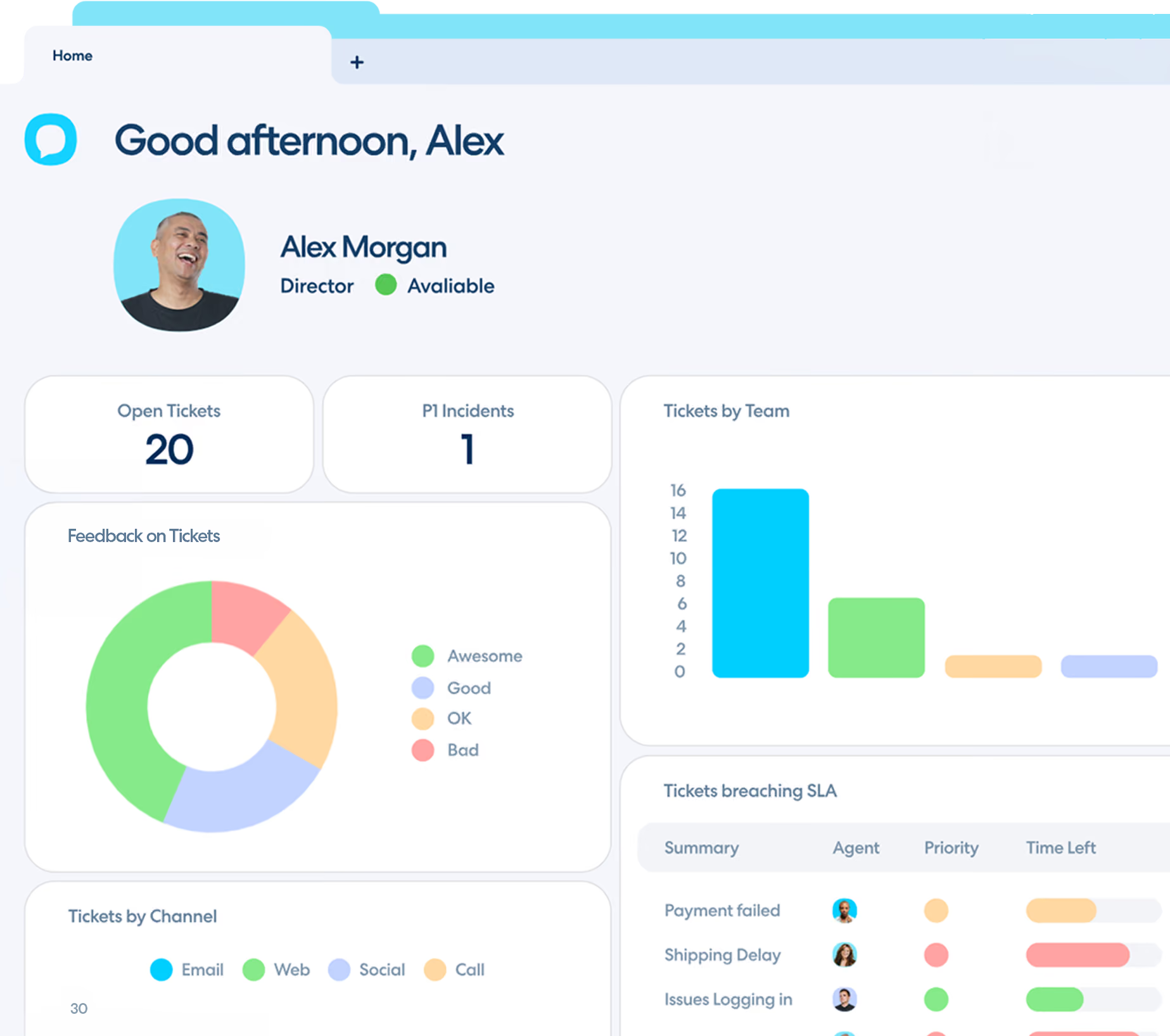
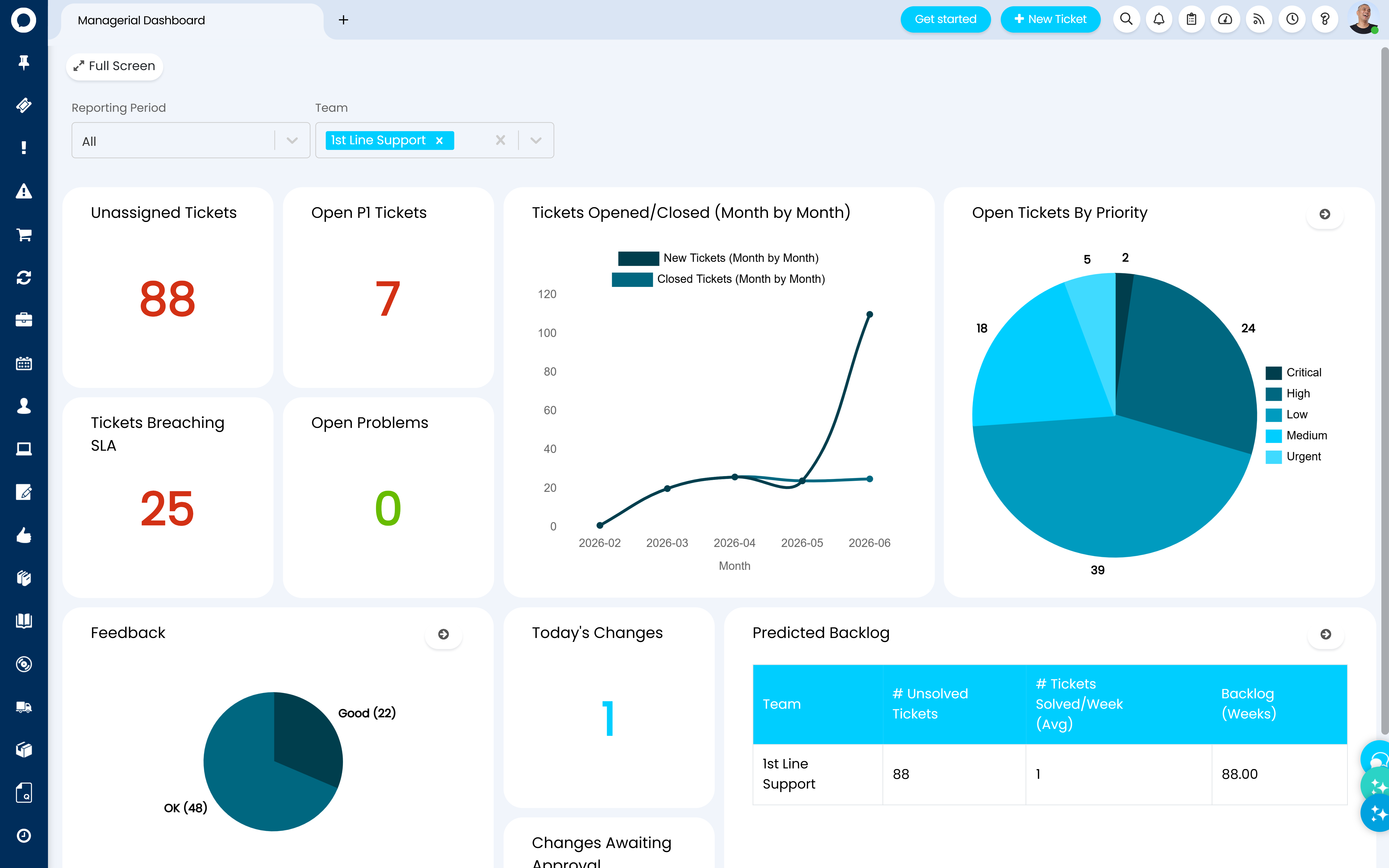
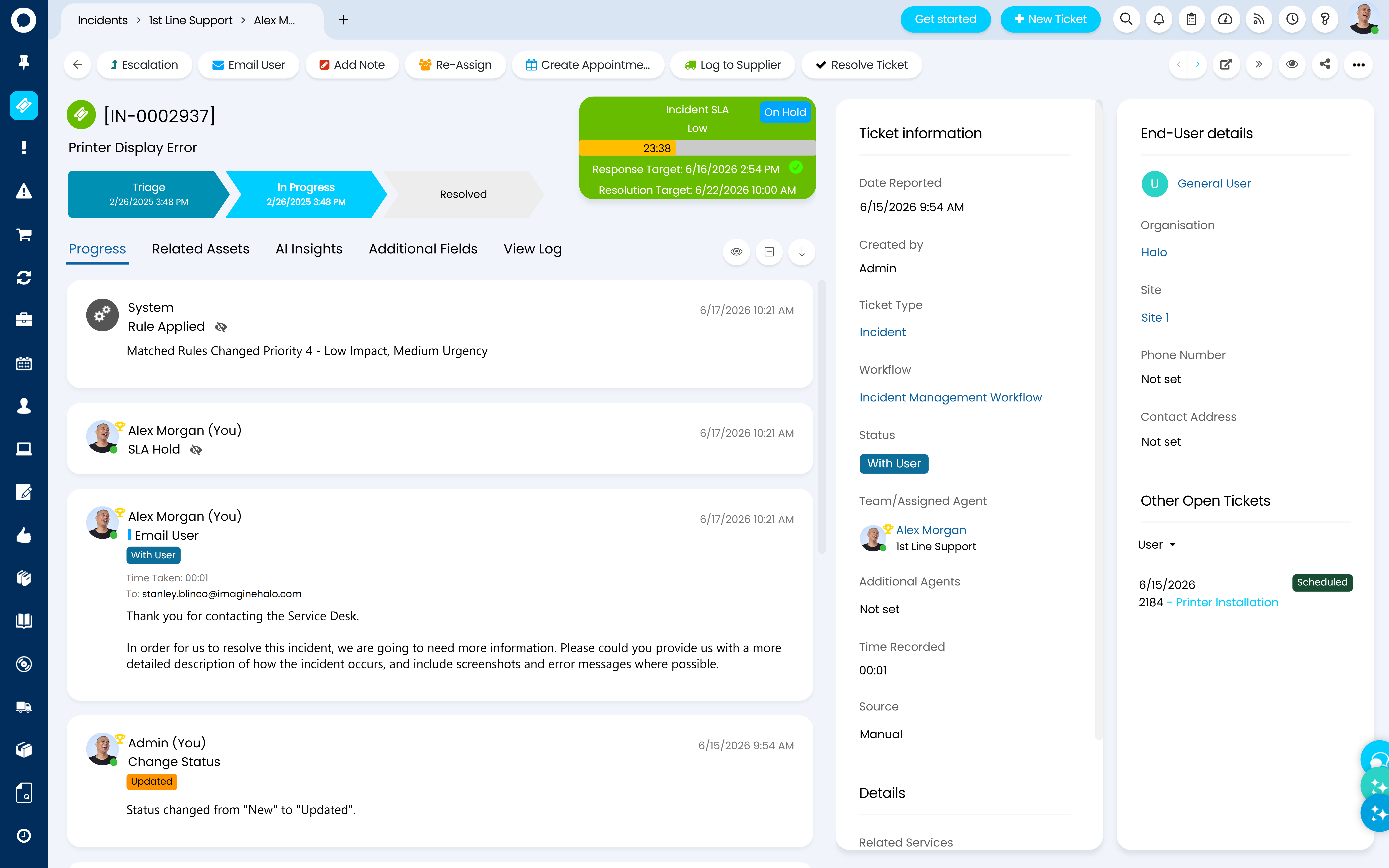
From the moment a ticket is raised to the moment it is resolved, every action, update, communication and decision is captured in a single, chronological timeline. Service managers get a real-time view of every open incident across every team, every site and every priority level, with dashboards that surface what matters most without requiring manual reporting. Nothing falls through the gaps. Nothing goes unseen.

AI that accelerates every resolution
Halo AI is active from the moment an incident is logged. Intelligent triage classifies and routes tickets without manual sorting. AI-suggested knowledge articles surface relevant resolutions for analysts while they are working on the ticket. Automated resolution recommendations draw on historical data to identify the most likely fix. The result is faster resolution, less duplicated effort and a consistently higher first-contact resolution rate across every team.
Automated ticket routing
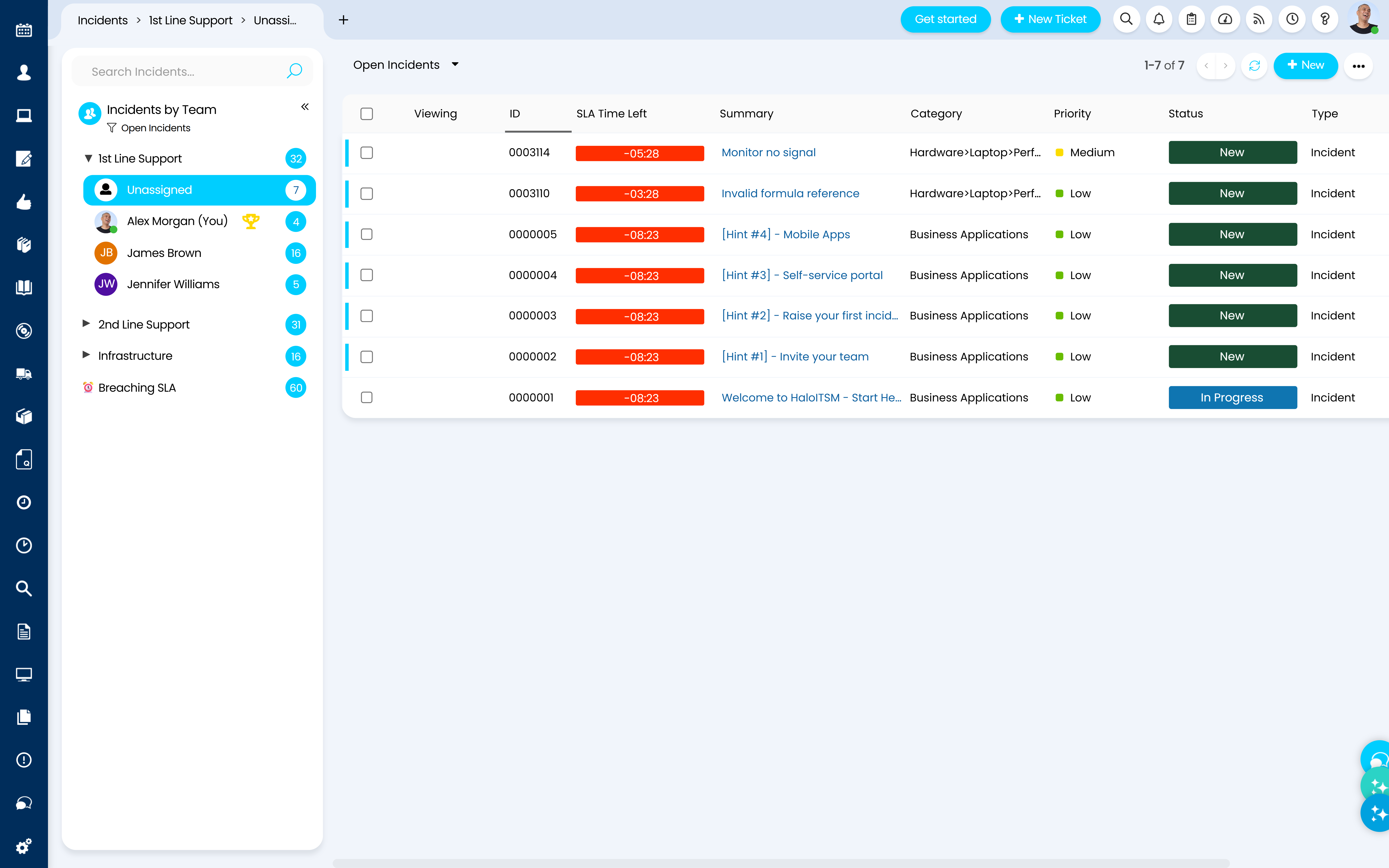
Every incident that arrives in Halo is automatically classified, prioritised and routed to the right team or individual based on rules you define. Routing logic can be built around ticket type, keyword, source, customer, time of day, workload balance or any combination of criteria. Manual ticket sorting is eliminated from the moment your team goes live, and every incident starts moving toward resolution immediately.
SLA and OLA management
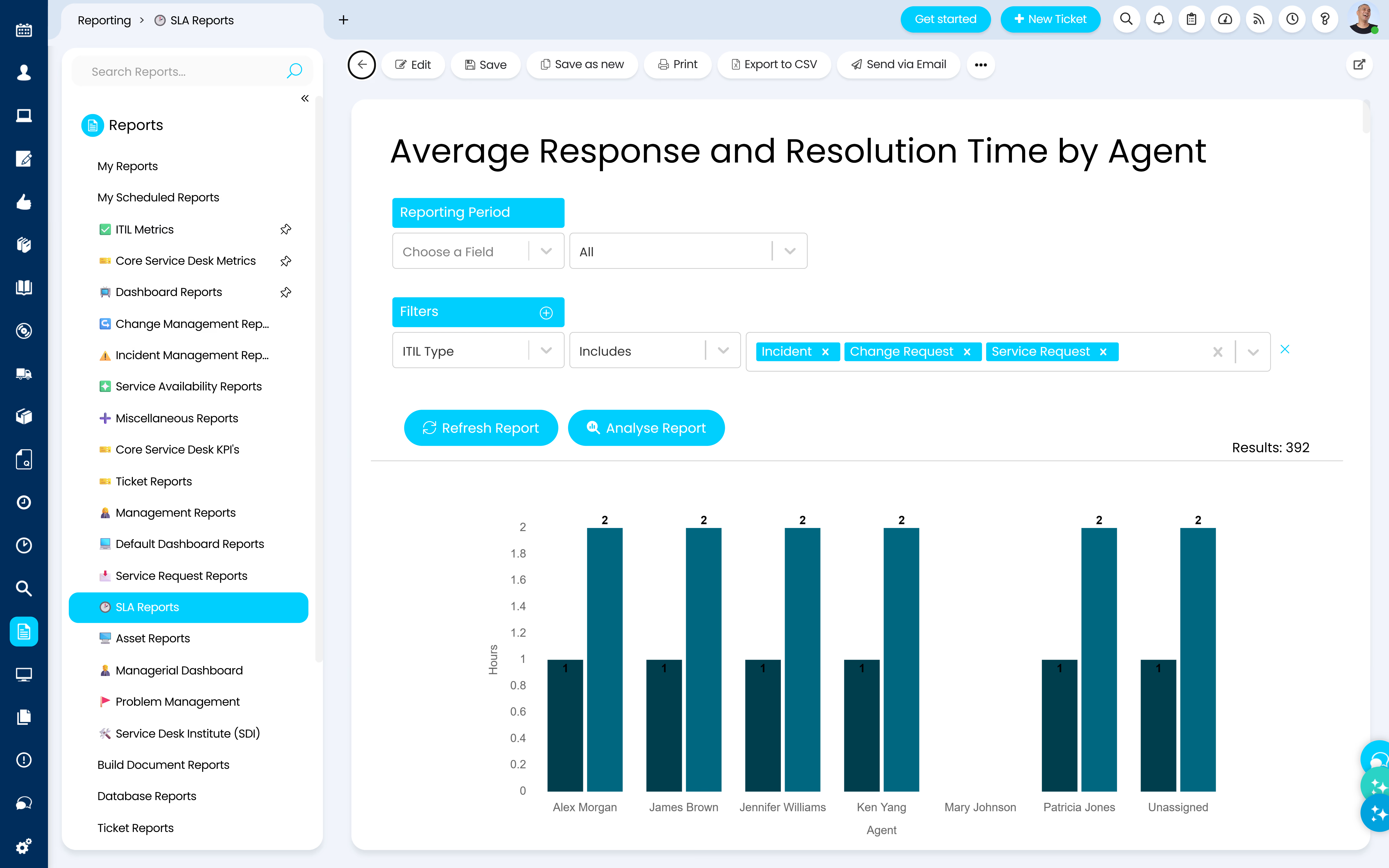
Define unlimited service level agreements and operational level agreements across any combination of ticket type, priority, customer group or team. Halo tracks every SLA in real time, triggers automated warnings as targets approach and escalates appropriately when thresholds are breached. SLA performance is reported in real time on dashboards and through scheduled reports, giving service managers the evidence to demonstrate delivery and identify where improvements are needed.
Multi-channel ticket capture
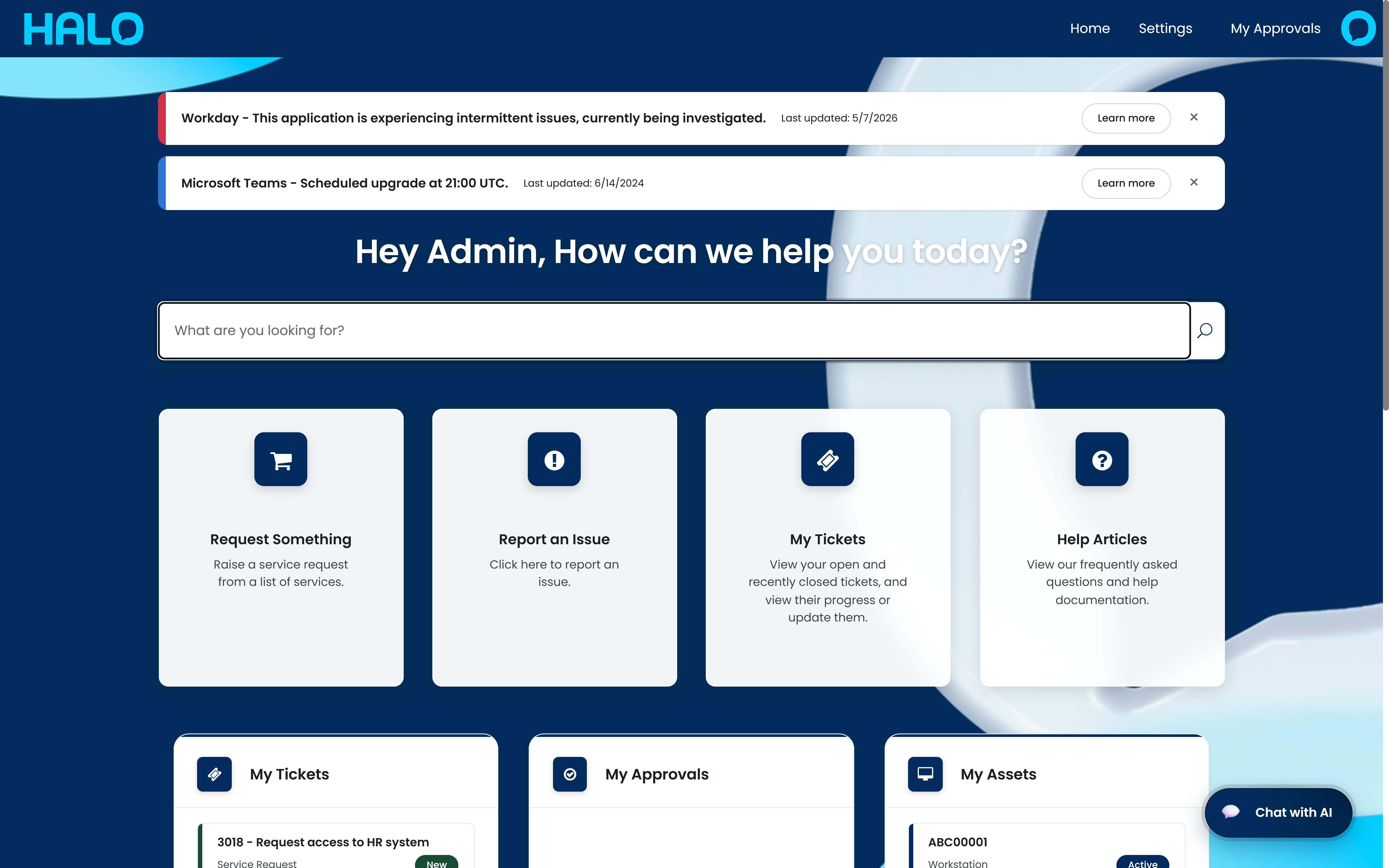
Incidents reach Halo from wherever your users are. Email, self-service portal, Microsoft Teams, phone calls, API integration and automated monitoring alerts all create tickets in the same system, with the same process applied regardless of the source. Every channel is tracked and reportable, giving you a complete picture of demand across the organisation without managing multiple intake points.
Real-time dashboards and reporting
Halo's drag-and-drop dashboard builder gives every team member and service manager the visibility they need, configured around the metrics that matter to them. Drill down from organisation-wide incident volumes to individual team queues, SLA performance, resolution times, backlog trends and first-contact resolution rates. Scheduled reports deliver the insight senior stakeholders need automatically, without anyone having to compile data manually.
Full audit trail and history
Every action taken on every incident is automatically recorded in a tamper-proof audit trail. Every status change, assignment, communication, escalation, note and resolution is timestamped and attributed to the individual who made it. The complete history of every ticket is always accessible, giving service teams the context they need when picking up an in-progress ticket and giving compliance and governance teams the evidence they need for audits, reviews and regulatory requirements.
Customer Story
From ServiceNow to HaloITSM: How inlumi Gained Efficiency, Flexibility, and Cost Savings
As inlumi grew, they needed an ITSM solution that could keep pace. Frustrated by rising costs, complex customisation, and declining support with ServiceNow, they made the switch to HaloITSM.
See Customer Story
30%
Reduction in licensing costs

ITIL 4 aligned out of the box
Halo Incident Management is built on the ITIL 4 framework as standard. Best practice processes for incident categorisation, prioritisation, escalation, resolution and closure are all configured and ready to use from day one. There is no need to build ITIL processes from scratch, adapt a generic ticketing tool or pay a consultant to implement a framework that should already be there.

Configured by your team, not a developer
Every aspect of Halo Incident Management, from ticket types and routing rules to SLA targets and escalation paths, is configured through a visual no-code interface by your own administrators. No developers required. No specialist platform knowledge needed. Changes happen when your processes need them to, at no extra cost and with no external dependency.

Scales from a single service desk to a global operation
Halo Incident Management handles everything from a single-site service desk managing hundreds of tickets a month to complex, multi-geography enterprise operations managing millions annually. Multi-site configurations, multi-language support, regional SLA frameworks and role-based access control are all included as standard, meaning the platform grows with your organisation without requiring a migration or a platform change.


Intelligent triage and auto-classification
Halo AI reads every incoming incident the moment it arrives, classifying it by type, category and priority without any manual intervention. Routing rules then direct it to the right team or individual automatically. For high-volume service desks where manual triage creates delays and inconsistency, AI classification means every ticket starts moving toward resolution immediately, with the right priority and the right owner assigned before a human has even opened the queue.
Resolution recommendations from historical data
As analysts work on an incident, Halo AI analyses the ticket content and surfaces resolution recommendations drawn from similar historical cases. Rather than searching through previous tickets or knowledge articles manually, analysts see the most relevant suggested solutions directly within the ticket. First-contact resolution rates improve, average handle times reduce and institutional knowledge is shared across the team automatically, without anyone having to document it explicitly.
Virtual agent for end users
Halo virtual agent gives every person across your organisation a fast, intelligent first point of contact, available around the clock without any human intervention required. End users can raise incidents, check the status of existing tickets and find answers to common questions through a conversational interface that feels natural and immediate. The virtual agent deflects avoidable tickets before they reach the queue, reducing inbound volume and freeing your service team to focus on the incidents that genuinely need human attention.
FAQ Question 1

FAQ Answer 1


Faster resolutions for
every team with Halo
Try HALO for free today, the only platform to change the way the world works.