















































































Capture knowledge straight away
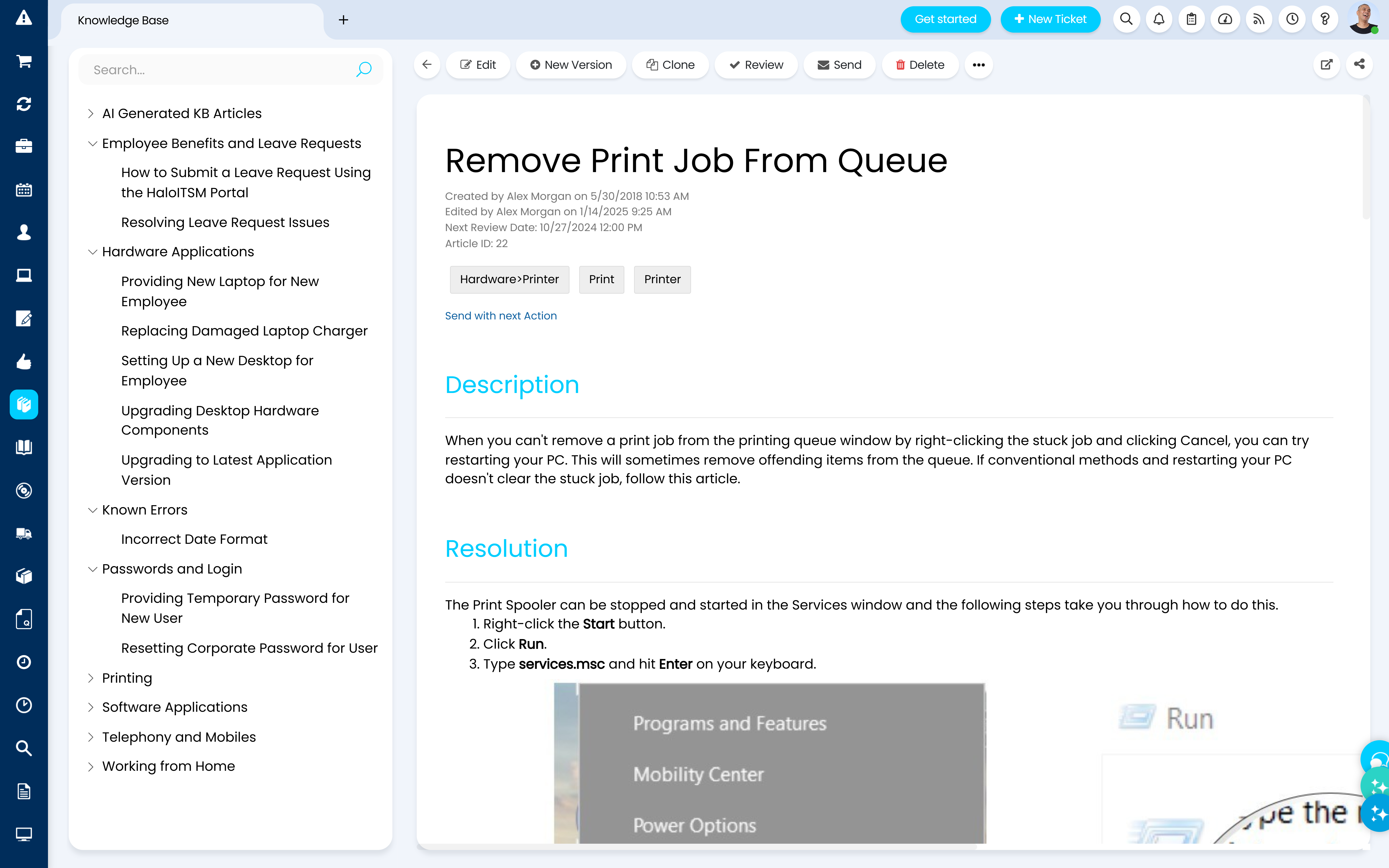
Every resolution your team reaches, every workaround your analysts develop and every process your organisation defines is an asset. Halo Knowledge Management gives your team a structured, easy way to capture that knowledge at the moment of resolution, turning individual expertise into organisational intelligence. When team members move on, when processes change or when new colleagues join, the knowledge stays.

Surface the right answer at exactly the right moment
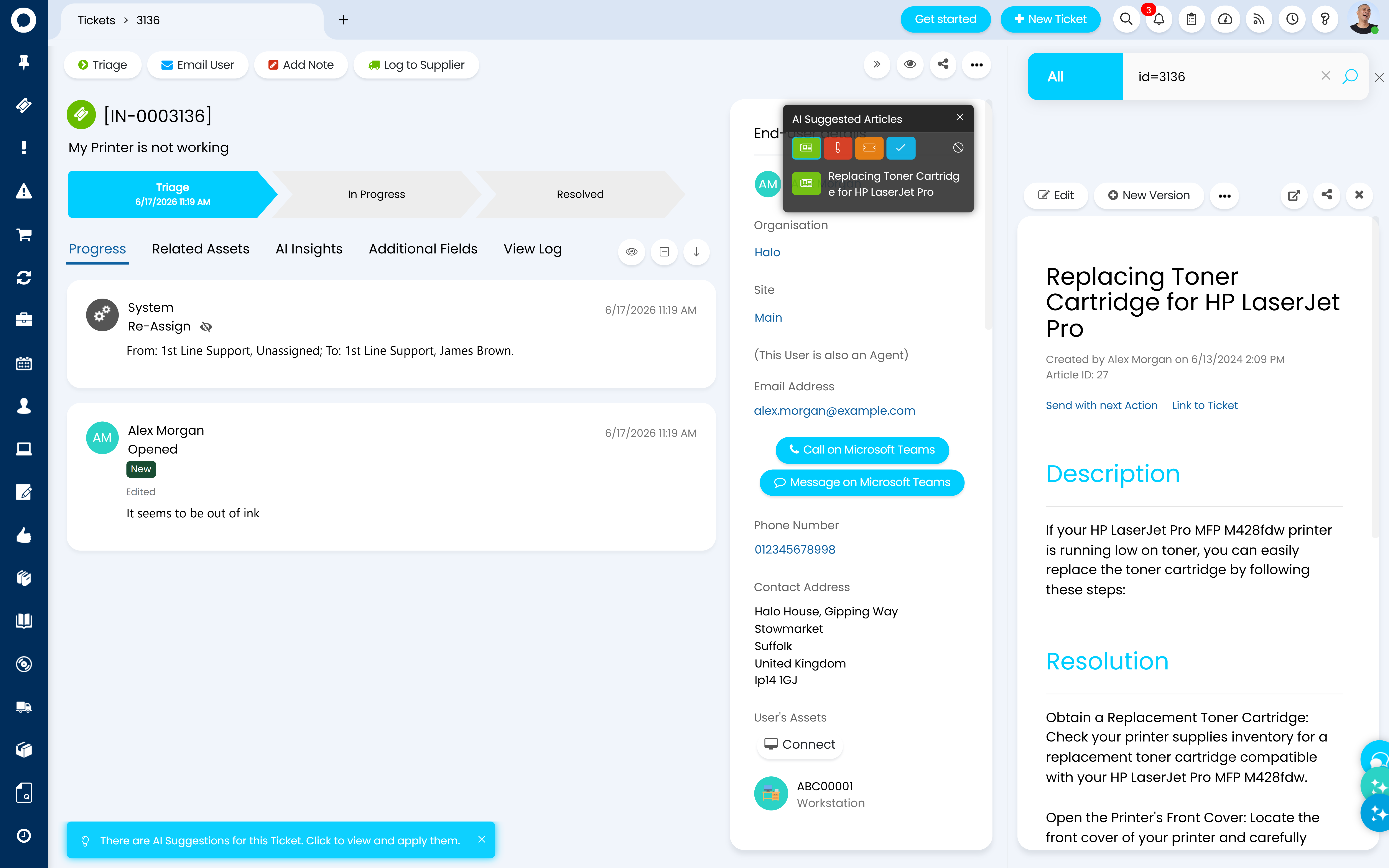
Halo connects knowledge directly to the moment it is needed. When an analyst picks up a ticket, AI-suggested articles surface the most relevant knowledge automatically from within the ticket view. When an end user starts to raise a request, the self-service portal shows relevant articles before the ticket is submitted. The right answer reaches the right person at the point of need, reducing resolution time and deflecting avoidable tickets.

Self-service that actually works
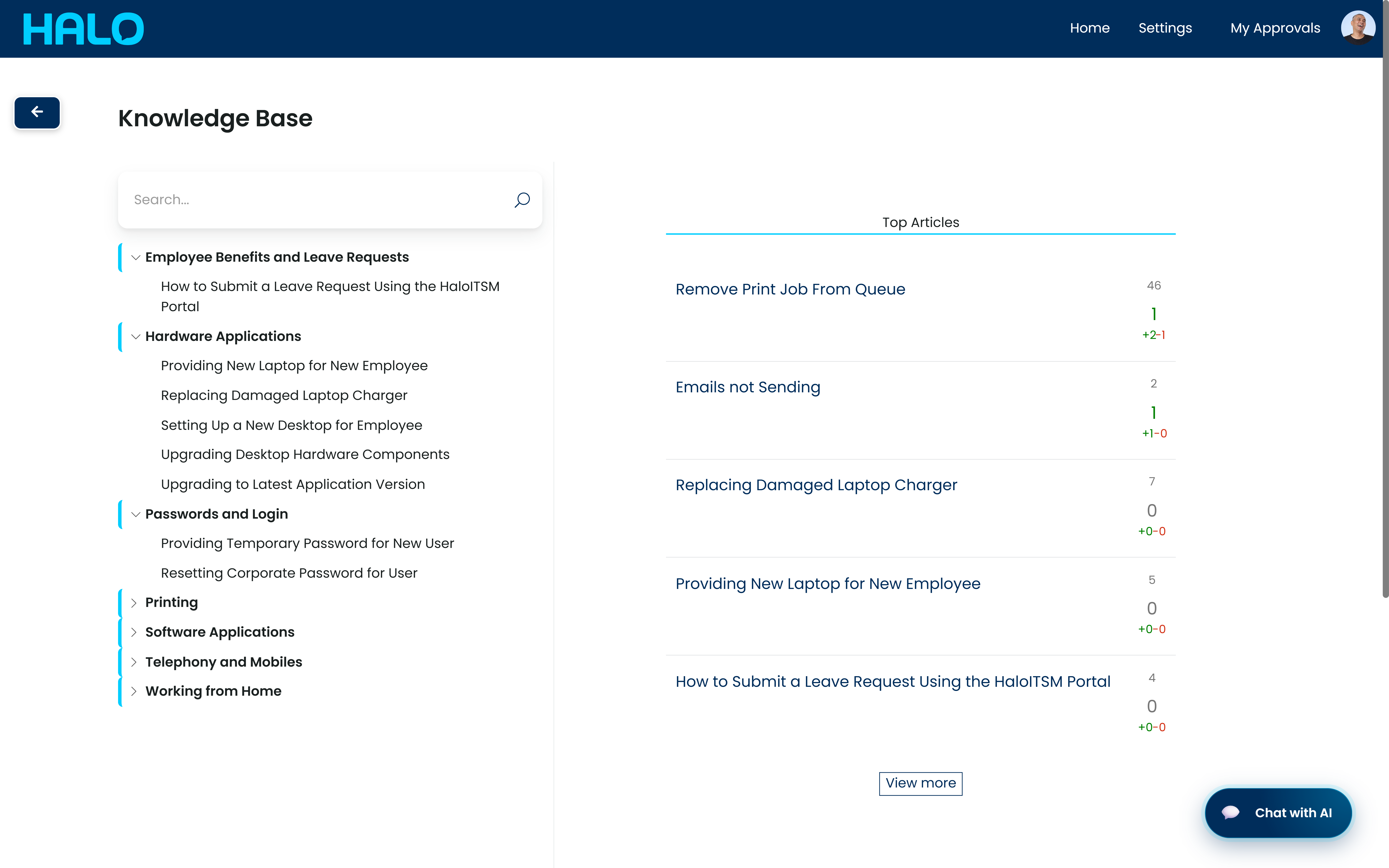
Most self-service portals fail because the knowledge base is incomplete, hard to navigate or out of date. Halo gives organisations the tools to build and maintain a knowledge base that end users genuinely trust and use. AI-powered search returns relevant results from natural language queries. Article feedback mechanisms identify outdated or unhelpful content. Knowledge base analytics show which articles are driving deflection and which gaps need filling.

A knowledge base for every team
Halo Knowledge Management supports separate knowledge bases for different teams, departments and audiences. IT knowledge is accessible to IT analysts and relevant end users. HR knowledge is available to HR teams and staff. Facilities knowledge is accessible to the estates team and building users. Every team maintains their own content, configured with the right visibility and access controls, all within the same platform.

Quality management built in
Knowledge without quality controls is noise. Halo gives knowledge managers the tools to maintain a high-quality, trusted knowledge base without manual review overhead. Article ratings surface the best content. Expiry dates trigger review reminders before articles become outdated. Knowledge ownership assigns responsibility for each article's accuracy. Usage analytics identify which content is used, which is ignored and which needs improvement.
AI-powered knowledge suggestions
Halo AI analyses the content of every ticket and surfaces the most relevant knowledge articles directly within the analyst workspace, ranked by relevance to the specific ticket. Analysts see suggested resolutions without searching manually, reducing resolution time and ensuring the knowledge base is used consistently. Self-service portal users see AI-suggested articles before submitting tickets, driving deflection at the point of need.
Knowledge capture at point of resolution
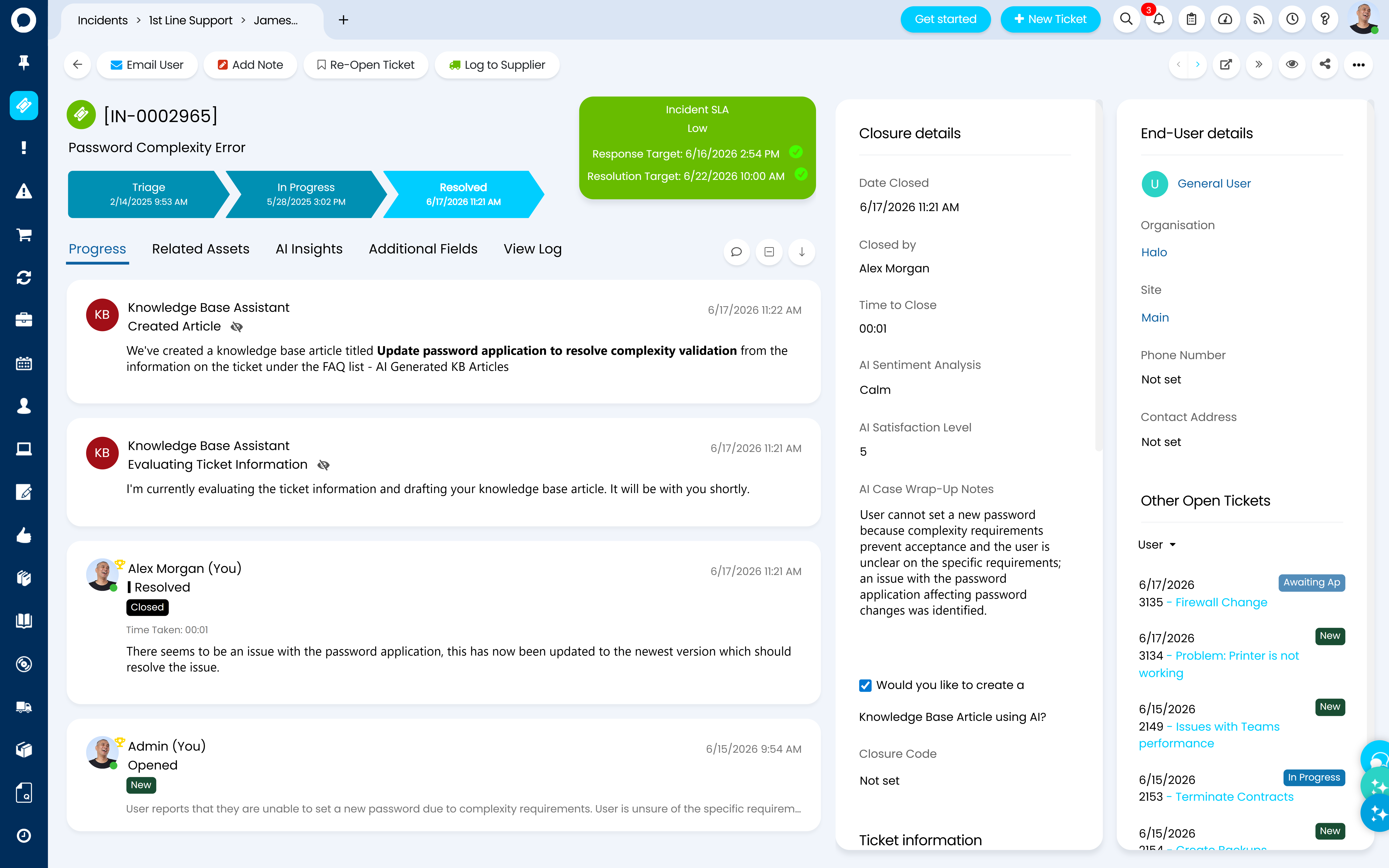
When an analyst resolves a ticket in Halo, they are prompted to create or update a knowledge article based on the resolution. Ticket content, resolution steps and relevant details are pre-populated into the article template, minimising the effort required to document the solution. Knowledge is captured at the moment it is most accurate and relevant, turning every resolved ticket into a potential knowledge asset.
Self-service knowledge base
Halo self-service portal includes a fully integrated knowledge base that end users can browse and search independently. Natural language search returns relevant articles from conversational queries. Category structures make it easy to find knowledge by topic or service area. AI suggestions surface relevant articles contextually when users begin to raise a request. Every interaction with the knowledge base is tracked and reported.
Article lifecycle and quality management
Halo gives knowledge managers complete control over article quality and currency. Expiry dates trigger review reminders before articles become outdated. Article ratings from analysts and end users surface the best content and flag articles that need improvement. Knowledge ownership assigns responsibility for each article's accuracy to a named individual or team. Review workflows ensure changes to critical articles go through an approval process before publication.
Knowledge base analytics
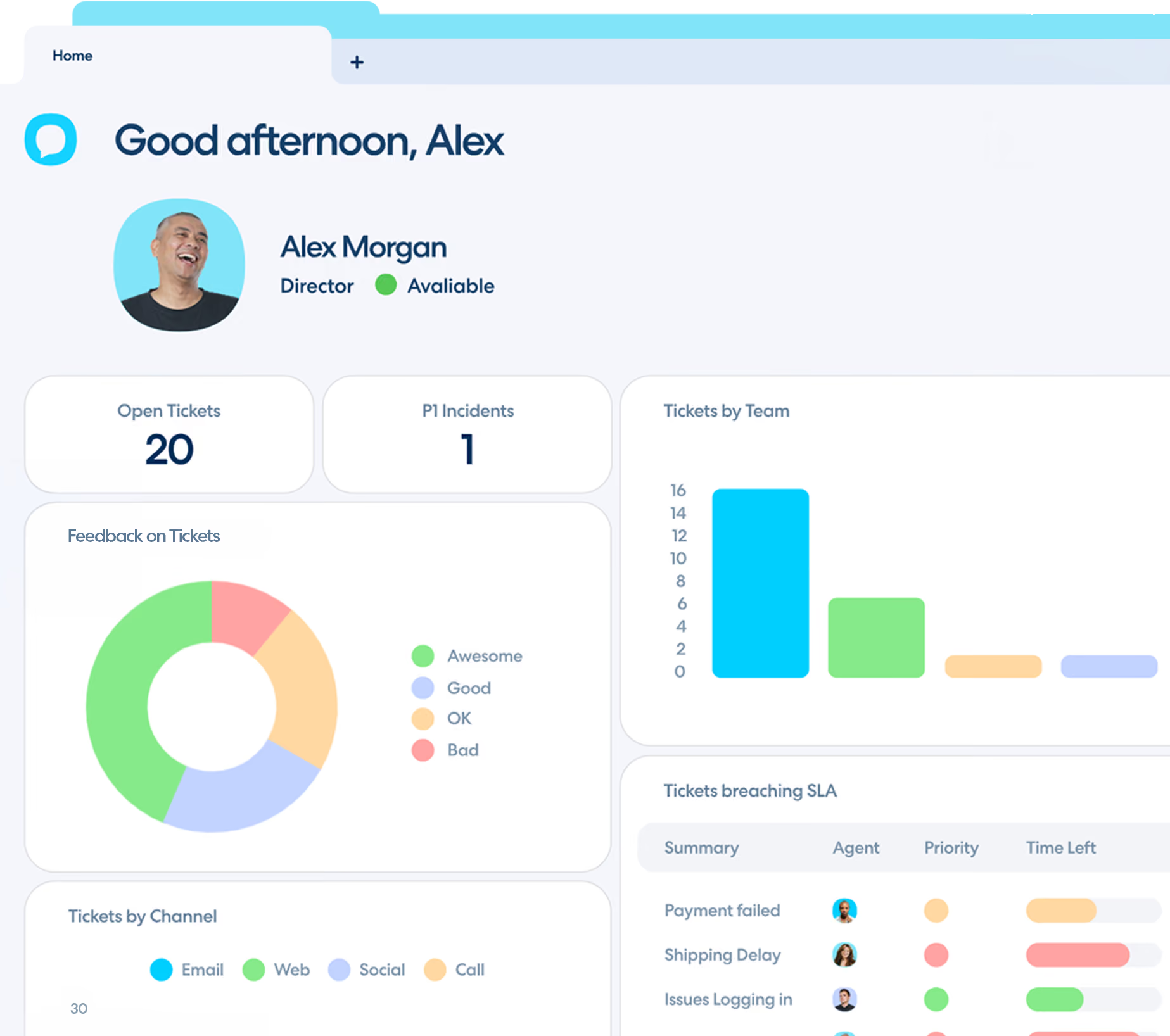
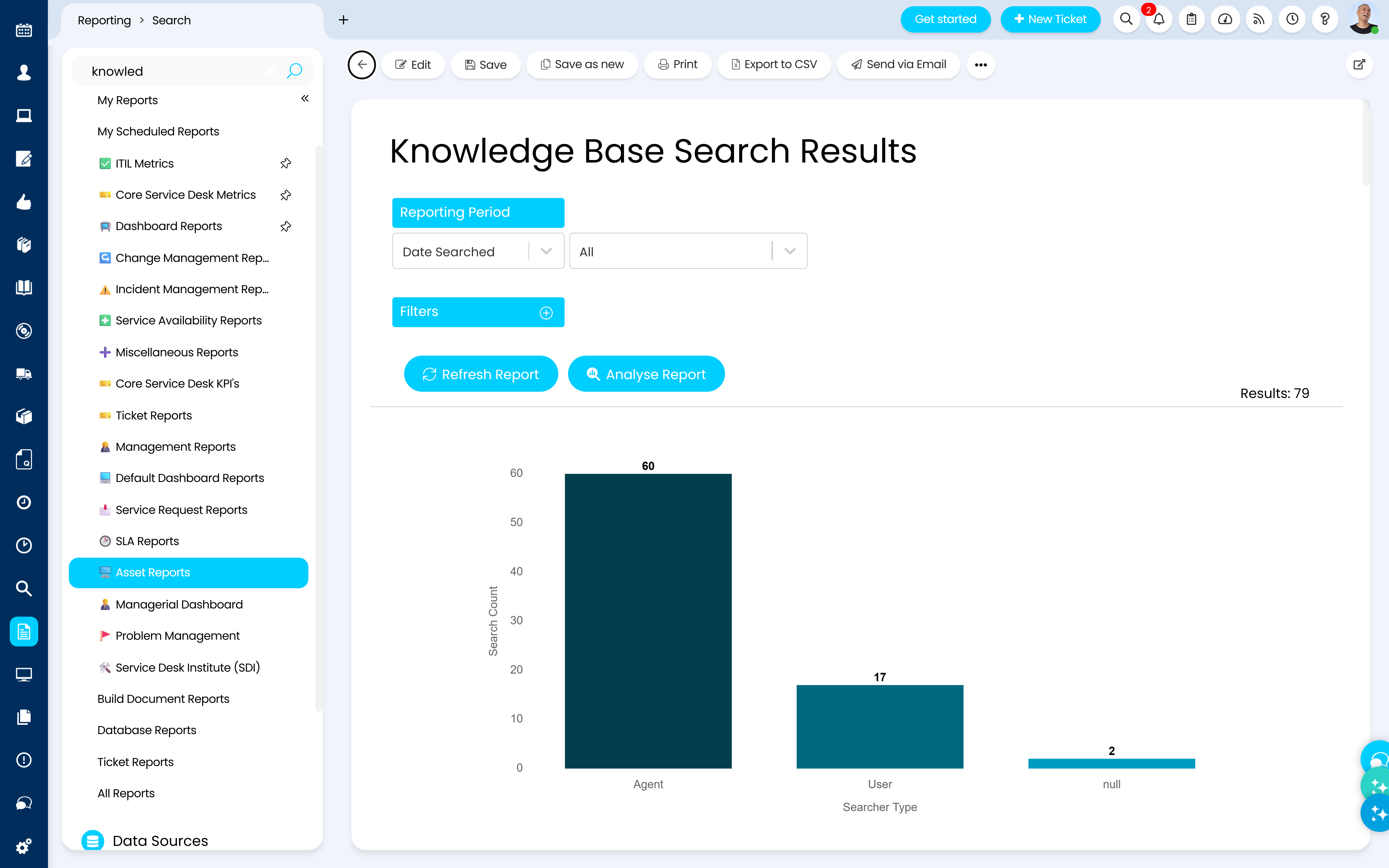
Halo knowledge base analytics show which articles are being used, which are driving self-service deflection, which are receiving negative ratings and where knowledge gaps exist based on ticket analysis. Knowledge managers use this data to prioritise content creation, identify outdated articles and demonstrate the business value of a well-maintained knowledge base.
Roles and permissions
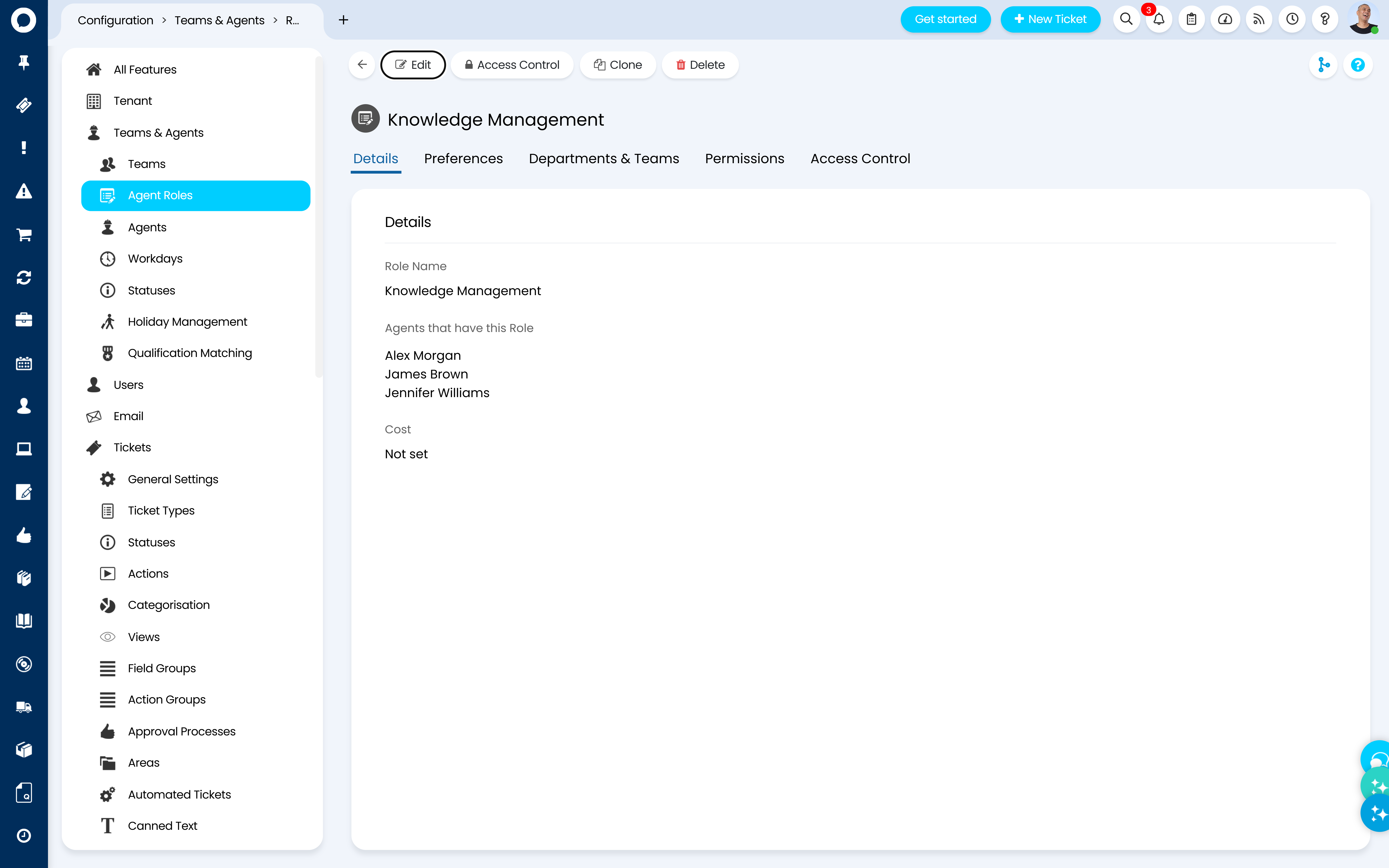
Halo knowledge management supports granular roles and permissions that control who can create, review, approve, publish and view knowledge content. Internal articles visible only to service teams sit alongside end-user-facing self-service content within the same platform. Sensitive knowledge for restricted teams is accessible only to those with appropriate permissions.
Customer Story
From ServiceNow to HaloITSM: How inlumi Gained Efficiency, Flexibility, and Cost Savings
As inlumi grew, they needed an ITSM solution that could keep pace. Frustrated by rising costs, complex customisation, and declining support with ServiceNow, they made the switch to HaloITSM.
See Customer Story
30%
Reduction in licensing costs

Integrated with AI from day one
Halo knowledge management is connected to AI from the moment it is used. AI-powered search, contextual suggestions and deflection analytics are all active from day one, ensuring knowledge is surfaced at the right moment without relying on analysts remembering to search for it.

Drives measurable self-service deflection
Halo knowledge base analytics measure and report the deflection impact of every article, showing service managers the direct relationship between knowledge investment and ticket volume reduction. The value of a well-maintained knowledge base is always visible and always measurable.

Works across every department
Halo knowledge management supports separate knowledge bases for every department running service management within the platform, each with their own content, permissions and analytics. One platform, multiple knowledge bases, a consistent management experience across every team.

Maintains quality without manual overhead
Halo knowledge quality tools, including expiry dates, article ratings, ownership assignment and review workflows, maintain the currency and accuracy of the knowledge base without requiring knowledge managers to manually review every article on a regular schedule.

Included in every Halo licence
Knowledge Management is included in every Halo licence at no additional cost. There are no separate knowledge management modules, no premium content management features and no additional licensing required for AI-powered knowledge suggestions or knowledge analytics.


Contextual knowledge surfacing
Halo AI analyses every ticket the moment it arrives and surfaces the most relevant knowledge articles within the analyst workspace, ranked by relevance to the specific content. Analysts see the most likely answers without searching. End users see suggested articles before submitting requests. The right knowledge reaches the right person at the right moment, automatically.
Automated article suggestions from resolved tickets
When an analyst resolves a ticket, Halo AI analyses the resolution content and automatically suggests a knowledge article structure, pre-populating the title, category, content summary and related article links based on the ticket data. The analyst reviews and refines the suggestion rather than creating from scratch, dramatically reducing the effort required to turn every resolved ticket into a knowledge asset.
Virtual agent for end users
Halo virtual agent gives every person across your organisation a fast, intelligent first point of contact, available around the clock. When an end user raises a query through the virtual agent, it searches the knowledge base in real time and returns the most relevant articles through a conversational response before attempting to create a ticket. Known answers are delivered instantly. Avoidable tickets simply do not get raised.
FAQ Question 1

FAQ Answer 1


Trust your knowledge
with Halo
Try HALO for free today, the only platform to change the way the world works.