



















































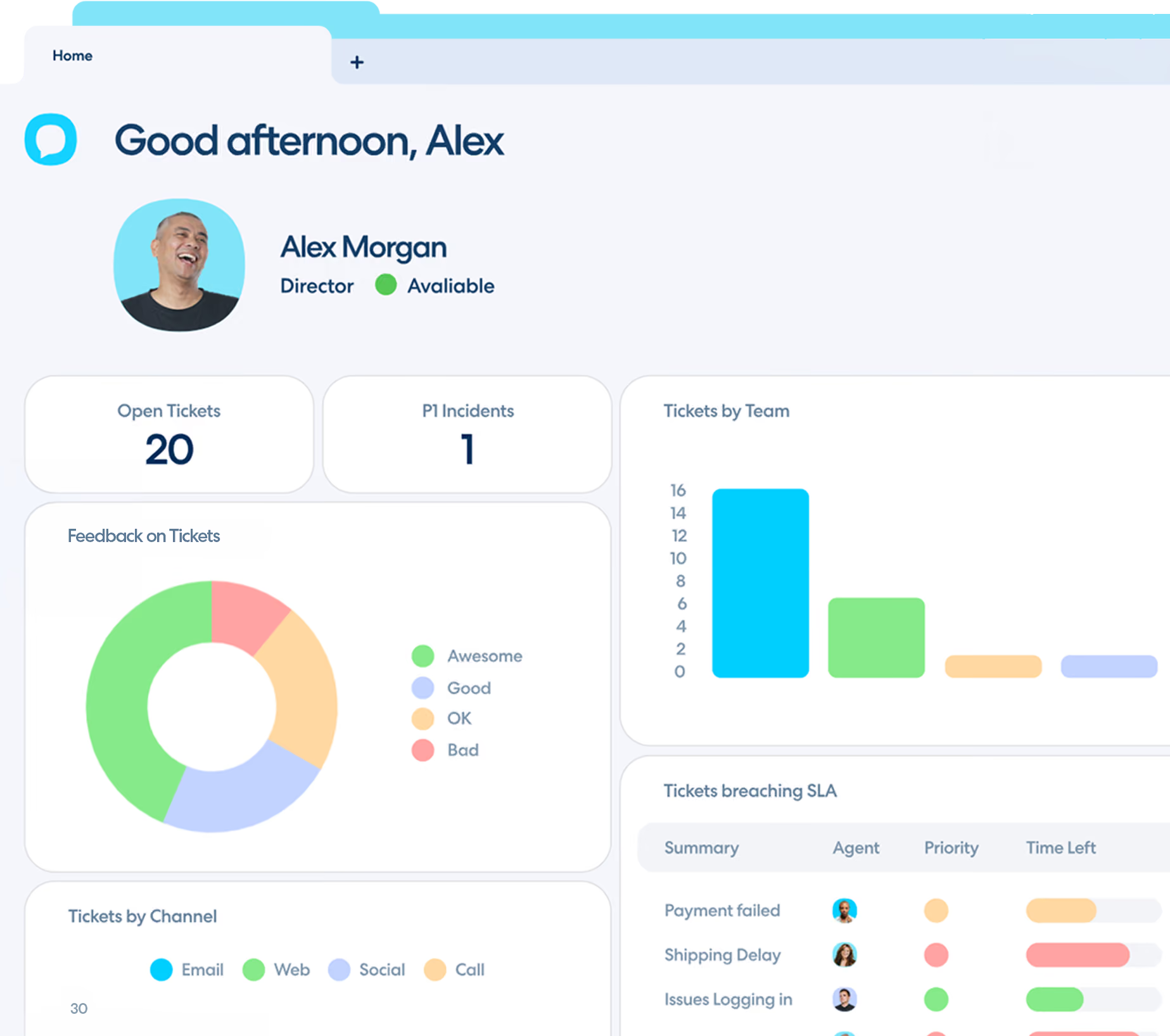






























From reactive firefighting to proactive prevention
Incident management gets you back up and running. Problem management stops the same thing happening again. Halo Problem Management gives your service teams a structured, ITIL-aligned process for identifying root causes, documenting known errors and driving permanent resolution. The cycle of recurring incidents that drain your team's time and your organisation's confidence in service delivery ends when the underlying problem is found and fixed.

A single place for every problem investigation
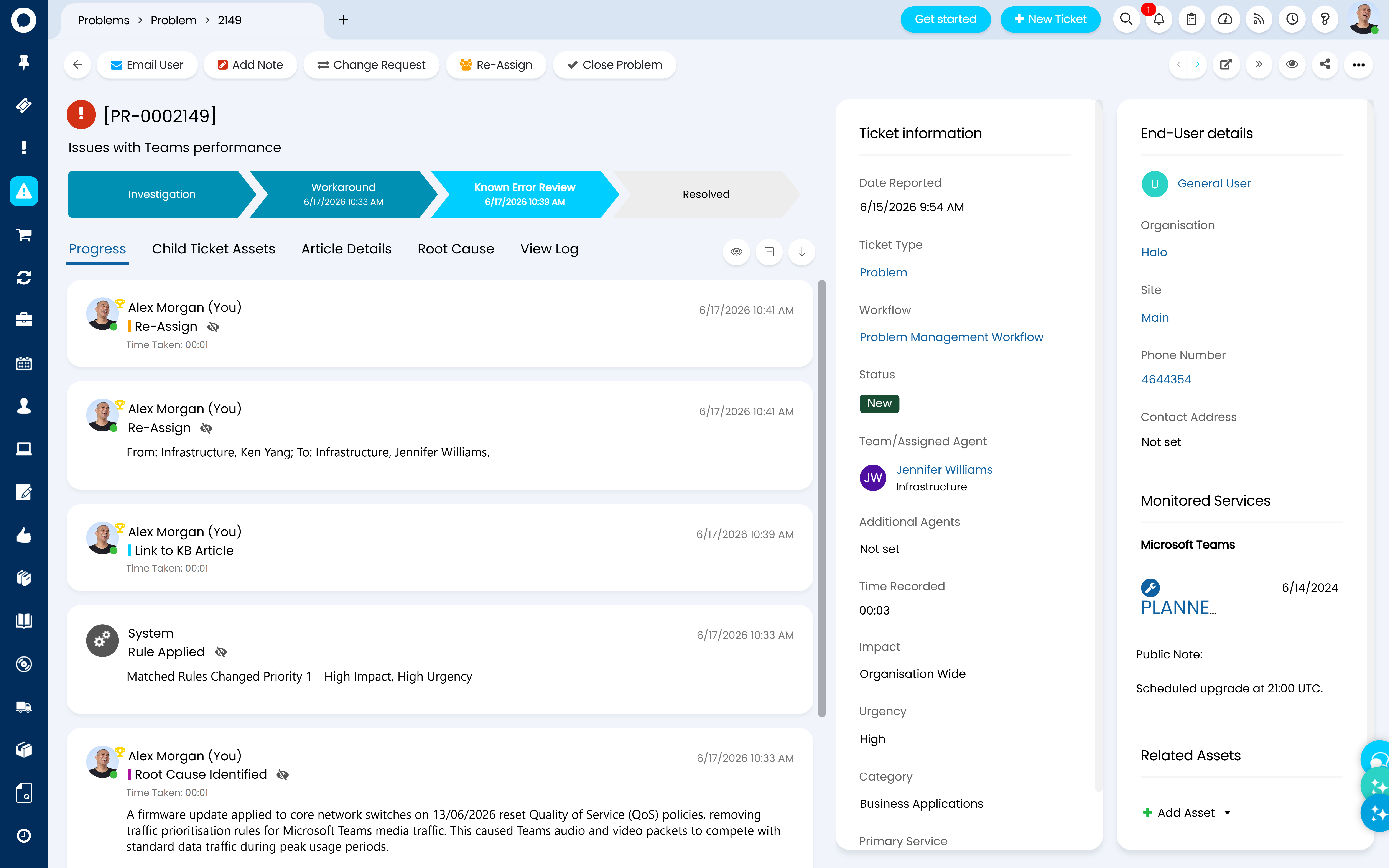
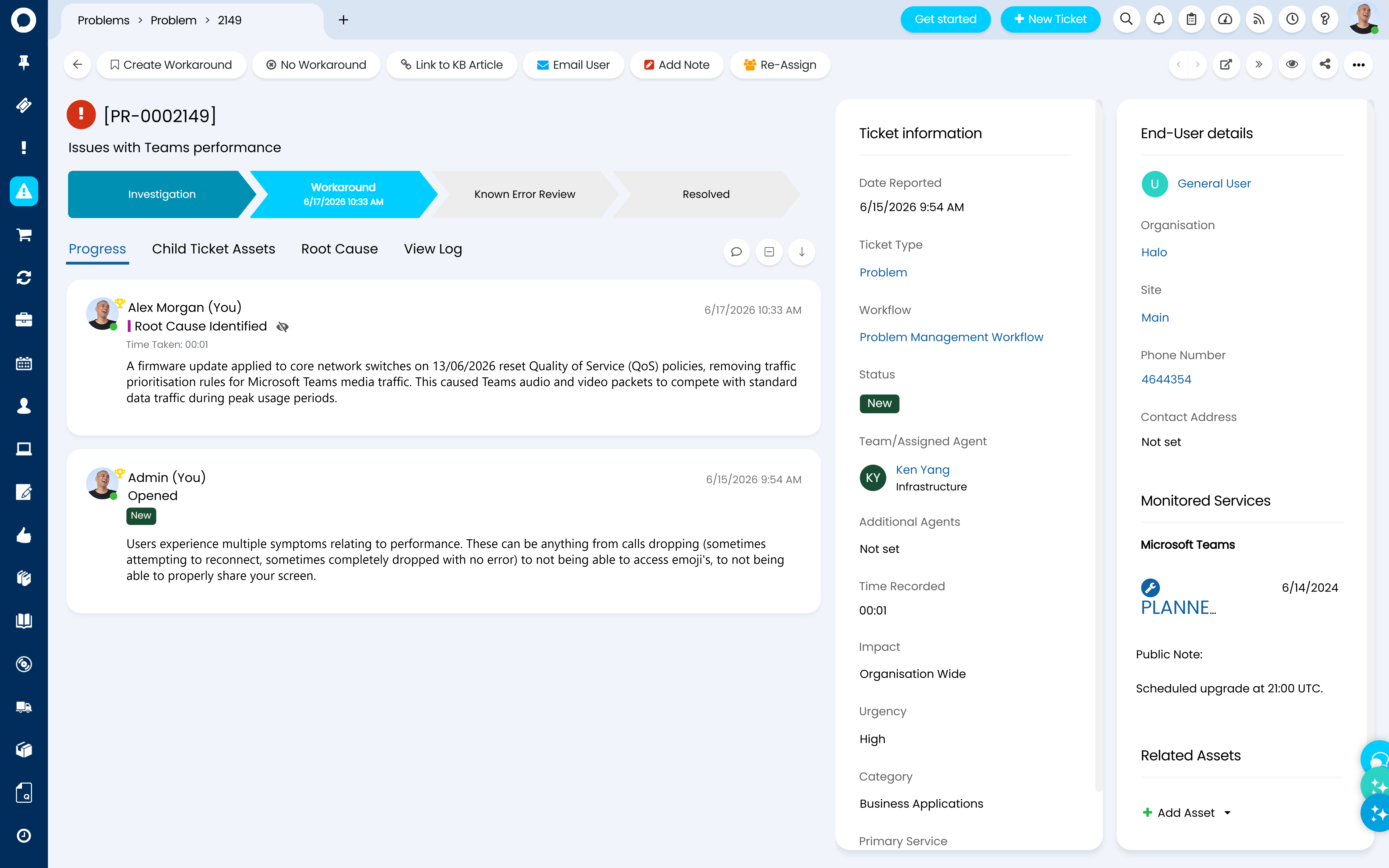
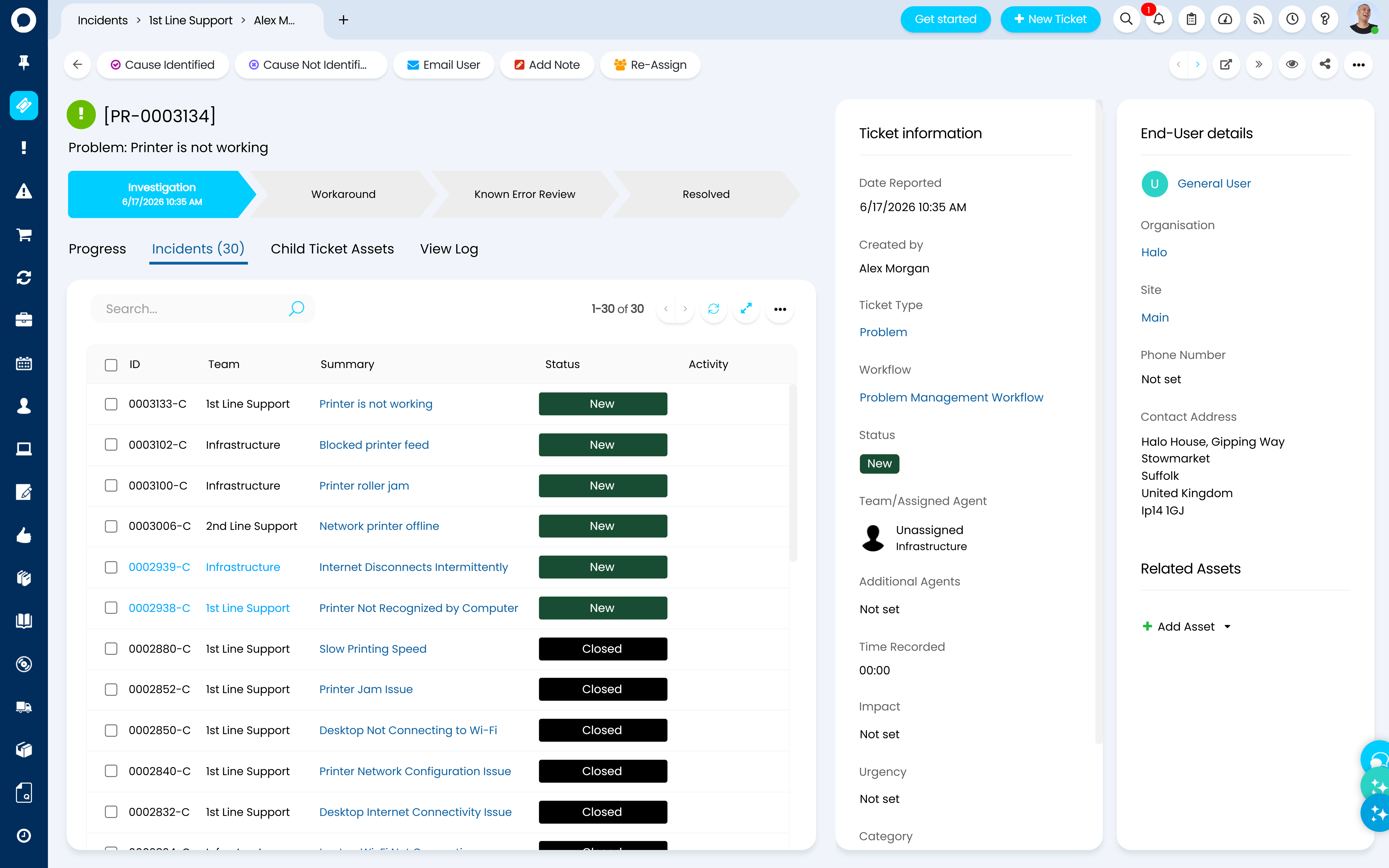
Every problem record in Halo captures the full investigation in one place, from initial identification and root cause analysis through to known error documentation, workaround development and permanent fix implementation. Every linked incident is visible from the problem record. Every communication, decision and action is tracked in a chronological audit trail. Nothing is lost between team members, nothing repeated between investigations.

Linked to incidents, changes and assets automatically
Halo connects problem records directly to the incidents that triggered them, the changes raised to resolve them and the assets or configuration items involved. Impact analysis draws on the CMDB to show which systems, services and users are affected before any change is made. The relationships between problems, their causes and their resolutions are always visible, giving your team the context they need to make the right decisions.

Known error management that actually works
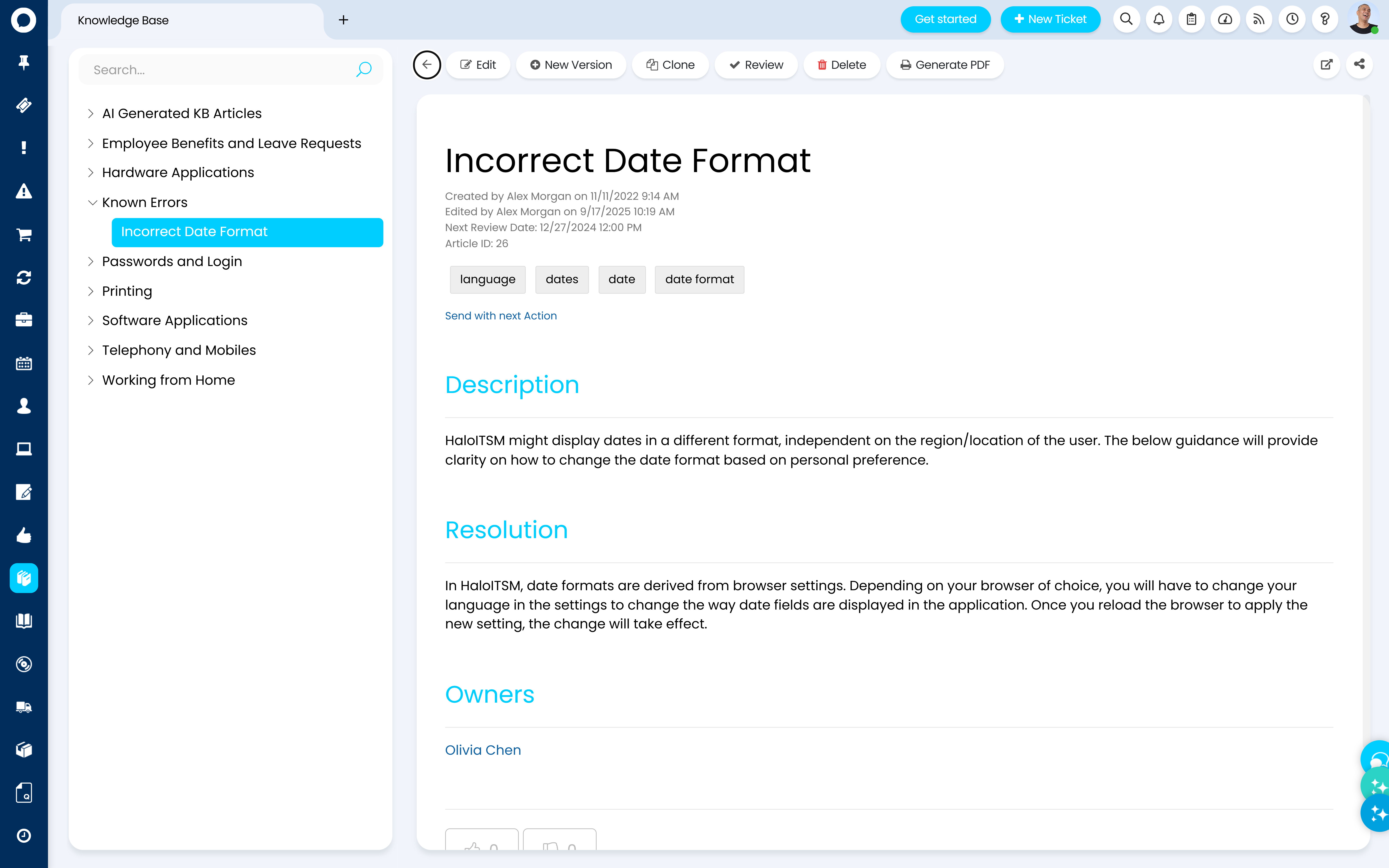
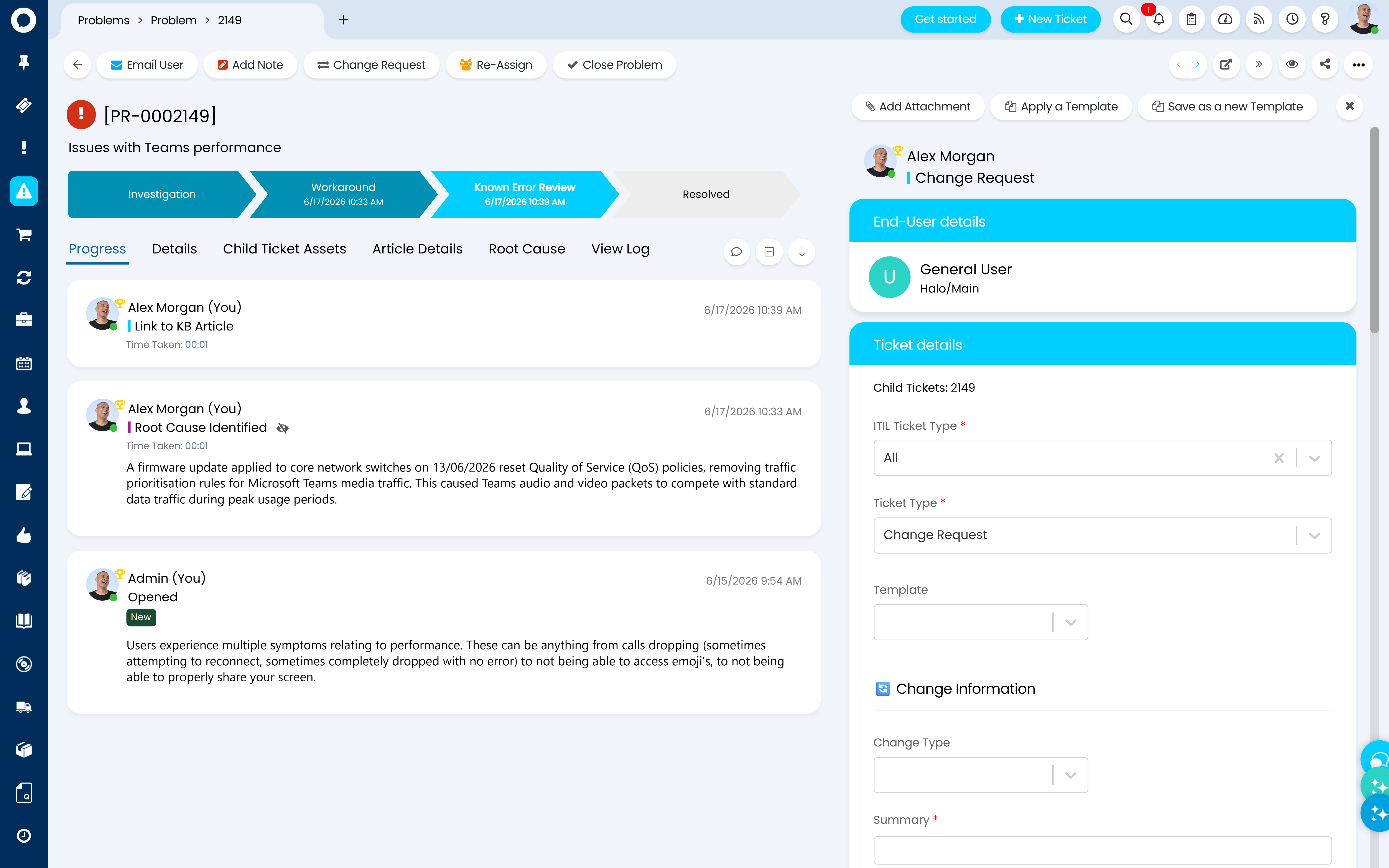
When a root cause has been identified but a permanent fix is not yet in place, Halo Known Error Database captures the workaround and makes it available to every analyst handling related incidents. Frontline teams resolve affected incidents faster using approved workarounds while the problem team works toward permanent resolution. Service quality is maintained even when a permanent fix takes time.

AI that spots patterns your team might miss
Halo AI analyses ticket data across your service environment to identify recurring patterns and surface potential underlying problems before they generate significant incident volumes. Trend analysis highlights which issue types are increasing in frequency, which assets are generating repeated failures and which teams or systems are producing disproportionate ticket volumes. Problem management becomes proactive, not just reactive.
Root cause analysis
Halo Problem Management provides a structured workspace for root cause analysis, with configurable investigation templates and a complete record of every hypothesis, finding and conclusion. The full investigation history is maintained in an audit trail that gives your team the documentation they need for post-incident reviews, quality management reporting and continuous improvement.
Known error database
Halo Known Error Database captures every identified root cause that is awaiting permanent resolution, along with the approved workaround for each. Analysts handling related incidents see the known error and workaround automatically within the ticket, reducing resolution time and ensuring consistent, approved responses across the team. Known errors are linked to their parent problem records and updated automatically when permanent fixes are implemented.
Incident to problem linking
Any incident in Halo can be raised as a problem or linked to an existing problem record with a single action. All incidents linked to a problem are visible from the problem record, with their combined impact, affected users and resolution status all displayed in one place. When the problem is resolved, linked incidents are updated and closed automatically, with bulk communications sent to all affected users simultaneously.
Trend analysis and proactive identification
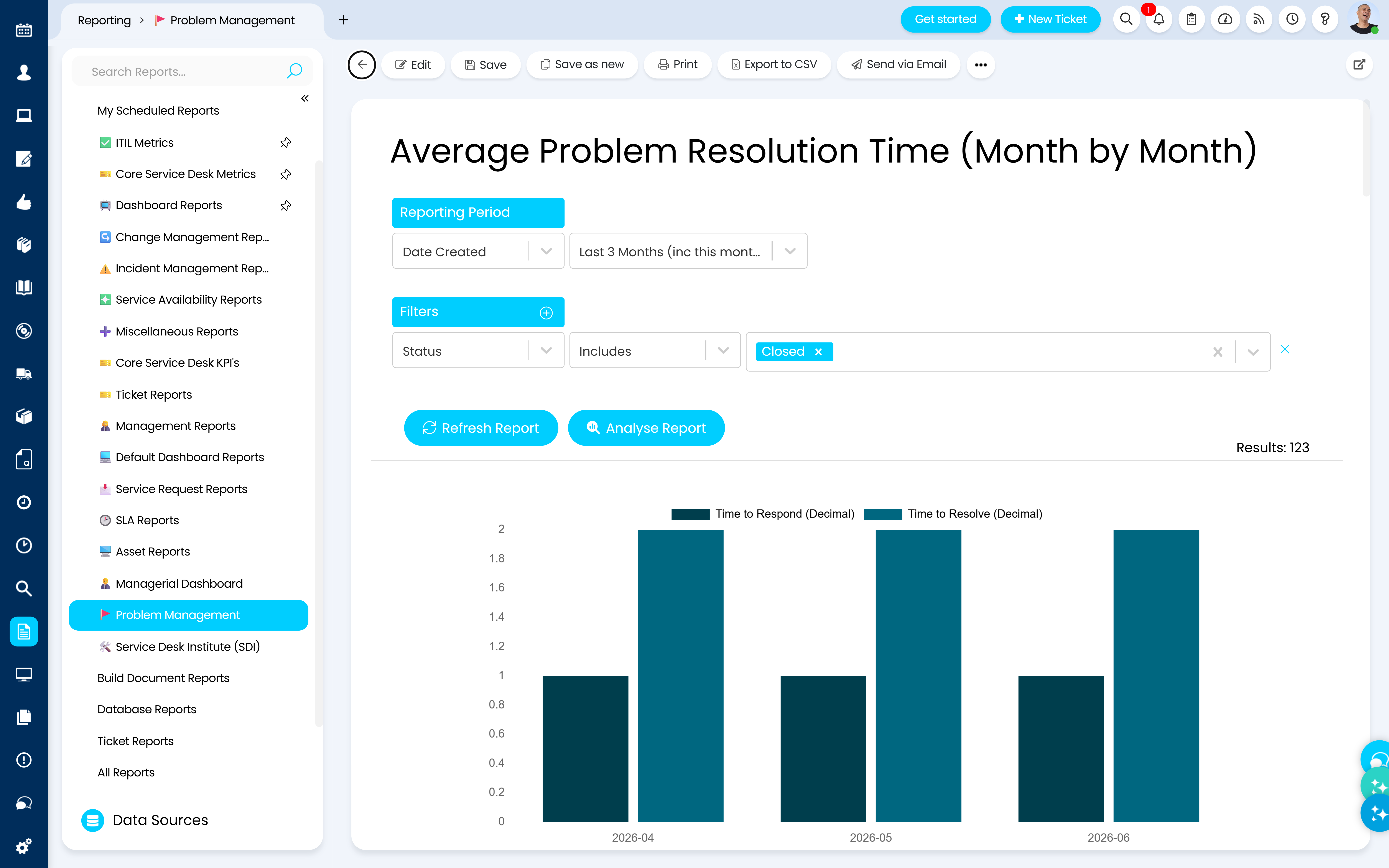
Halo reporting tools surface recurring patterns in incident data, flagging issue types that appear repeatedly, assets that generate disproportionate ticket volumes and teams or systems that are experiencing increasing failure rates. Service managers use trend reporting to identify problems before they become critical, raising problem investigations proactively rather than waiting for a major incident to force the issue.
Change management integration
When a permanent fix requires a change to the environment, Halo raises the change request directly from the problem record with all relevant context pre-populated. The relationship between the problem and the change is maintained throughout the change lifecycle, giving both teams visibility of progress and ensuring the change is tracked back to the underlying problem it was raised to resolve.
Audit trail and compliance documentation
Every action, decision, communication and status change across every problem record is captured in a tamper-proof audit trail. The complete history of every investigation is always accessible, giving compliance, quality management and governance teams the documentation they need for audits, regulatory reviews and quality management system certification requirements.
Customer Story
From ServiceNow to HaloITSM: How inlumi Gained Efficiency, Flexibility, and Cost Savings
As inlumi grew, they needed an ITSM solution that could keep pace. Frustrated by rising costs, complex customisation, and declining support with ServiceNow, they made the switch to HaloITSM.
See Customer Story
30%
Reduction in licensing costs

ITIL 4 aligned from day one
Halo Problem Management is built on the ITIL 4 framework, covering problem identification, investigation, known error management, workaround development and permanent resolution in a structured, best-practice process ready to use from day one.

Directly connected to incident and change management
Problem Management in Halo is fully connected to Incident Management, Change Management and Asset Management within the same platform, with relationships maintained automatically and context shared across every linked record.

Configured by your team
Investigation templates, workflow rules, escalation paths and reporting are all configured through Halo no-code interface by your own administrators. Problem management processes adapt as your organisation's needs change, quickly and without external dependency.

Reporting that drives continuous improvement
Halo reporting tools surface the insight your service teams need to drive continuous improvement, from recurring incident patterns and root cause categories to time-to-resolution metrics and problem backlog trends.


Pattern & problem identification
Halo AI continuously analyses incident data across your service environment, identifying recurring patterns and surfacing potential underlying problems before they are manually spotted. When the same issue type appears repeatedly, AI flags it as a candidate for a problem investigation automatically, reducing the time between a problem emerging and your team beginning to investigate it.
AI-assisted root cause analysis
During problem investigations, Halo AI analyses the characteristics of linked incidents, affected assets and historical cases to suggest probable root causes and relevant investigation paths. Analysts benefit from AI-generated insight that draws on patterns across the full ticket history, reducing the time spent on manual analysis and helping investigations reach accurate conclusions faster.
Predictive failure analysis
Halo AI analyses asset performance data, maintenance records and incident history to identify assets and systems that show patterns consistent with impending failure. Problem managers receive predictive alerts that allow them to raise proactive problem investigations and schedule preventative action before a failure occurs, reducing unplanned outages.
Virtual agent for end users
Halo virtual agent gives every person across your organisation a fast, intelligent first point of contact, available around the clock without any human intervention required. When a known error exists for an issue, the virtual agent surfaces the approved workaround immediately, resolving the interaction without a ticket being raised.
FAQ Question 1

FAQ Answer 1


Make permanent
resolutions with Halo
Try HALO for free today, the only platform to change the way the world works.