




















































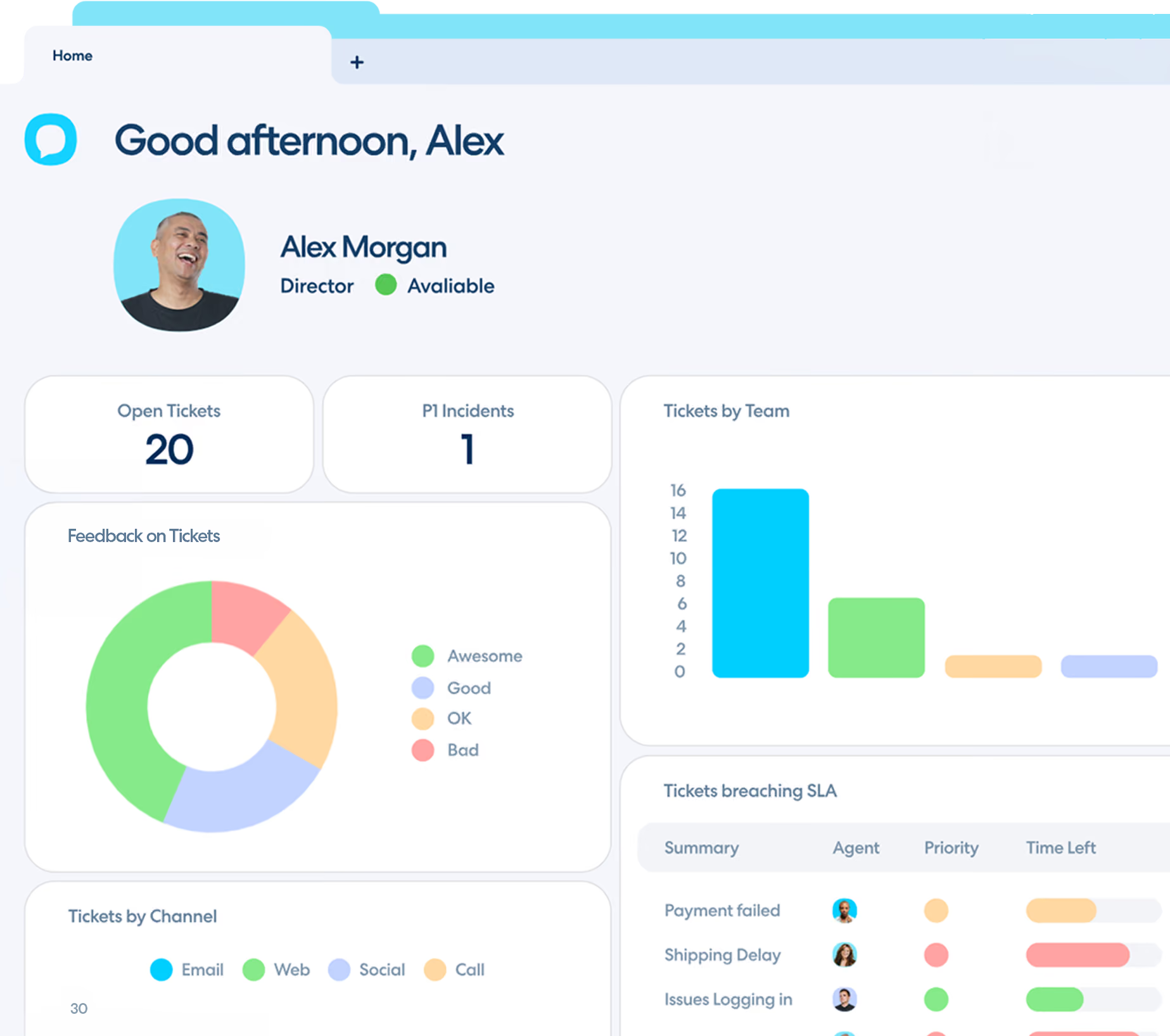

















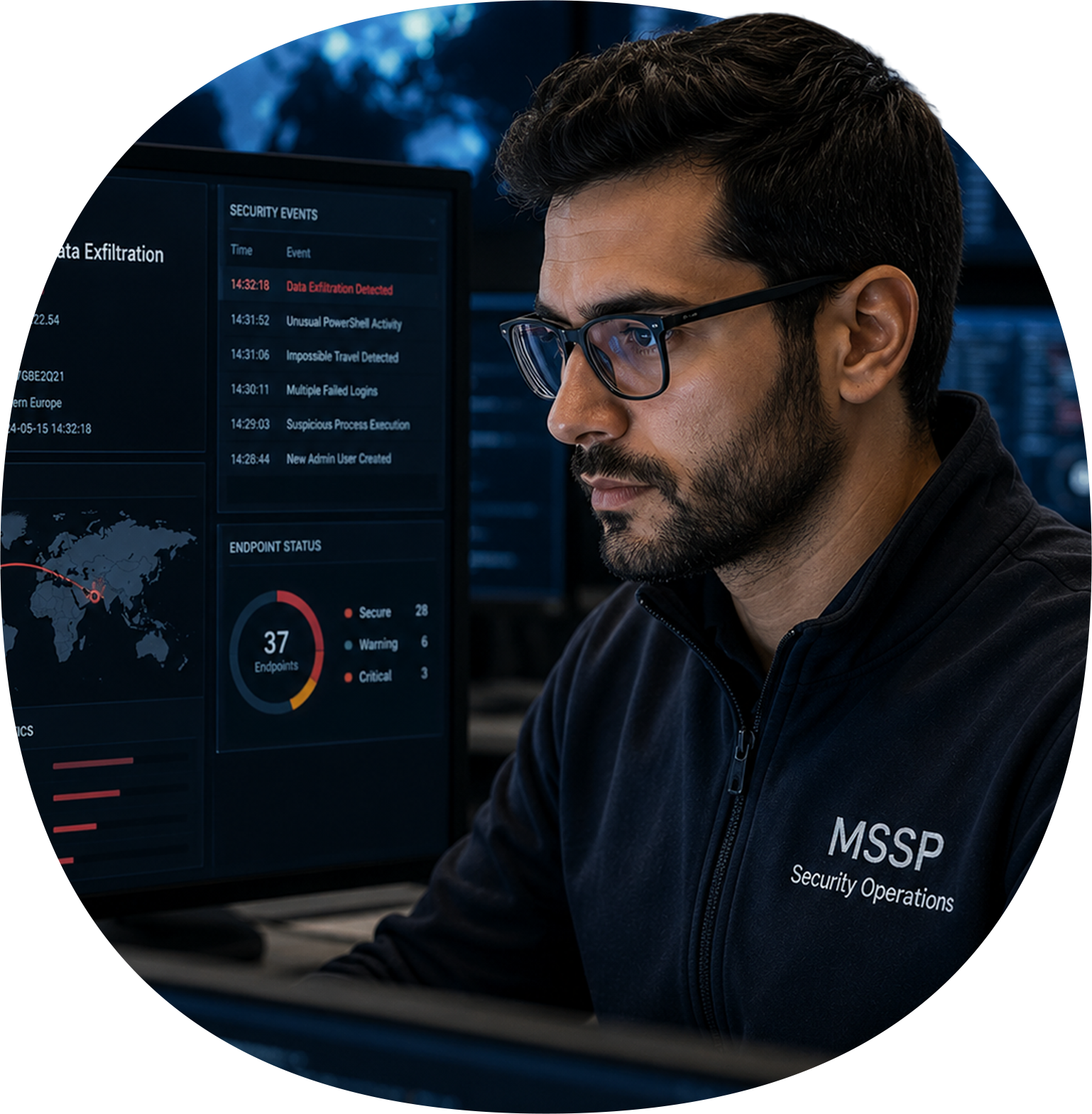








Running a SOC 24/7 against a moving threat landscape is its own discipline - alerts, incident response, compliance reporting, and recurring security contracts all demanding attention at once, and generic PSAs were never built for that pace. Halo pulls ticketing, incident workflows, asset visibility, and billing into one platform, so analysts stay focused on threats instead of switching tools.
Every alert, every customer, in one view
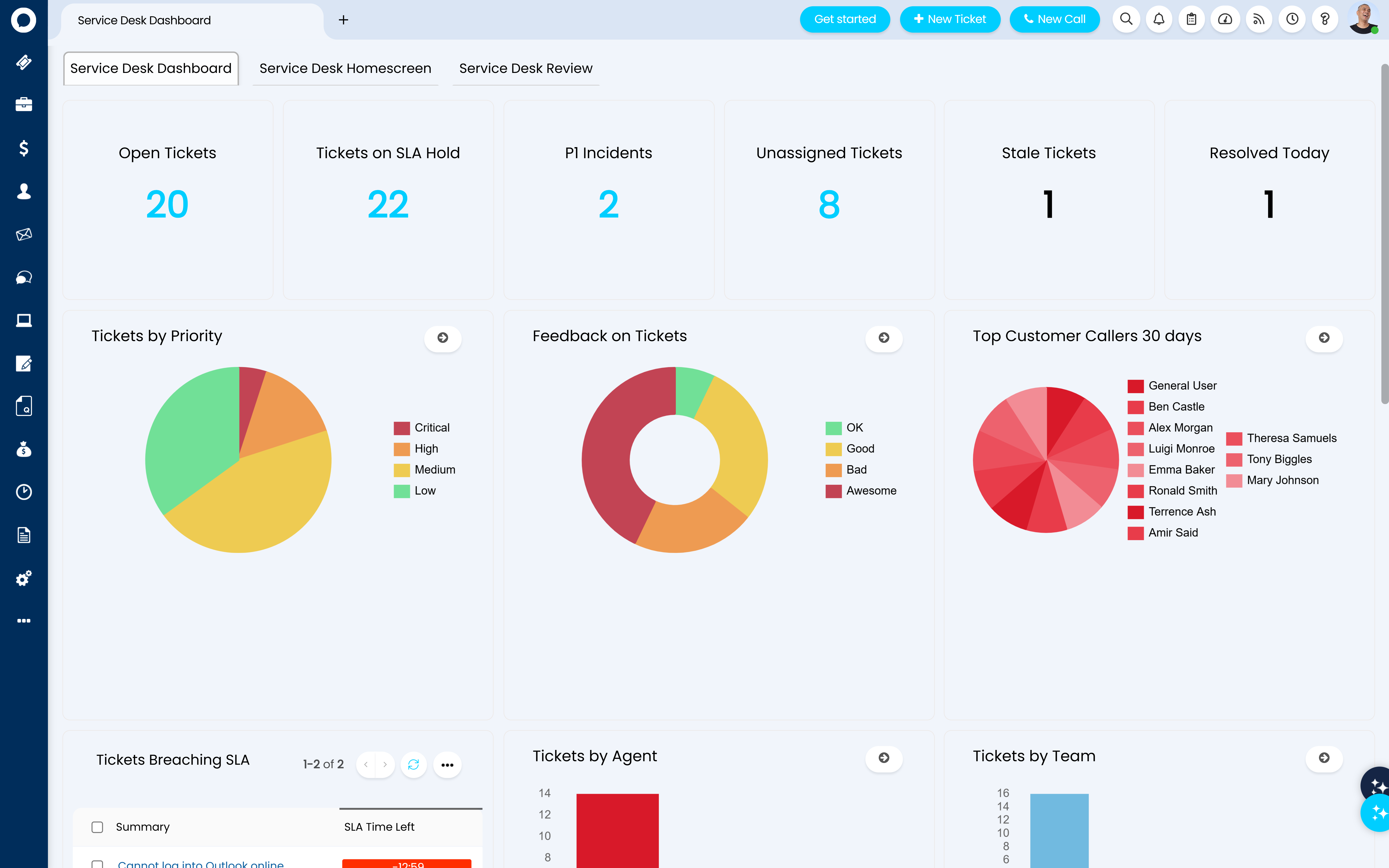
Centralise SOC alerts, customer-raised incidents, and proactive Tickets against a single Customer record so analysts see the full security picture in one place.

Incident workflows that match your runbooks
Map and automate incident response processes to flexibly mirror the playbooks your SOC actually runs, without forcing your team into a generic ticket flow.

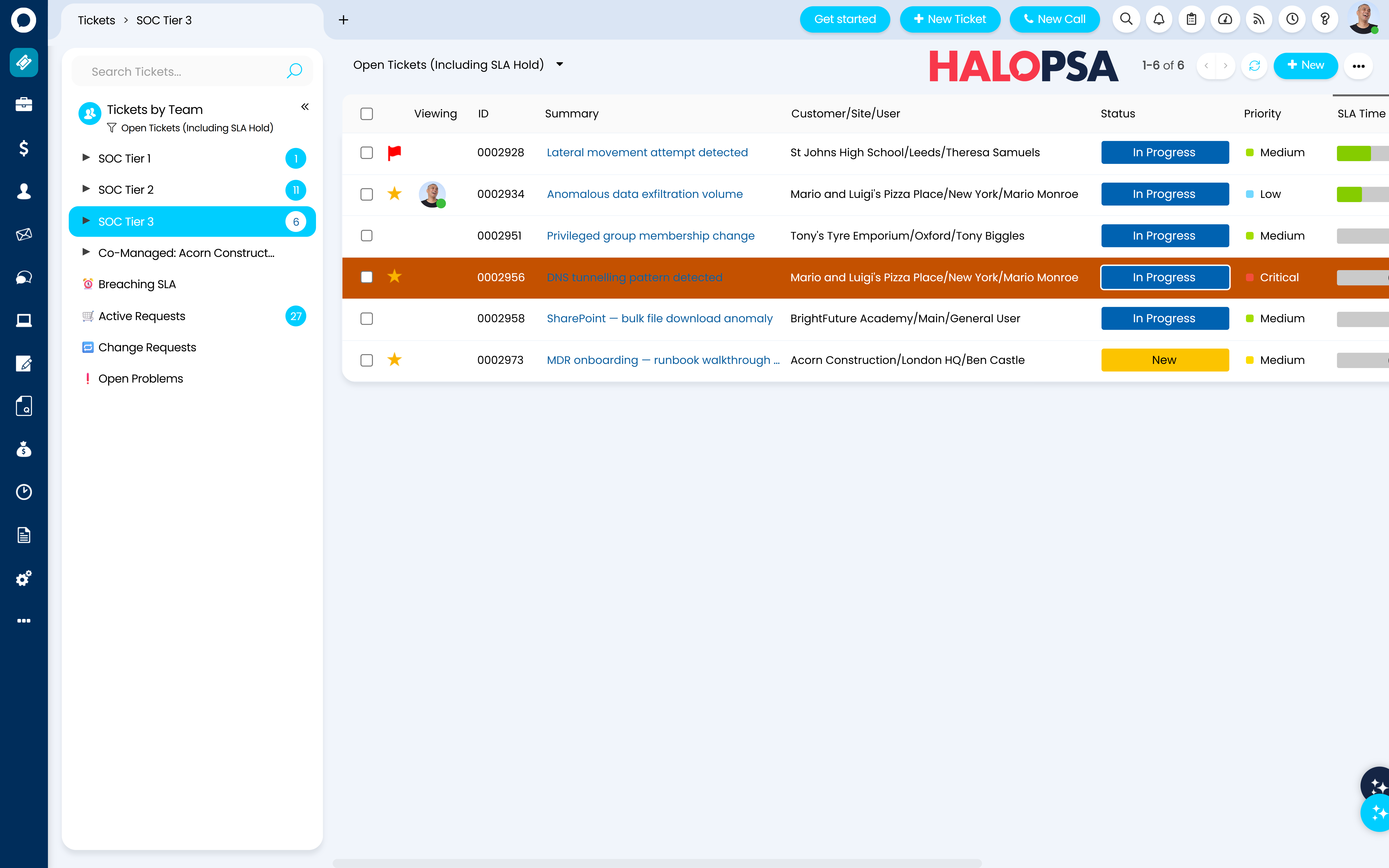
SLAs you can prove to customers and auditors
Track every response and resolution SLA against every Ticket automatically, with the audit trail and reporting needed for customer reviews and compliance frameworks.

Security services billed cleanly
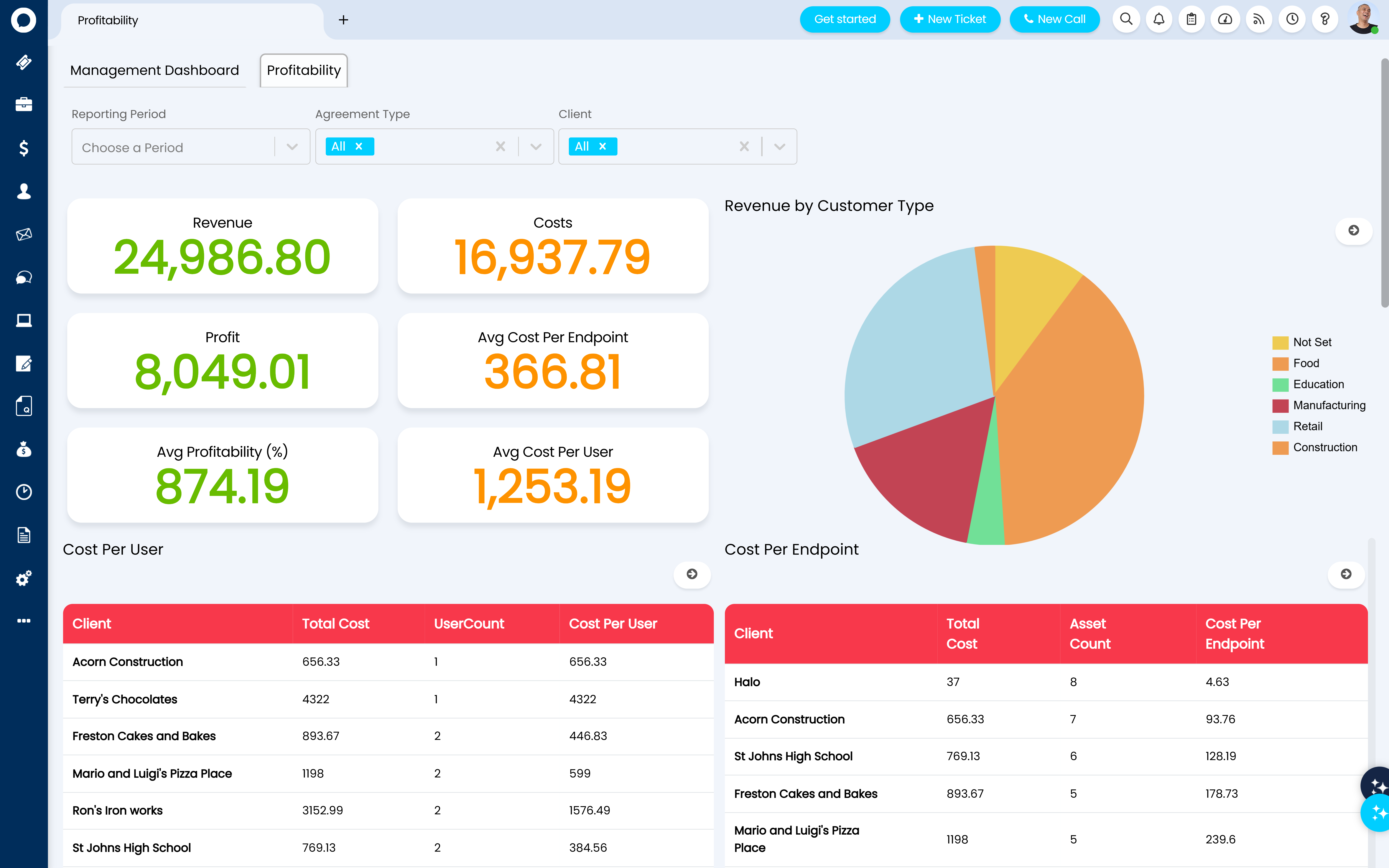
Convert recurring monitoring, per-endpoint charges, incident response retainers, and one-off engagements into accurate invoices, keeping commercial conversations clean.
Security incident management
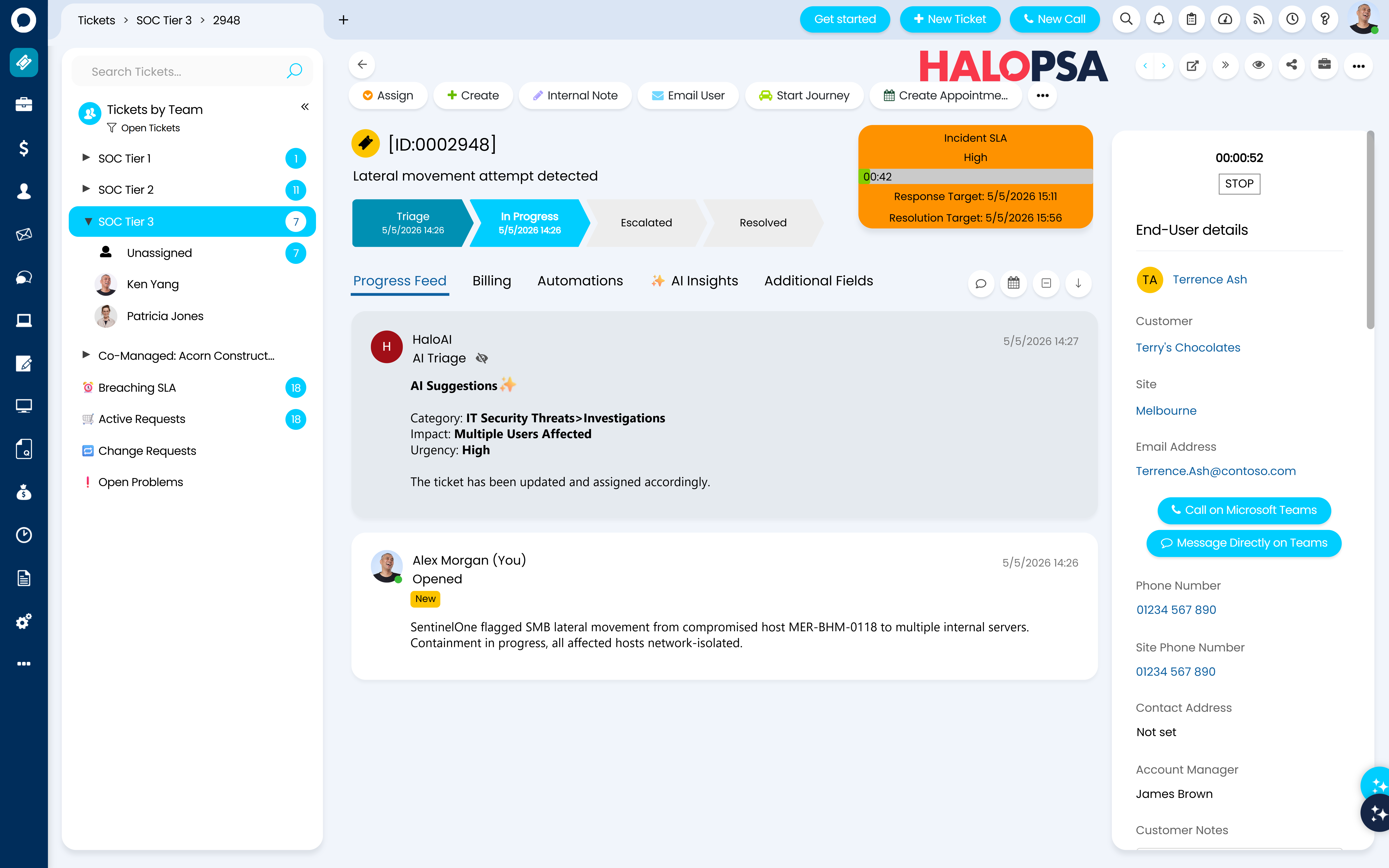
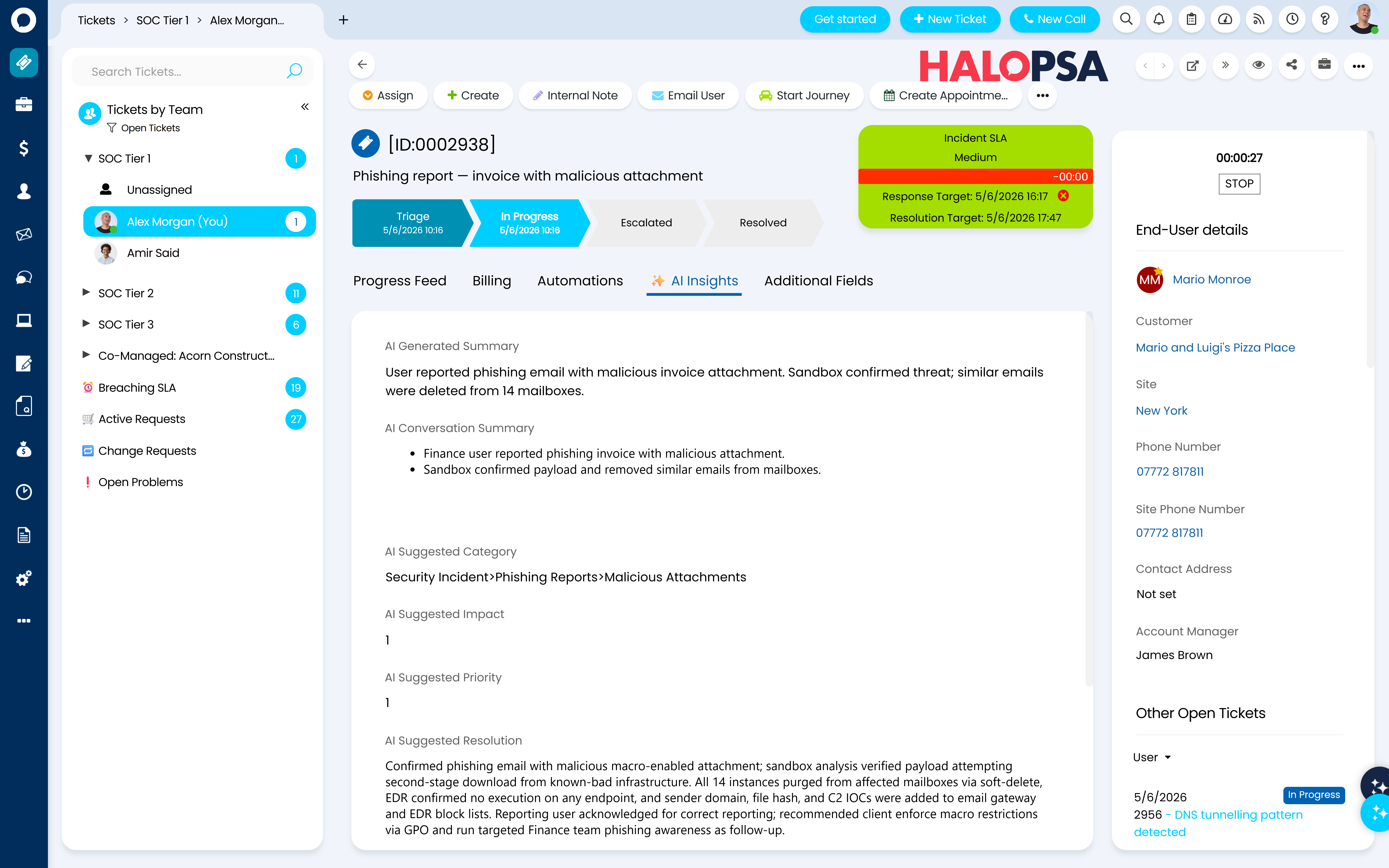
Centralise every security event into a single Ticketing view, whether it's a SIEM alert, an EDR detection, a phishing report, or a customer-raised concern. Use Halo's AI to triage incidents, classify them by severity and threat type, route them to the right SOC analyst pod, and surface similar past incidents so the assigned analyst has historical context immediately. Every action against a Ticket is logged, so the audit trail for post-incident review and customer reporting is built as the work happens.
SOC operations and shift handover
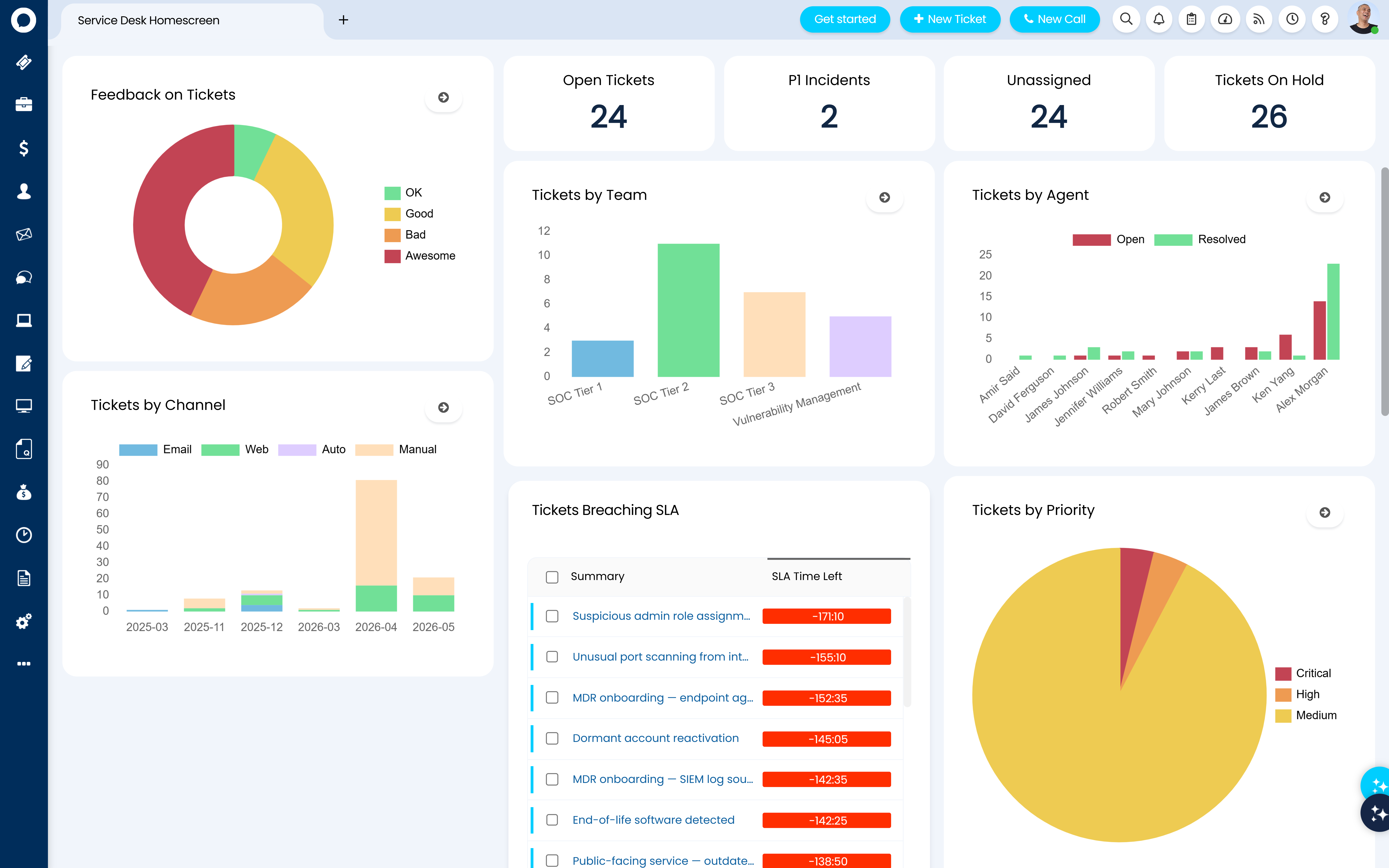
Run the SOC inside Halo with shift dashboards, queue management, and full visibility of in-flight incidents at any moment. When shifts change, the next analyst inherits a Ticket with the full timeline of what's been done, who's been notified, and what's outstanding, instead of relying on handover notes scattered across chat and email.
Security project delivery
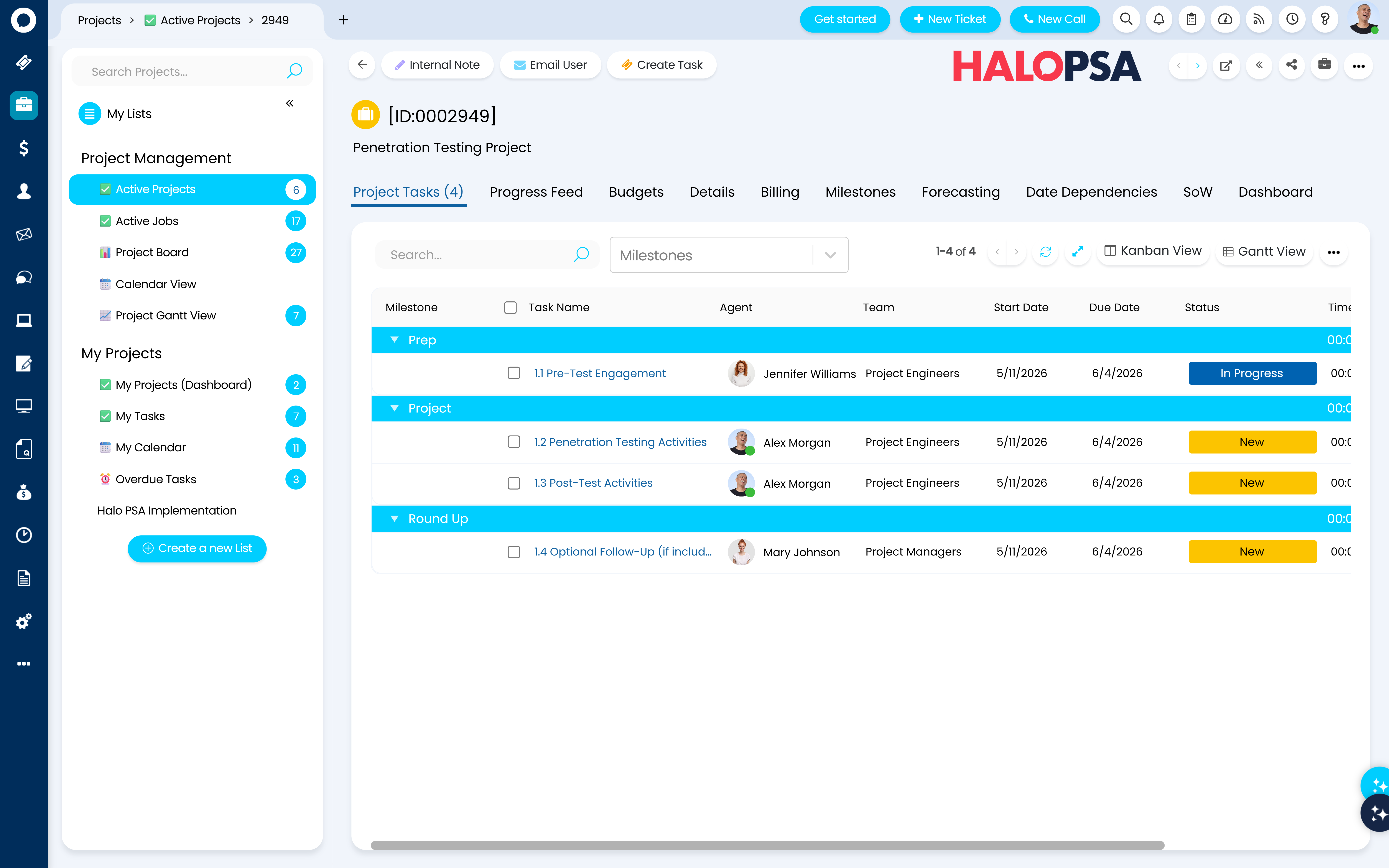
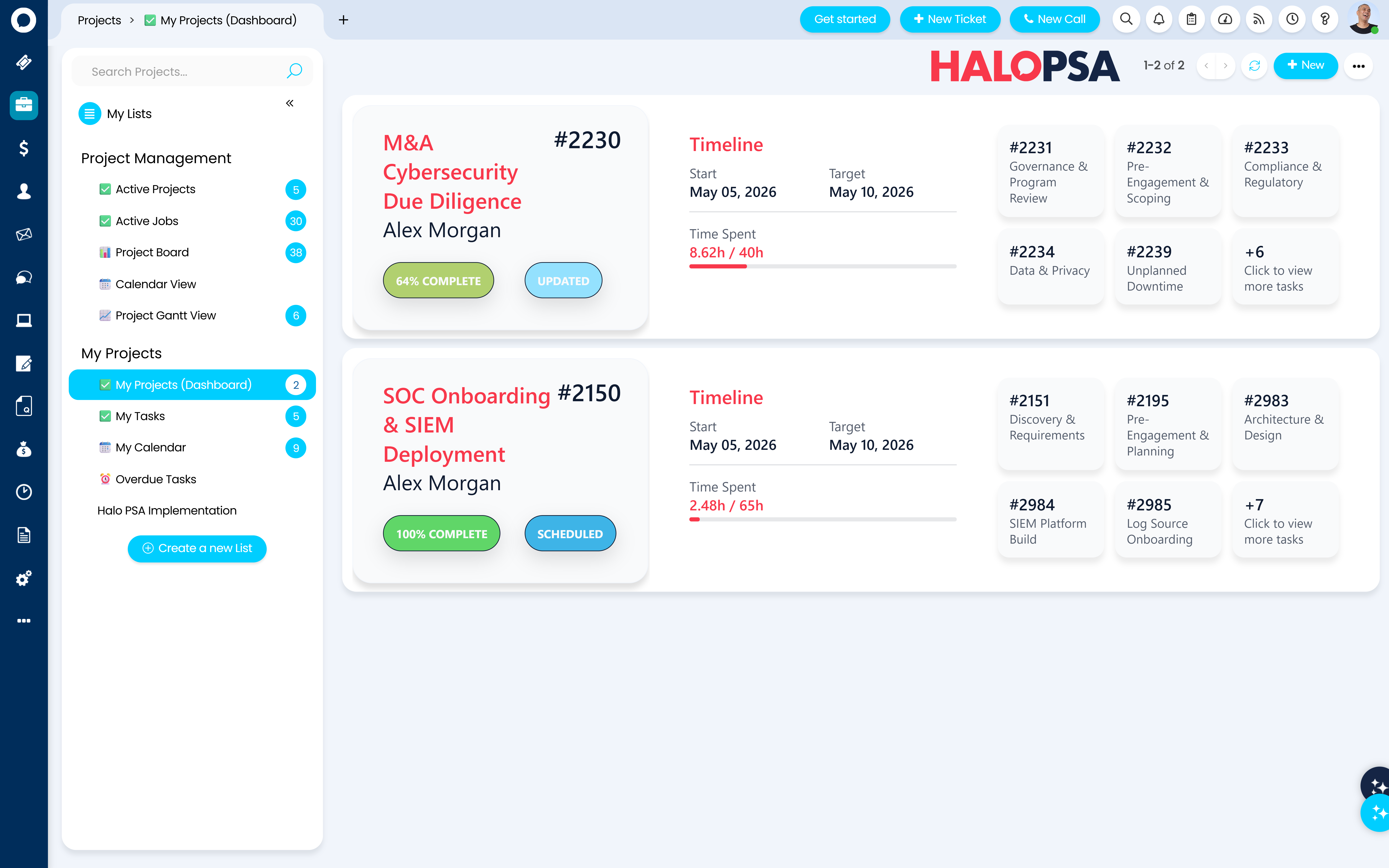
Deliver security assessments, pen tests, SIEM deployments, MDR onboarding, and compliance projects through Halo's Project Management feature. Every engagement runs to a defined process - tasks, dependencies, and consultant assignments lined up at kick-off - and project leads track each one on a single board, with comms and notes living on the Project Ticket rather than fragmented across inboxes and shared drives.
Recurring security service billing
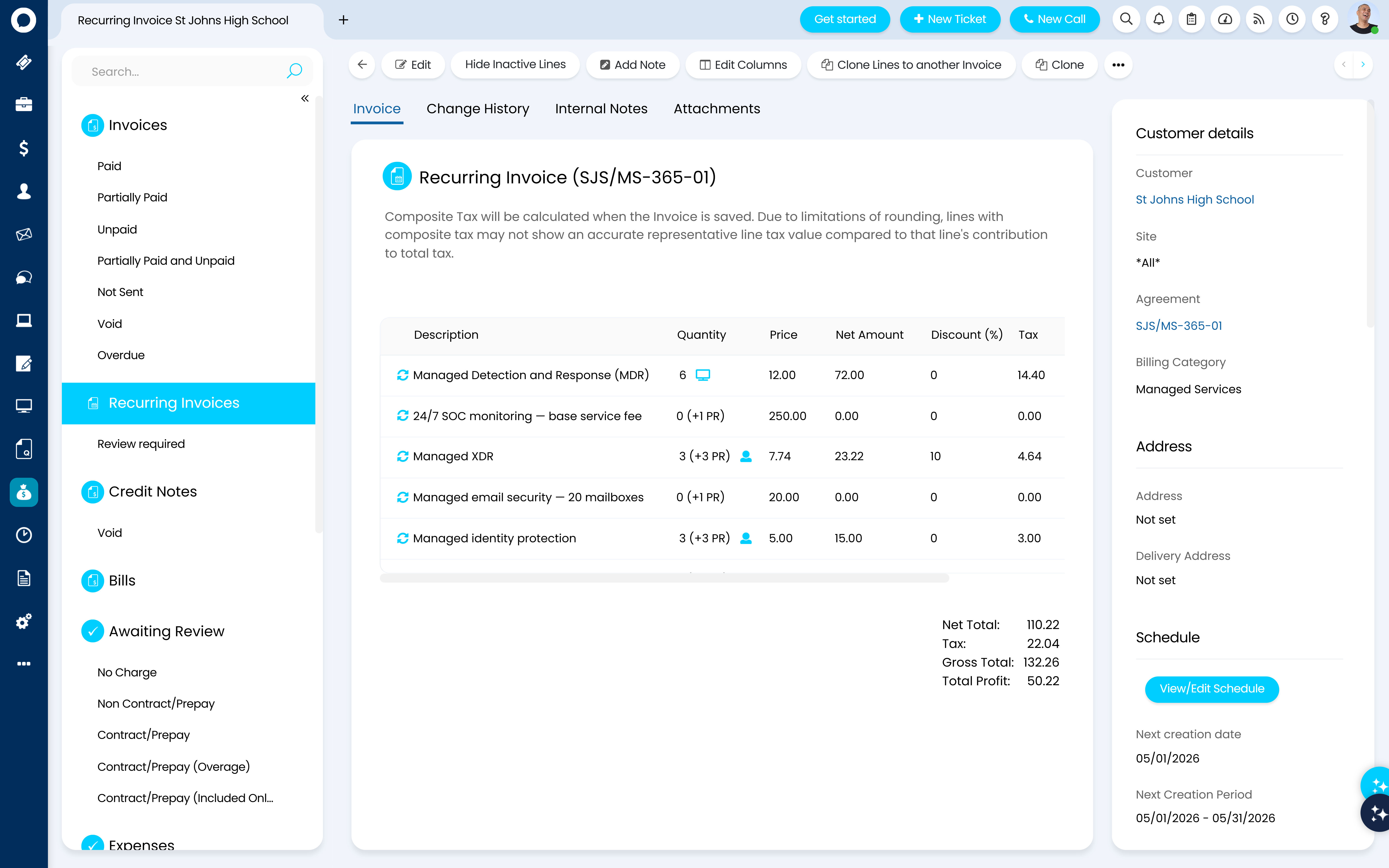
Automate the entire billing cycle for managed detection and response, vulnerability management, monitored endpoints, and per-user security services by linking contracts directly to Customer records inside Halo. Every recurring charge, incident response retainer hour, and one-off engagement attaches to the customer record, with billing disputes raised as linked Tickets rather than fought out in spreadsheets.
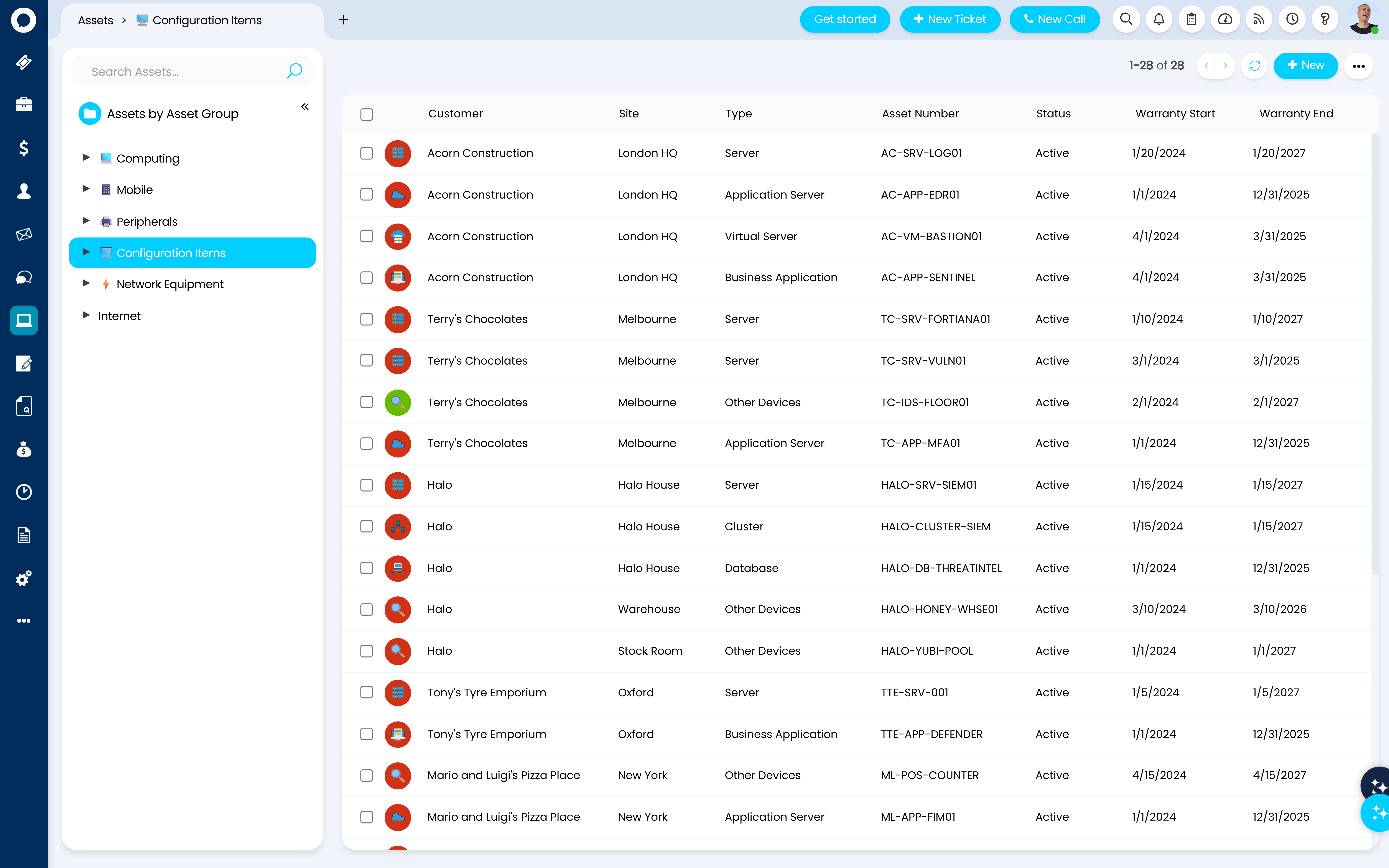
Asset and configuration visibility
Track every protected asset - endpoints, servers, identities, cloud workloads - for every customer estate, with each asset linked to its contract, its owner, and its incident history. When an alert lands, the analyst sees the asset, the customer, the linked contract, and any prior detections against it without switching tools.
Compliance and customer reporting
Pull SLA attainment, incident metrics, mean time to detect, and mean time to respond from the same data the SOC runs on, into customer-facing and audit-ready reports. Quarterly business reviews and compliance evidence stop being a manual export exercise and become a live view of how the service is actually performing.
Customer Story
How Magna5 Built the Platform Behind Their MSP Growth
Magna5’s existing PSA was becoming harder to scale. By consolidating service operations into HaloPSA, the team automated workflows and has since onboarded 9 acquired MSPs.
See Customer Story
15–20
hours saved per week on the service desk

A centralised service desk
One system for every alert, incident, and customer request, regardless of source.
Recurring and per-endpoint billing
Automated invoicing for monthly monitoring, per-user and per-endpoint charges, retainer hours, and one-off engagements, reducing manual work and billing errors.
Asset and configuration tracking
Record every protected asset for every customer and link it to their contracts, Tickets, and incident history.
Reporting and dashboards
Visibility into incident volumes, analyst performance, SLA attainment, mean time to detect and respond, and customer trends, for both internal reviews and customer-facing reports.
Project management
Plan and deliver assessments, deployments, and compliance work alongside day-to-day SOC operations in one platform.
An integrated tech stack
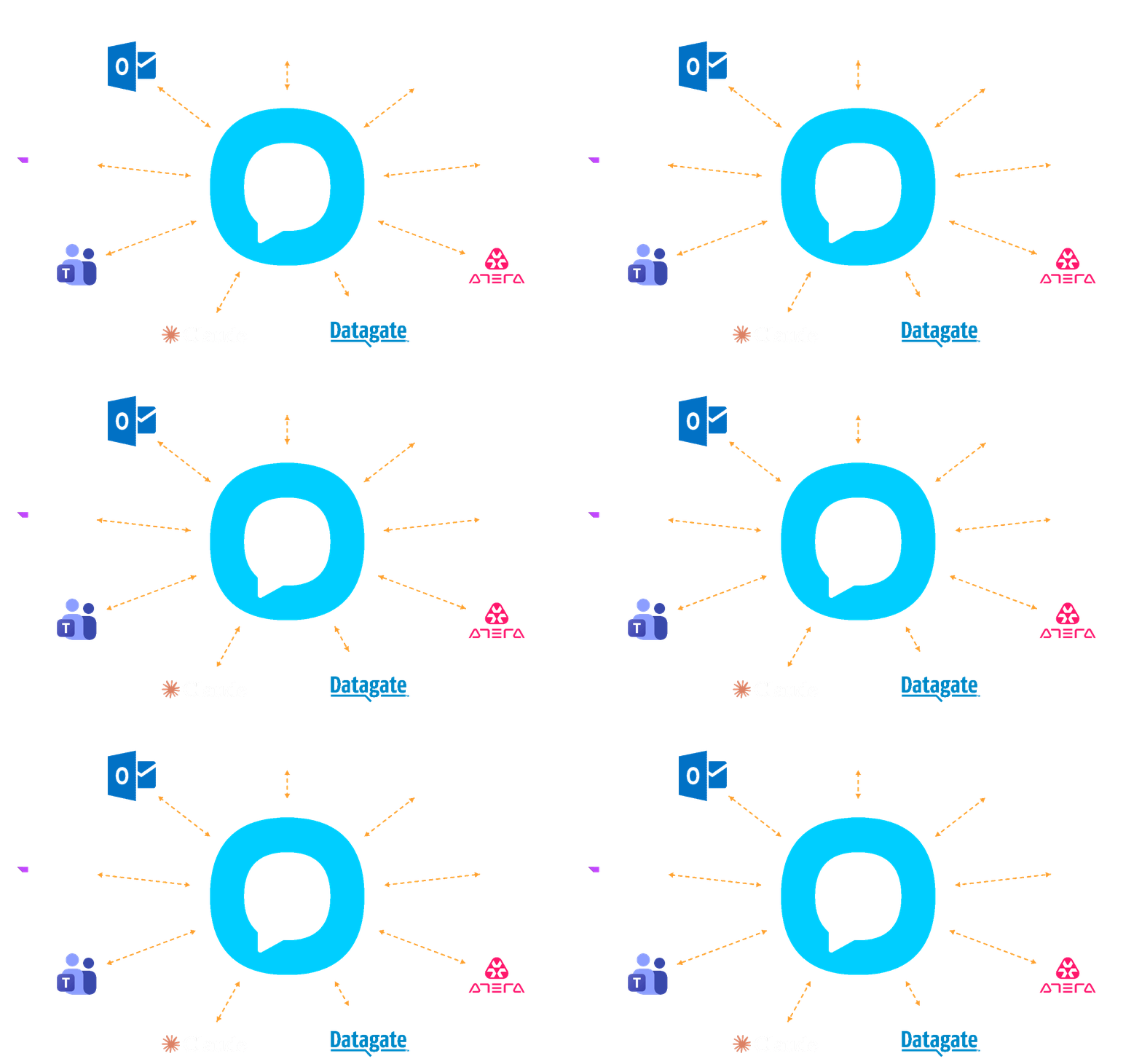
Connect to your SIEM, EDR/XDR, MDR, vulnerability management, and communication platforms for a smooth and automated flow of information.

Anomaly & Trends
Triage & Classification
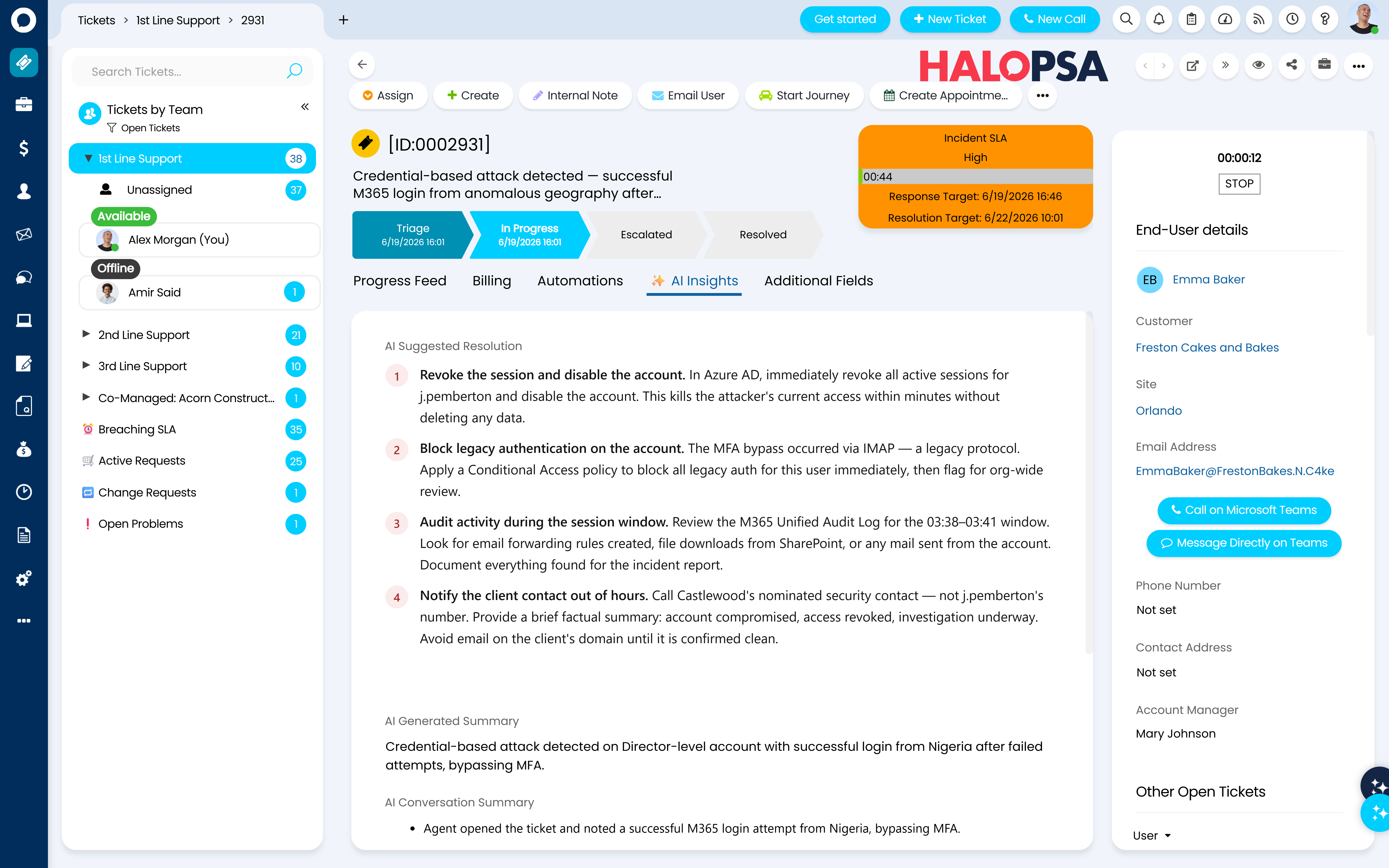
Suggested Resolutions
Workload Insight

Anomaly and trend detection
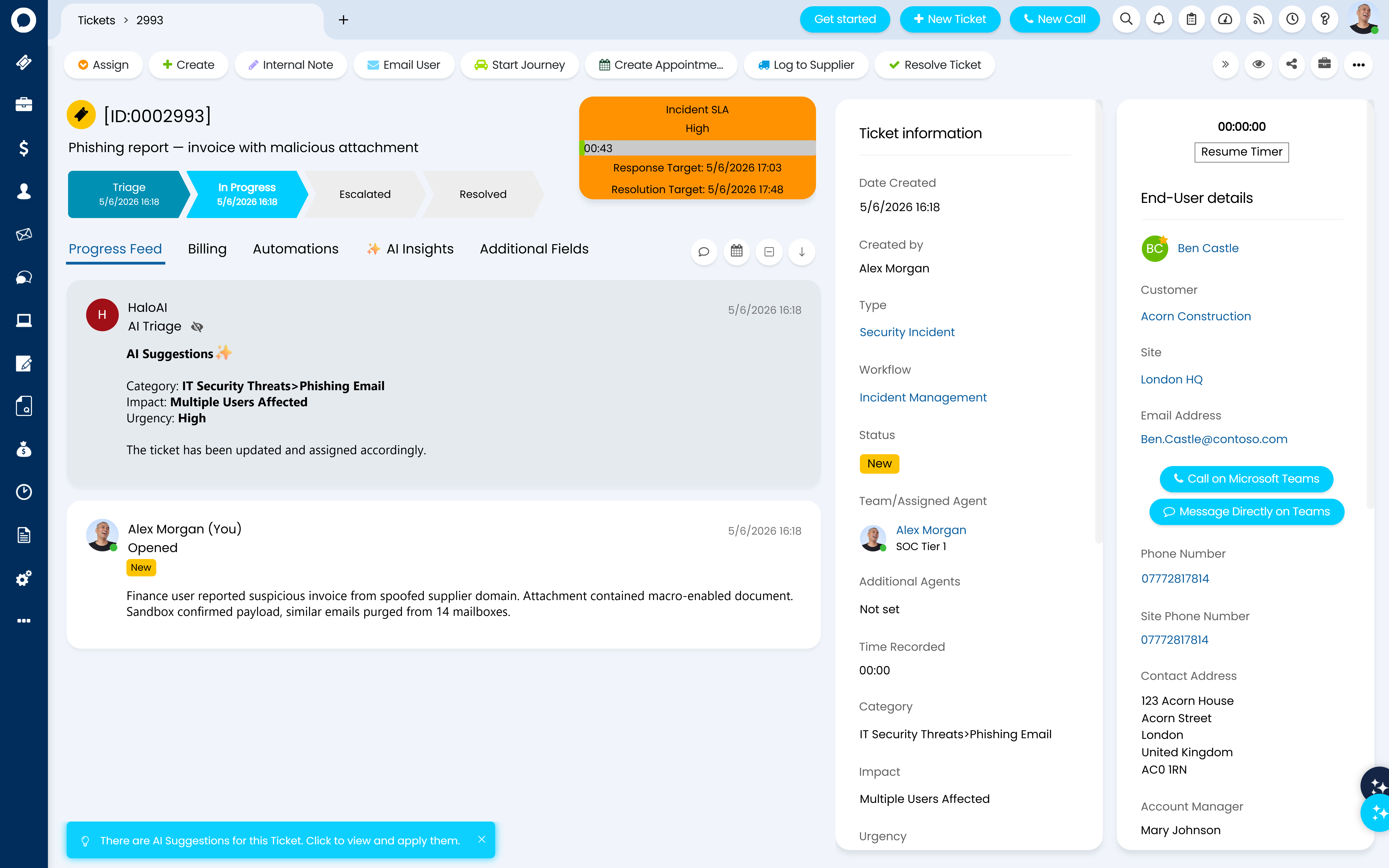
Halo's AI scans every new Ticket against your history, surfacing hidden patterns and emerging threats across your customer base before they spread. A detection that looks isolated on one customer's estate may already match a pattern seen elsewhere - Halo makes that connection immediately so your analysts can escalate and investigate with the full picture rather than a single data point.
Ticket triage and classification
Halo's AI automatically categorises incoming alerts and Tickets by severity and type, and routes them to the right analyst pod based on content. Critical detections reach a senior analyst in seconds rather than sitting in a general queue waiting to be read and redirected.
Suggested responses and resolutions
Halo's AI surfaces relevant knowledge base articles, and past resolutions of similar incidents for the assigned analyst, speeding up first response times and cutting the time spent searching for context on common detections. An analyst picking up a phishing incident or an EDR alert gets the relevant playbook and similar past cases surfaced immediately, so the response starts informed rather than cold.
Workload and capacity insight
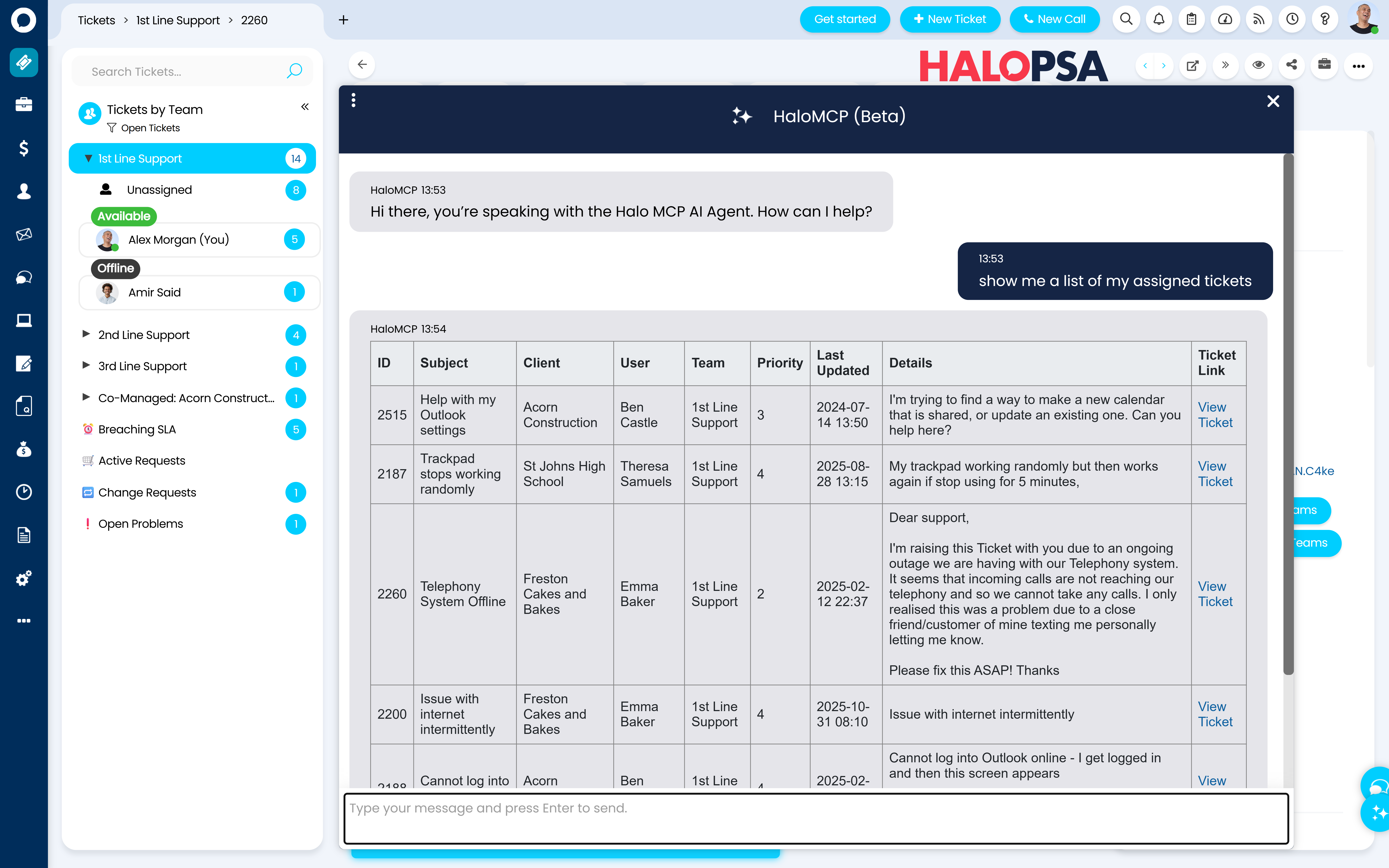
Halo's AI and MCP connection give your SOC leadership a live read on analyst capacity without leaving the page they're already in. Ask Halo how many open incidents each analyst is carrying, which customers have the most in-flight Tickets, or where the queue is building ahead of a shift change - and get an answer drawn directly from live SOC data. Shift leads can rebalance coverage in the moment rather than relying on a handover note or a report that's already out of date by the time it's read.
FAQ Question 1

FAQ Answer 1



Reimagine the way
your MSSP runs
Try Halo for free, or book a demo to see how SOC operations, project delivery, and security billing can finally live in one place.