



















































































A single, accurate register of every asset
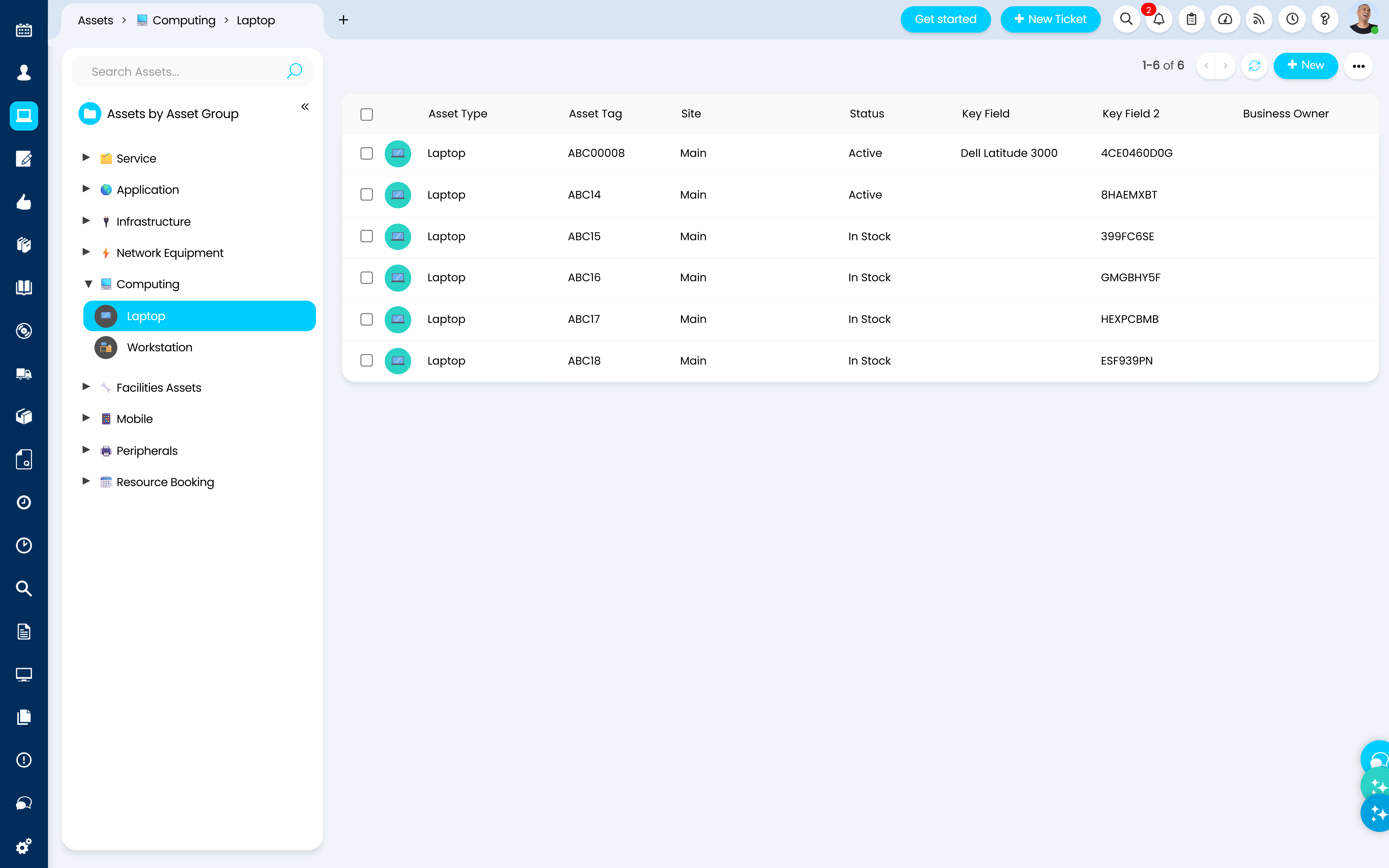
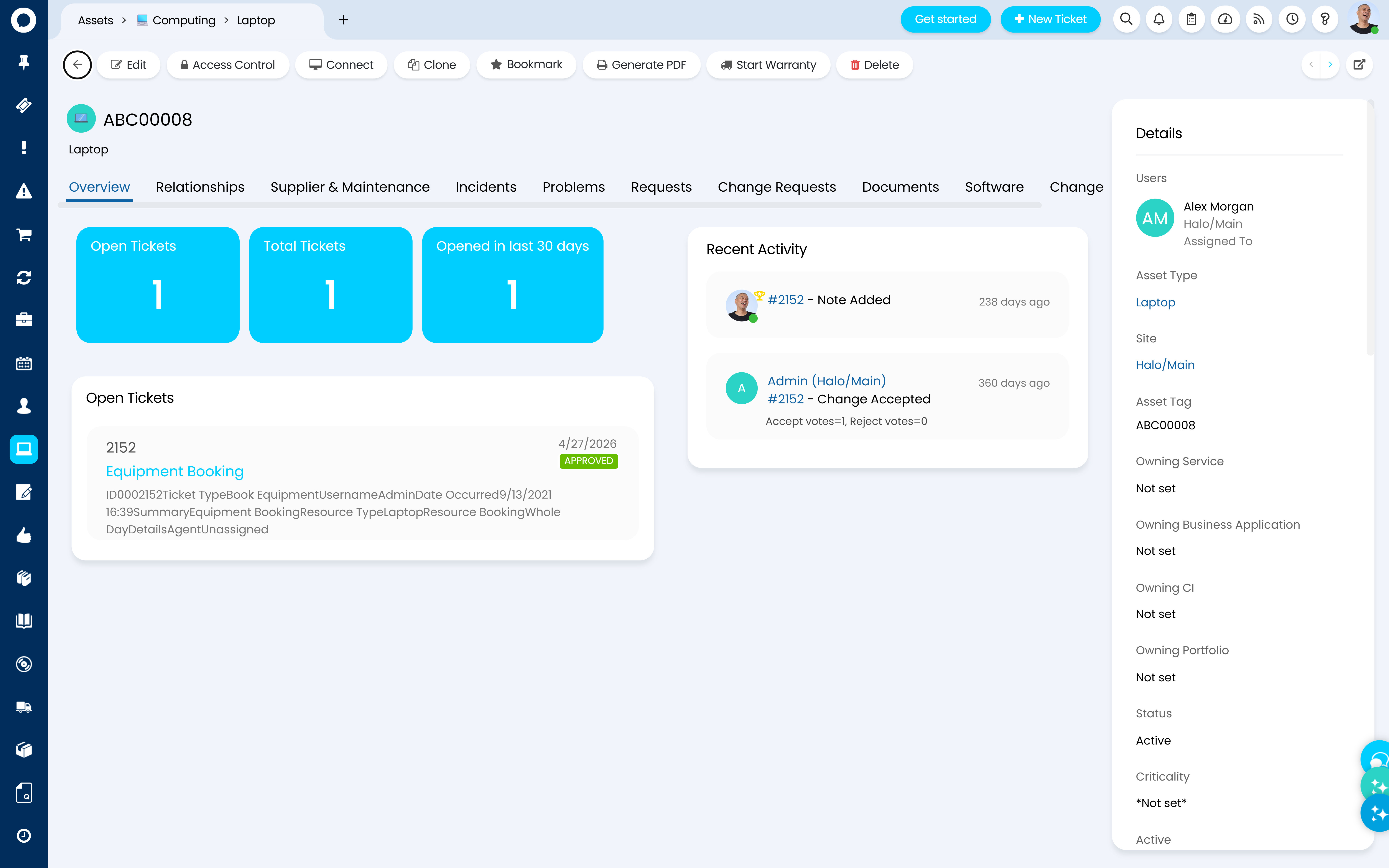
Halo Asset Management gives your organisation one place where every asset lives. Hardware, software, licences, contracts, physical assets and cloud resources are all tracked in a single, accurate register that is always up to date. Automated discovery integrations pull asset data from your environment in real time, eliminating the manual effort of keeping records current and the risk of decisions being made on inaccurate information.

CMDB with relationship mapping and impact analysis
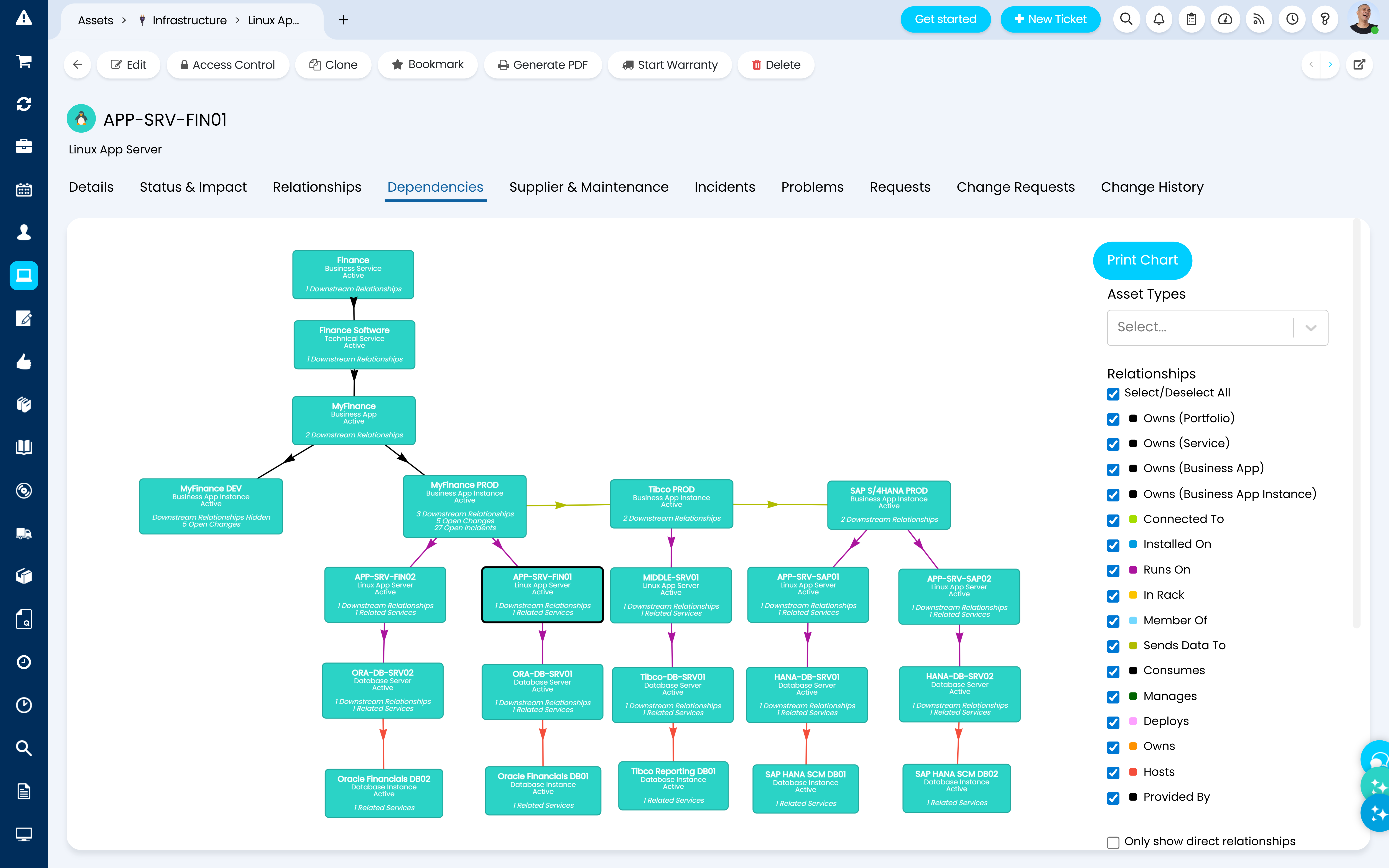
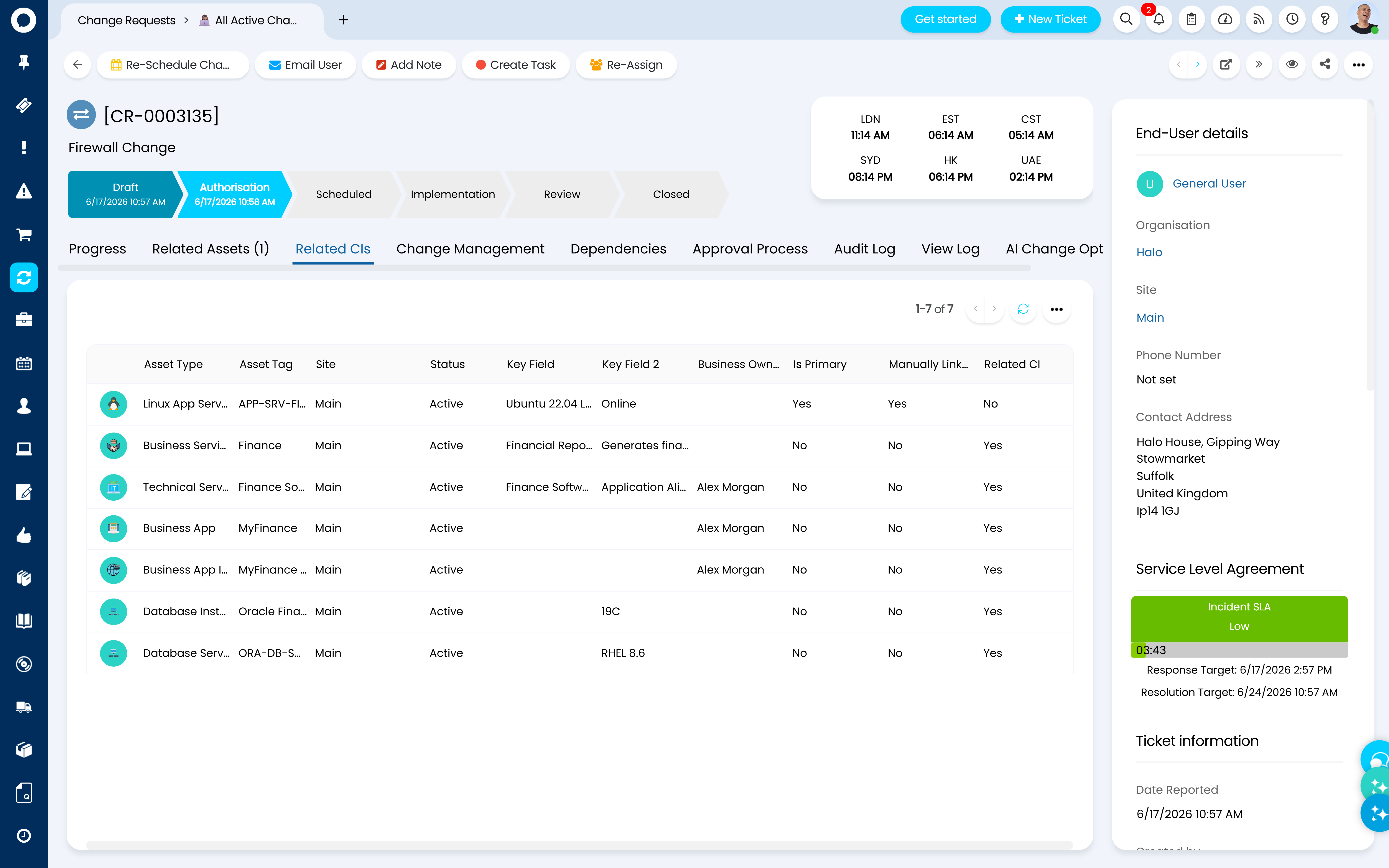
Halo CMDB goes beyond a simple asset register. Configuration items are connected by their relationships, servers linked to the applications they support, applications linked to the services they deliver, services linked to the users who depend on them. When an incident occurs or a change is planned, impact analysis draws on those relationships instantly, showing exactly which services and users will be affected before any action is taken.

Connected to every service management process
Asset records in Halo are linked directly to incidents, changes, problems, service requests and contracts. When a ticket is raised, the affected assets are visible immediately. When a change is planned, the CMDB shows what will be affected. When an asset approaches end of life, the relevant service owners are notified automatically. Asset management is embedded in every service management process.

Licence and contract management built in
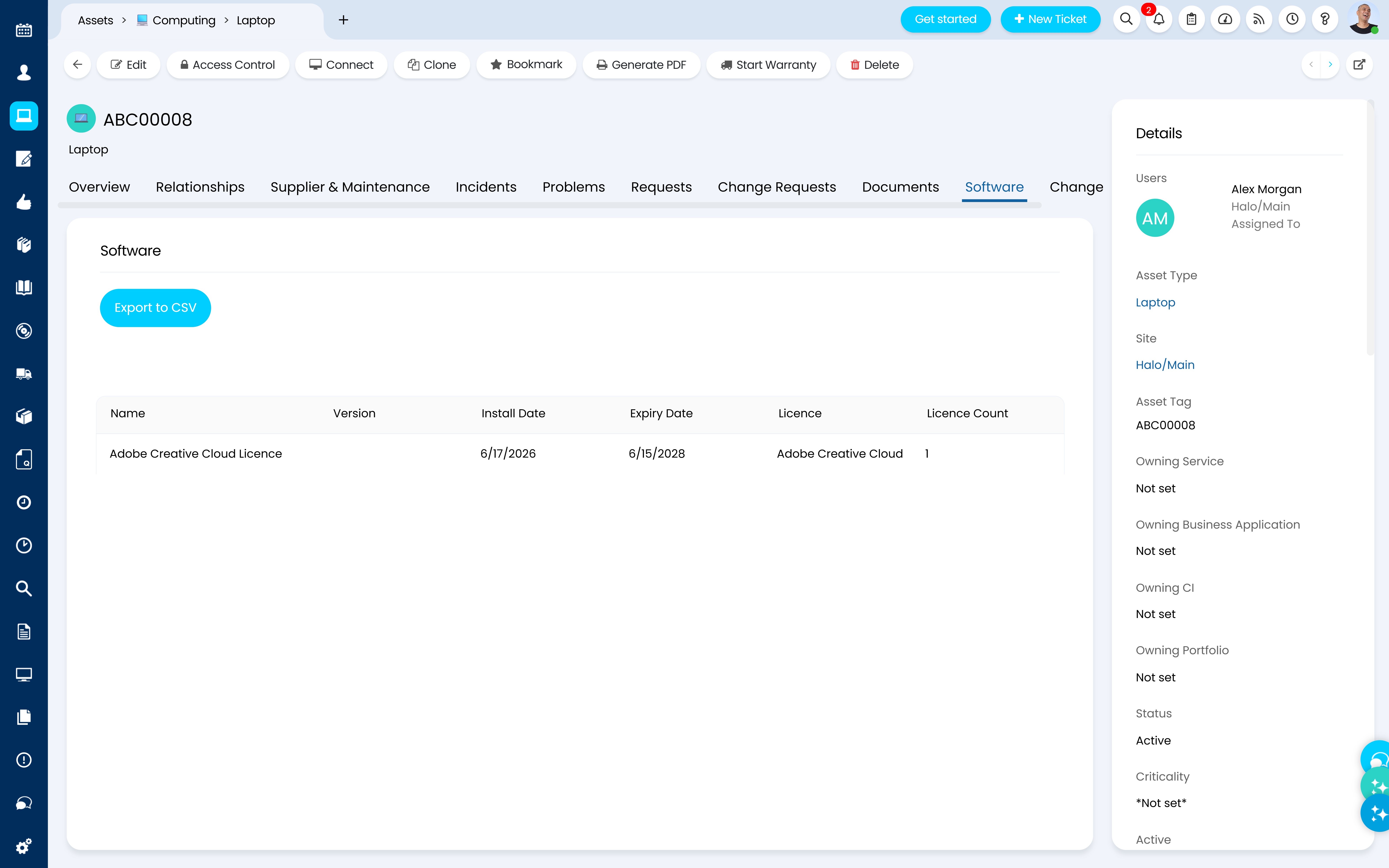
Halo tracks every software licence, maintenance contract and supplier agreement within the same system. Renewal dates trigger automated notifications before expiry. Licence compliance reporting shows where the organisation is over or under-licensed. Contract spend is visible in real time. Asset management becomes a financial management tool as much as an operational one.

Automated discovery keeps records accurate
Manual asset registers become outdated the moment they are created. Halo automated discovery integrations pull asset data from your existing environment continuously, creating and updating asset records without manual input. All systems can feed into the same asset register, ensuring that what Halo shows always reflects what is actually in the environment.
Hardware asset management
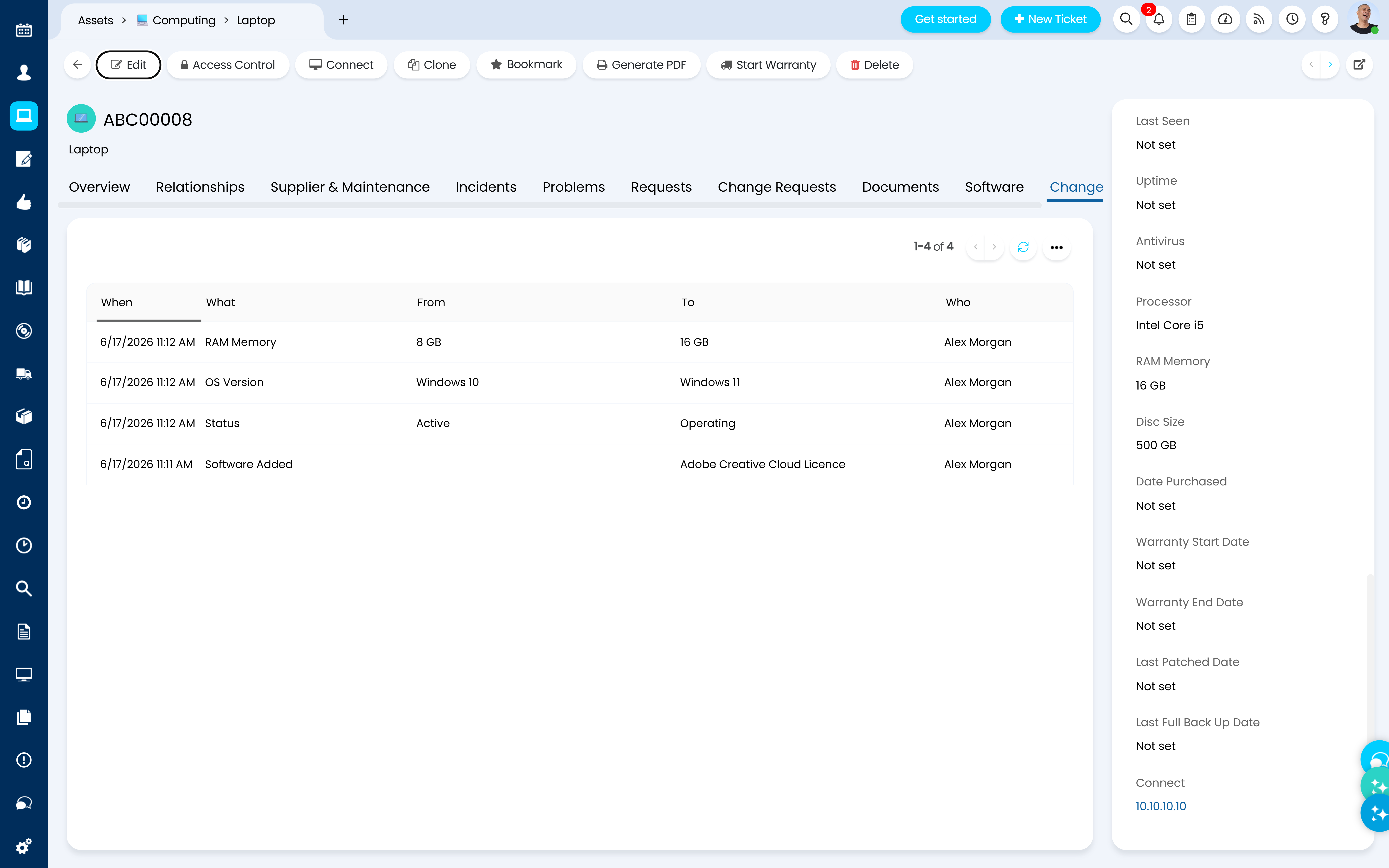
Halo tracks every hardware asset across its full lifecycle, from procurement and deployment through maintenance, support and disposal. Asset records capture make, model, serial number, location, assigned user, warranty status, maintenance history and current condition. Lifecycle stage tracking identifies assets approaching end of support or end of life, giving procurement teams the lead time they need to plan replacements without disruption.
Software and licence management
Software and licence management
Halo tracks every software installation and licence across the organisation, with compliance reporting that shows where the estate is over or under-licensed against entitlement. Licence alerts notify the relevant team before contracts expire or compliance thresholds are crossed.
Halo tracks every software installation and licence across the organisation, with compliance reporting that shows where the estate is over or under-licensed against entitlement. Licence alerts notify the relevant team before contracts expire or compliance thresholds are crossed.
CMDB relationship mapping
Halo CMDB captures the relationships between every configuration item in the environment. Servers, applications, services, databases, network components and user groups are all connected by their dependencies. Relationship maps are built from discovery data and maintained as the environment changes. Service impact analysis uses the relationship map to show exactly which CIs, services and users are affected by any incident or planned change.
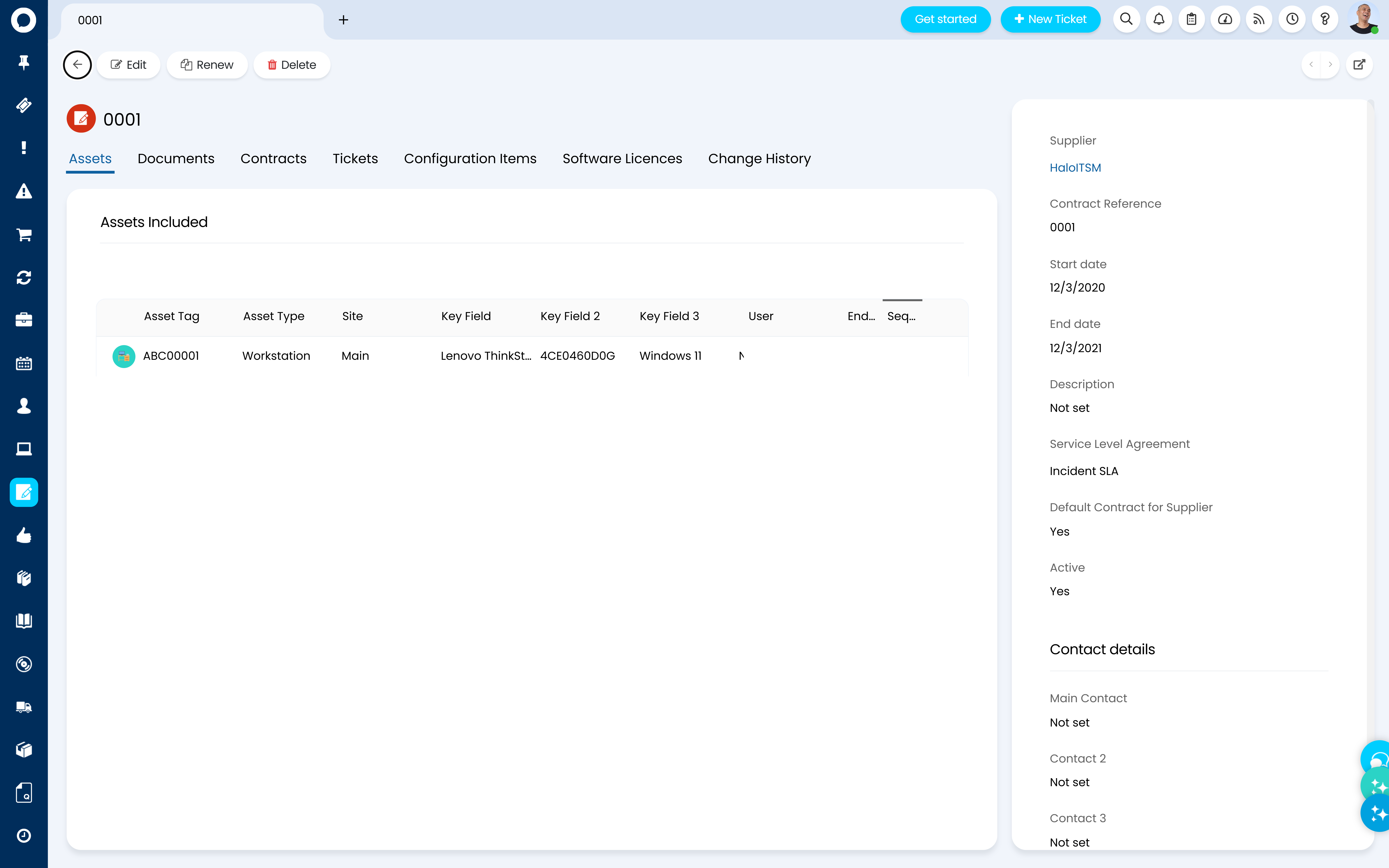
Contract and supplier management
Halo tracks every maintenance contract, software agreement and supplier commitment within the same system. Contract records capture value, term, renewal date, SLA commitments and associated assets. Automated alerts notify asset managers before contracts expire or renewal windows open. Contract spend is visible in real time against budget.
Asset lifecycle management
Halo tracks every asset from procurement request through to secure disposal, with each lifecycle stage recorded and reportable. Procurement requests link directly to the asset records created when equipment arrives. Deployment records capture when and where assets are deployed. Maintenance events are logged against the asset record. Disposal records evidence secure decommissioning with audit trails that satisfy data protection requirements.
Impact analysis for incidents and changes
When an incident occurs or a change is planned, Halo CMDB impact analysis shows instantly which services, applications and users are affected based on the dependency relationships of the affected configuration items. Incident responders understand the full scope of impact immediately. Change requestors see exactly what their change will affect before submitting it for approval.
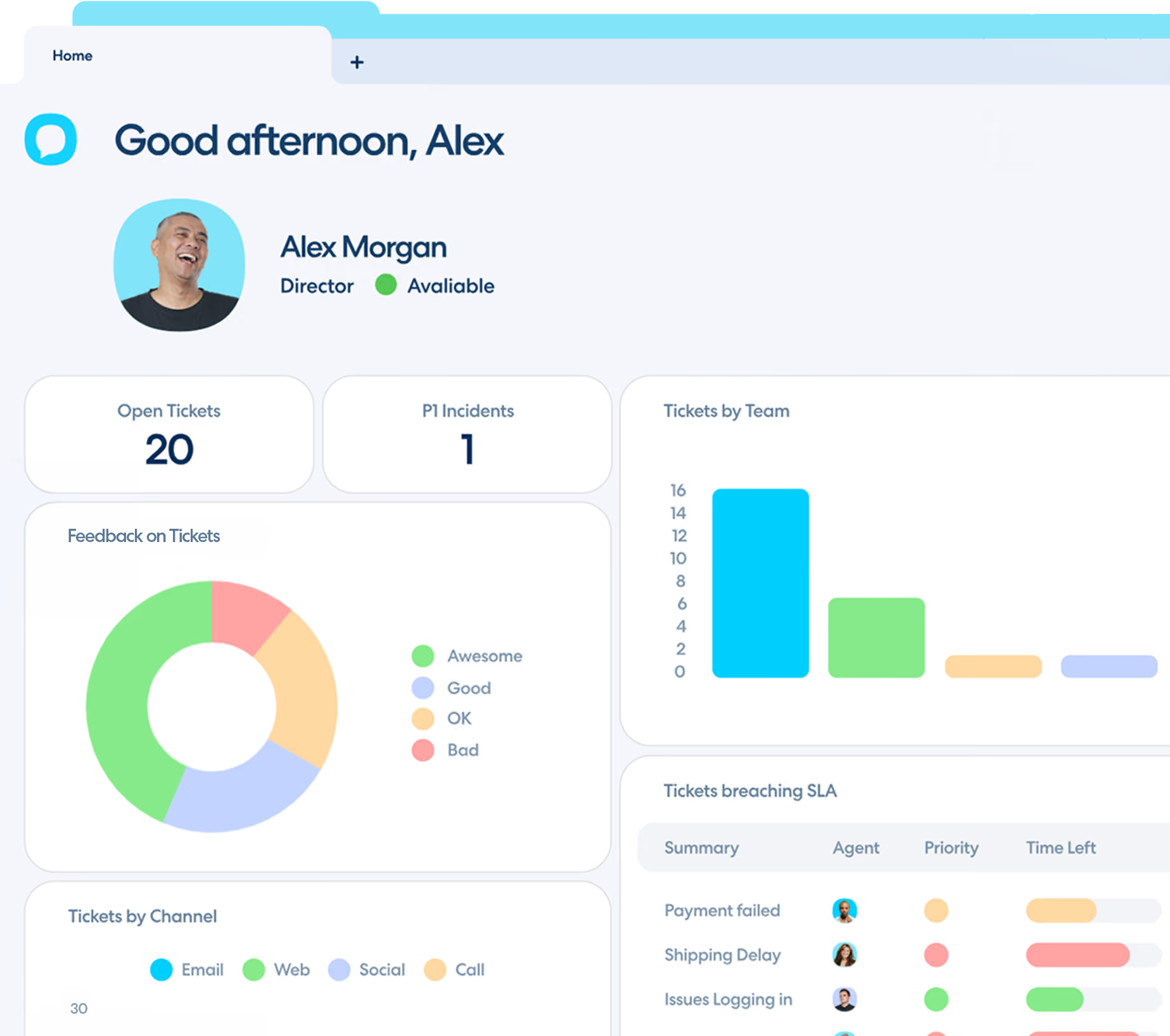
Asset reporting and dashboards
Halo provides a comprehensive suite of asset management reports and dashboards, covering asset inventory by type, location and status, licence compliance, contract renewal pipeline, end-of-life exposure, discovery exceptions and asset-linked incident volumes. Scheduled reports deliver the asset intelligence procurement, finance and service management leads need automatically.
Customer Story
From ServiceNow to HaloITSM: How inlumi Gained Efficiency, Flexibility, and Cost Savings
As inlumi grew, they needed an ITSM solution that could keep pace. Frustrated by rising costs, complex customisation, and declining support with ServiceNow, they made the switch to HaloITSM.
See Customer Story
30%
Reduction in licensing costs

Included in every Halo licence
Halo knowledge management is connected to AI from the moment it is used. AI-powered search, contextual suggestions and deflection analytics are all active from day one, ensuring knowledge is surfaced at the right moment without relying on analysts remembering to search for it.

Automated and always accurate
Halo knowledge base analytics measure and report the deflection impact of every article, showing service managers the direct relationship between knowledge investment and ticket volume reduction. The value of a well-maintained knowledge base is always visible and always measurable.

Connected to every service management process
Halo knowledge management supports separate knowledge bases for every department running service management within the platform, each with their own content, permissions and analytics. One platform, multiple knowledge bases, a consistent management experience across every team.
Supports compliance and audit requirements
Halo knowledge quality tools, including expiry dates, article ratings, ownership assignment and review workflows, maintain the currency and accuracy of the knowledge base without requiring knowledge managers to manually review every article on a regular schedule.

Scales from hundreds to millions of assets
Knowledge Management is included in every Halo licence at no additional cost. There are no separate knowledge management modules, no premium content management features and no additional licensing required for AI-powered knowledge suggestions or knowledge analytics.


Contextual knowledge surfacing
Halo AI analyses every ticket the moment it arrives and surfaces the most relevant knowledge articles within the analyst workspace, ranked by relevance to the specific content. Analysts see the most likely answers without searching. End users see suggested articles before submitting requests. The right knowledge reaches the right person at the right moment, automatically.
Automated article suggestions from resolved tickets
When an analyst resolves a ticket, Halo AI analyses the resolution content and automatically suggests a knowledge article structure, pre-populating the title, category, content summary and related article links based on the ticket data. The analyst reviews and refines the suggestion rather than creating from scratch, dramatically reducing the effort required to turn every resolved ticket into a knowledge asset.
Virtual agent for end users
Halo virtual agent gives every person across your organisation a fast, intelligent first point of contact, available around the clock. When an end user raises a query through the virtual agent, it searches the knowledge base in real time and returns the most relevant articles through a conversational response before attempting to create a ticket. Known answers are delivered instantly. Avoidable tickets simply do not get raised.
FAQ Question 1

FAQ Answer 1


Full asset visibility
with Halo
Try HALO for free today, the only platform to change the way the world works.