About
DOT Security is the cybersecurity arm of Impact, a privately held, family-owned business. Operating as a true MSSP, DOT delivers managed detection and response alongside compliance services, including SOC, vCISO, CMMC compliance and penetration testing. Founded in 2020, with its SOC facility launched in 2021, the team of around 40 is focused purely on security delivery and has grown more than 30% year on year.
The Challenge
Security work runs the opposite way to IT support. At an MSP, customers call in. At DOT, analysts watch client environments and pick up the phone when something looks wrong. Response is measured in minutes, against targets the team has to hit.
DOT originally ran on the same system and tenant as Impact’s managed IT business, a platform built for a different kind of work. Tickets existed mainly to capture time. They didn’t tie back to the service a client was paying for or the hours budgeted to deliver it, so there was no reliable way to judge the health of a contract, an analyst’s workload or the division as a whole. Performance data reached the team a month after the fact, too late to change anything. The tooling had no custom workflows, runbooks or integrations, so analysts investigating an incident had to pivot between separate tools to piece together what was happening.
At a few million in revenue, that was manageable. Growing more than 30% a year into double-digit millions, it became very hard to deliver everything DOT had sold and keep clients happy.
DOT’s first attempt at a new PSA didn’t help. Less than a third of the way through the rollout, the team had a growing list of workarounds and was rebuilding its old processes on a platform it was now paying for. Impact used an exit clause, and DOT started again.
“Our ticketing system was simply to capture time. It prevented us from analysing the data to understand the health of a division, a team member delivering against a contract, or the health of a contract for a customer.”
Jeremiah School, President, DOT Security
The Solution
DOT’s leadership had worked with other PSAs for well over a decade and seen very little of them change. This time, features weren’t the deciding factor. Other roadmaps looked stale, while Halo’s people were clearly invested in where the product was going, and the capability matched when DOT tested it against its own requirements. DOT went live in January 2025, five months after starting, with around 40 users. It also became the proving ground for Impact’s own rollout later that year.
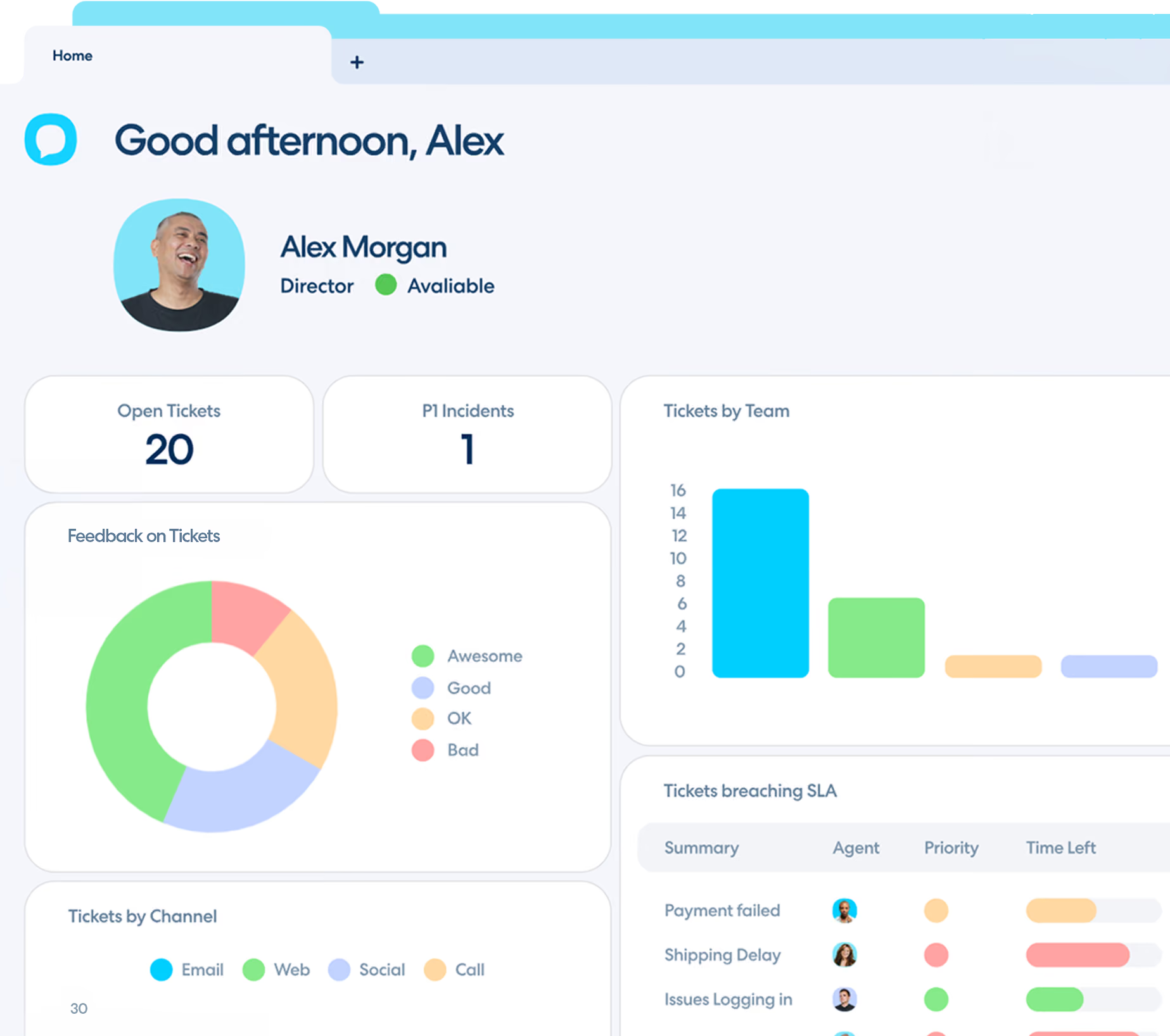
The first change was visibility. Work now runs through Halo tickets tied to what each client has bought, and that data feeds dashboards around DOT’s office in real time. Analysts can see how they’re tracking against response targets, and leadership can spot exceptions, such as incident response tickets open too long, without having to ask.
DOT also used the move to standardise how security work is done. Its incident response process is built into Halo tickets, so analysts select the relevant runbook and step through it the same way every time. Integrations with DOT’s detection and response tools pull the information an analyst needs into the ticket, rather than leaving them to hunt across systems.
Halo supports DOT’s outbound model too. When DOT sees unusual activity, Halo messages the client to check whether it’s expected, and they confirm with a single click. Clients see everything about an incident in one ticket instead of a trail of emails. Internally, DOT can flag events in Halo and use real cases to train associate analysts, which supports its focus on building talent in-house.
Whenever DOT has hit a gap at its size, it has found Halo quick to respond, with a whole team working to understand the problem and build what was needed. For DOT, Halo works more like a partner than a supplier. The relationship, the shared vision and the culture behind the product mattered as much as the platform itself.
“What we’re really selling is our labour, our time. Being able to track, manage and enable our teams to spend their time wisely is absolutely imperative.”
Jeff Leder, CTO, DOT Security
The Results
Since moving to Halo, DOT has a security operation that can see itself and respond consistently as it grows:
- Visibility into the health of the business. Leadership can now see delivery against contracts, team by team, where before the system only logged time. Clients get the same insight in real time, not a month after the fact.
- Live in 5 months. DOT’s rollout became the blueprint for Impact’s move of around 350 users to Halo.
- Consistent, repeatable incident response. Standardised runbooks mean every analyst follows the same path, cutting the back-and-forth that used to happen outside any central system.
- One place for security operations. Consolidating onto a single platform removed switching between tools and gave the team a shared view of the work.
- Stronger client verification and faster onboarding. Automated expected-behaviour checks let clients confirm activity with a single click, and structured workflows make it quicker to train newer analysts on real cases.
DOT has launched its Halo customer portal to an initial group of clients, with a wider rollout to follow. It also plans to open in more US locations, both to extend round-the-clock coverage and to reach a wider talent pool. With its core operation now running on Halo, DOT is set up to keep scaling without losing the consistency its clients rely on.
“The amount of change we’ve seen with Halo in a year and a half is not even comparable to the other providers in the marketplace.”
Jeremiah School, President, DOT Security