About
Founded in 1209, the University of Cambridge is the fourth-oldest university in the world and one of the world’s leading research and education universities. Its alumni and affiliates include 126 Nobel Prize laureates, and it is both a global research powerhouse and a medieval market town on the edge of the Fens.
Rather than one organisation, Cambridge is an umbrella for 31 colleges, six schools and over 150 departments, each with its own autonomy. Together they have 55,000 members, from students and staff to postdocs and academics.
The Challenge
Delivering any service at Cambridge means working without central control. Departments and colleges decide for themselves which services they take from University Information Services (UIS), the University’s IT department, and almost as many IT staff work across them as in the centre.
As a result, almost every ITSM tool on the market was in use somewhere in the University. Tickets bounced between teams on different systems, and requests disappeared into shared mailboxes, which is how Central HR was still working. Reporting was so fragmented that building a picture of workload, cost or efficiency was difficult even within one department.
UIS’s own platform was shared by central IT and some finance, HR and administrative departments, around 200 agents in all. Over the years, it had grown without a shared approach to how it should be used, and teams developed their own ways of working around it. Requests were rarely questioned, so configurations multiplied, and the system became hard to change and harder to report on.
The platform did a job, but it had stopped moving forward. Adding capability such as knowledge management meant unlocking a separate module, and UIS could see other organisations getting far more out of the same kind of platform. Over time, people stopped engaging with it, and with change so complex, new requests stopped coming in.
As a world-class university, Cambridge needed a platform that could keep up with the way it works, across every college, school and department.
“The overhead to change configuration or put in new requests was so burdensome and so complex and slow that everybody basically gave up.”
Jon Holgate, Head of Infrastructure and IT Services, University of Cambridge
The Solution
UIS needed a platform that would steer it towards best practice, with a licensing model that could scale if other departments wanted to join. It wanted to switch on new capability when it was ready, without going back through a funding cycle. It also needed a partner that understood the University’s challenges and would grow with it.
The University found Halo to be an innovative, growing organisation, with a modern, engaged team that understood its challenges from the start. As well as meeting each of those requirements, Halo shared the University’s values.
“The values Paul Hamilton, the founder, is leading Halo with fit really nicely with the University of Cambridge. Cambridge isn’t all about making money. It’s about education. It’s about nurturing talent.”
Richard Kruller, Service Desk Manager, University of Cambridge
Halo was ready to complete the implementation in three months, but the University knew it needed longer. Decisions at Cambridge are made collectively, so it chose to take extra time to train staff and prepare teams for the change. Halo supported each stage and, at the University’s request, flagged anything that didn’t follow best practice.
Since go-live, Halo has made it easy for new teams to join. Mixing named and concurrent licences means the University doesn’t need a fixed seat for every user, which has saved it a significant amount and lets departments come on board when they’re ready.
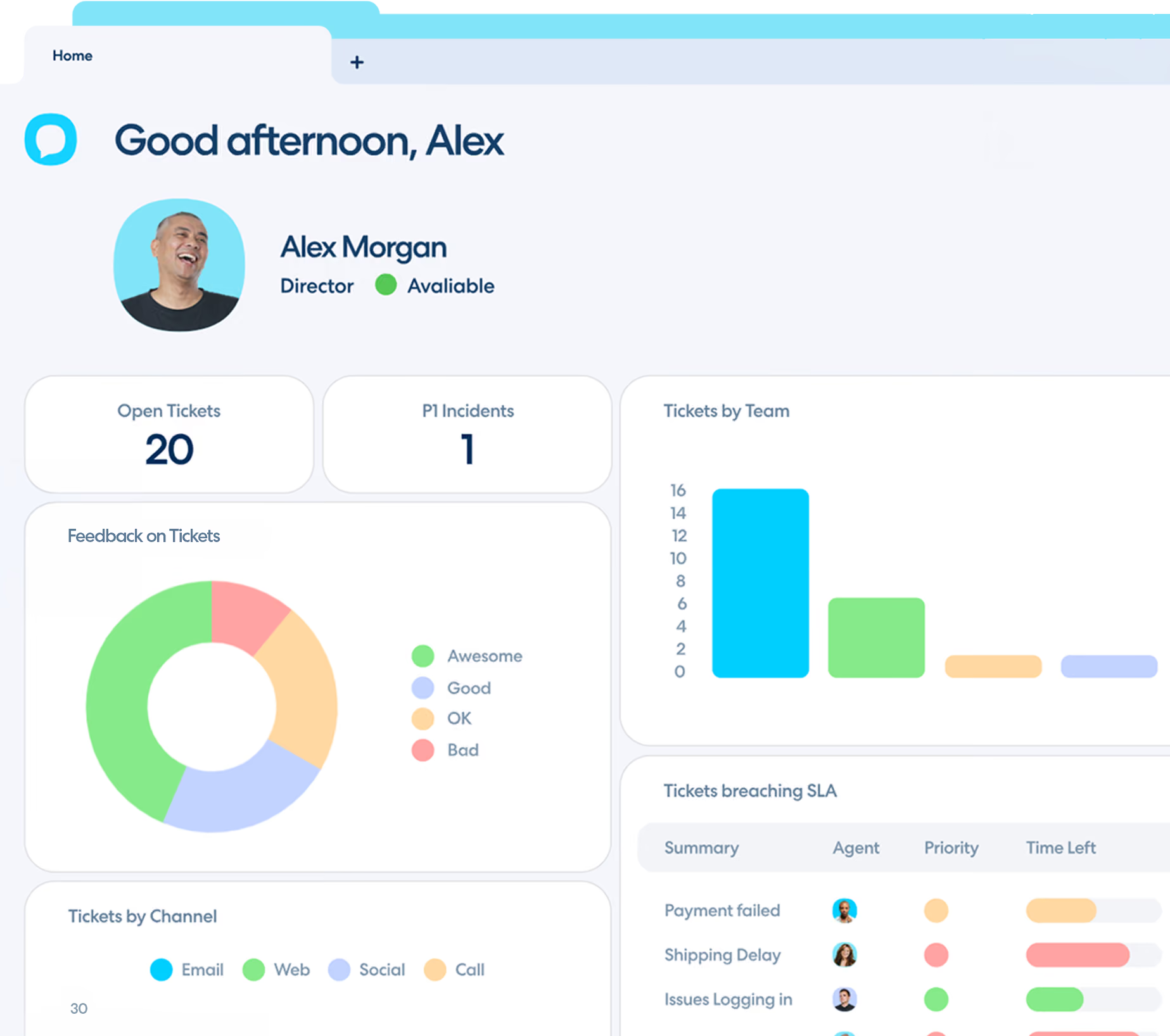
Reporting is one of the biggest changes. Halo’s dashboards show managers trend lines across teams and where action is needed, so the data now informs decisions rather than just recording closed tickets. With teams on one platform, tickets pass between them without getting lost, and the University has a far clearer view of costs and efficiency.
Change management has opened up too. The change calendar is now shared with a much broader group of stakeholders, who can feed into it, and every change has clear tracking, escalation and visibility. The same approach is now being applied across other modules.
New features are available as soon as the University is ready to use them, from asset and configuration management to CRM. There are no extra modules to unlock and no new funding bids to make, so UIS can respond to requests far more quickly.
The way people work has also changed. Departments are now sharing knowledge bases and asset management, and Halo’s ITIL-aligned workflows give staff across the University a common way of working. A small UIS team helps each new department set up its workflows, and rather than being told to move, teams are asking to join.
The Results
Within a year, Halo has changed how the University works, inside IT and beyond:
- Under six months to full adoption. The move covered IT and non-IT services, with overwhelmingly positive feedback throughout.
- Around 200 → 650 licences in twelve months. Use has spread from IT into Estates, Finance and HR because teams want it.
- 550 concurrent licences. Mixing 100 named licences with around 550 concurrent ones means the University doesn’t need a fixed seat for every user. It has saved a significant amount and lets departments join when they’re ready.
- Leadership engaged with the data. Leadership interest in what happens at an operational level has changed night and day. Staff now see the value in the data they generate, as it tells the University what’s coming and how to respond.
- Demand has flipped. On the old platform, requests dried up. Now departments ask for new integrations and functionality, and staff outside the service desk are connecting their own datasets and workflows into Halo.
“The product is selling itself rather than anybody going out, particularly offering this to departments or functions. They’re proactively engaging with IT, which is almost never heard of.”
Jon Holgate, Head of Infrastructure and IT Services, University of Cambridge
Next, the University is onboarding Central HR, moving its work off shared mailboxes and into workflows. UIS is also exploring AI to support its small service desk team, from auto-triage and trend spotting to knowledge creation. Other universities have already asked Cambridge for its view of Halo, and the University is looking to host workshops with Halo and a partner on how Halo works in an academic setting.